IBL News | New York
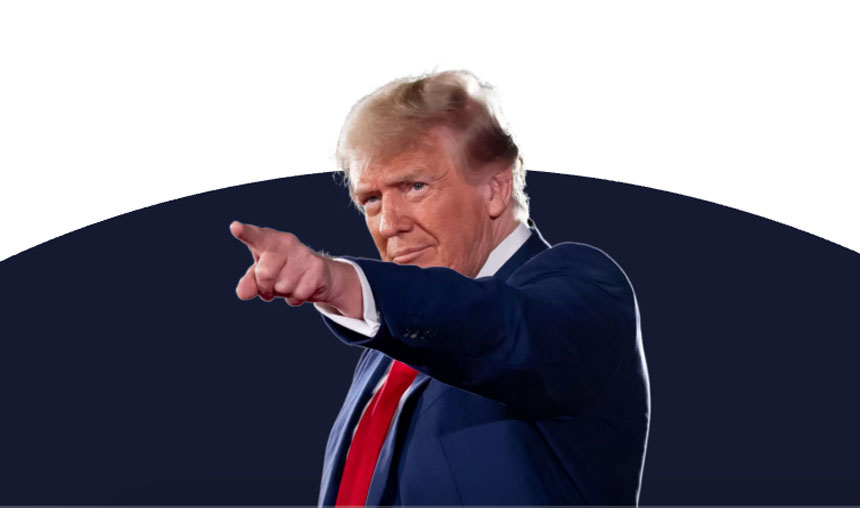
President Trump introduced a comprehensive AI legislative framework yesterday, emphasizing the administration’s commitment to “winning the AI race” as essential for both economic competitiveness and national security. The proposed federal AI framework aims to prevent individual states from enacting their own AI legislation, thus centralizing regulatory power in Washington once it is signed into law.
The framework explicitly calls for Congress to preempt state laws, establish age-gating requirements, streamline permitting processes for data centers to generate power on-site, combat AI-enabled scams, and address various national security concerns associated with artificial intelligence. Additionally, it seeks to ensure that American creativity remains a driving force in the nation’s future.
The White House acknowledged that many Americans harbor uncertainties regarding the implications of this transformative technology, particularly concerning their children’s well-being and rising electricity costs. To mitigate these concerns, the administration is proposing “guardrails” designed to maintain truth and accuracy in AI applications.
“The Administration wants American workers to participate in and reap the rewards of AI-driven growth,” the framework states, urging Congress to enhance workforce development and skills training programs. This initiative aims to broaden opportunities across sectors and create new jobs within an increasingly AI-powered economy.
This regulatory approach, characterized as “light-touch,” is supported by “accelerationists” like the White House AI czar and venture capitalist David Sacks, who believe that reducing regulatory burdens will foster innovation. Notably, legislation such as New York’s RAISE Act and California’s SB-53 seeks to impose specific safety protocols on large AI companies, highlighting a contrasting view on the need for robust oversight.
The AI industry has largely welcomed the Trump administration’s direction. Many industry leaders view this framework as a means to enhance their capabilities to innovate without fear of restrictive regulations. David Sacks highlighted this philosophy on Twitter, recalling Trump’s December Executive Order that called for a unified national framework, dubbed “One Rulebook,” in response to the potential pitfalls of a fragmented regulatory landscape across the 50 states.
As the legislative process unfolds, the administration’s framework could have profound implications for the future of AI development in the United States. By centralizing authority and potentially sidelining state-level regulations, the government aims to create a more cohesive environment conducive to technological advancement.
While many in the AI sector are optimistic, the move raises questions about the balance between fostering innovation and ensuring safety. As discussions progress in Congress, stakeholders will likely focus on the need for assurance that AI technologies are developed responsibly and ethically, reflecting the broader public interest.
Looking ahead, the success of this framework will depend not only on legislative approval but also on its implementation and the industry’s ability to adapt to new expectations. As AI continues to evolve, the interplay between innovation and regulation will remain a central theme in shaping the technology landscape in the United States.
See also University of Phoenix Study Reveals Generative AI’s Impact on Doctoral Research and Ethics
 BranchED Launches AI-Driven Simulations to Enhance Teacher Training Confidence
 Organizational Culture, Not Technology, Hinders AI Adoption in Education, Says Tanzania Times
 White House Unveils AI Policy Linking Workforce Skills to National Training Programs