















































Artificial intelligence startup Simile has secured US$100 million in funding to develop a model aimed at predicting human behavior in various contexts, including the anticipation of questions during earnings calls. The funding was announced last Thursday and led by Index Ventures, with additional participation from Bain Capital Ventures and Hanabi Capital. Notable contributors to this funding round include prominent figures such as Fei-Fei Li and Andrej Karpathy. The company did not disclose its valuation.
Founded as a spinout from Stanford University, Simile has begun to attract attention after spending seven months refining its AI model. This model has been trained using data from real individuals and historical transaction data, combined with insights from scientific journals focused on behavioral research. The company’s goal is to simulate decision-making scenarios using AI agents that reflect the preferences of actual people.
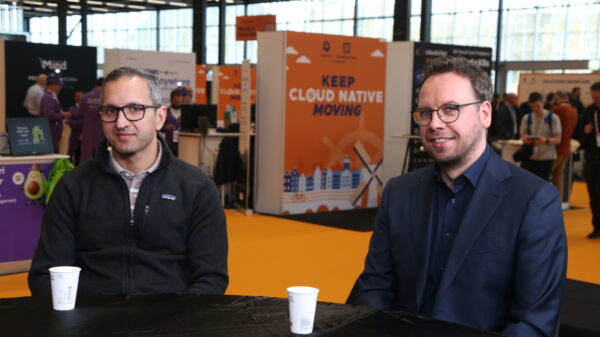
In a recent interview with Bloomberg Television, Simile CEO Joon Park highlighted the effectiveness of the model, stating, “In a recent earnings call, we simulated, we actually predicted, eight out of ten questions that were actually asked on this call.” This level of predictive accuracy showcases the potential utility of the model for businesses seeking to navigate investor communications more effectively.
Simile’s approach appears to offer a modern alternative to traditional methods such as focus groups. CVS Health Corp, for instance, has leveraged the model for the past five months to create AI agents that emulate real customers, streamlining their decision-making processes around product stocking and presentation in stores.
The technology aims to enhance corporate readiness for analyst questions during earnings calls and to gauge potential reactions to specific corporate announcements by analyzing historical data. This predictive capability could significantly impact how companies interact with investors and plan their communication strategies.
The founding team at Simile, which includes Park, Michael Bernstein, Percy Liang, and Lainie Yallen, is well-equipped to push the boundaries of AI application in this domain. Bernstein, in particular, gained recognition as a co-author of the influential ImageNet project, which has set crucial benchmarks for computer vision technology.
The investment in Simile highlights a growing interest in AI solutions that seek to merge technological innovation with psychological insights. By predicting human behavior, businesses may not only enhance their operational efficiency but also create a more engaging experience for consumers.
As the landscape of artificial intelligence continues to evolve, Simile’s work may represent a significant step forward in how companies anticipate and respond to human inquiries and behaviors. This could pave the way for more nuanced and effective business strategies in an increasingly data-driven world.
For more information about Simile’s innovations, visit their official website at Simile. To keep abreast of developments in AI technology, visit OpenAI and IBM.
See also Samsung Reveals ‘Ask AI’ Chatbot for Galaxy Browser Powered by Perplexity in One UI 9
 Amazon’s $200 Billion AI Bet: A Risky Step to Regain Cloud Market Share
 Nimbus Capital Invests $5M in Rizz Network’s $RZTO to Drive AI-Enabled Telecom Growth
 Corning Secures $6B Fiber Optic Deal with Meta to Enhance AI Data Center Capacity
 Applied Optoelectronics Invests $300M in Sugar Land, Boosts AI Transceiver Production with 500 New Jobs