
















































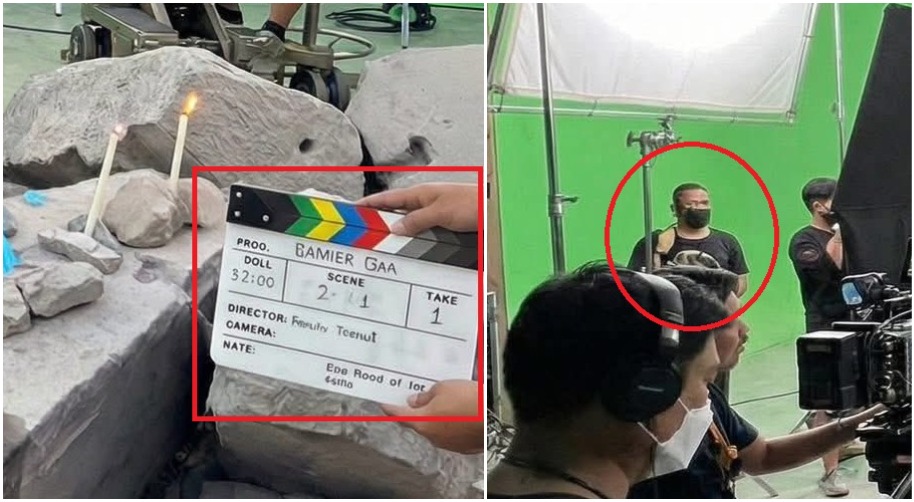
After reports emerged in Thai media regarding the army’s recapture of the Ta Khwai Temple on the disputed border with Cambodia, a series of images began circulating on social media. These images, shared in Khmer-language posts, falsely claimed that Thailand’s military had staged scenes featuring their troops in a studio setting with a green screen. The posts were flagged as potentially fabricated, as they contained visual errors typical of AI-generated content.
A Khmer-language Facebook post from December 21, 2025, invoked historical sentiments by referring to Thailand as “Siam,” urging the nation to cease its alleged deception. The post included six images purporting to show Thai soldiers at the temple alongside images that purportedly demonstrated they had been staged in a studio.
The dissemination of these images followed news reports of renewed clashes between Thailand and Cambodia in December 2025, which were rooted in a protracted dispute over colonial-era border delineations along their 800-kilometre (500-mile) frontier. This conflict has resulted in significant casualties, with at least 23 people reported dead in Thailand and 21 in Cambodia, displacing over 900,000 individuals across both nations.
The controversy intensified after the Thai military initially shared images of their troops at Ta Khwai Temple on December 20, claiming these were taken shortly after they had regained control. Colonel Ritcha Suksuwanon, deputy spokesperson for the Royal Thai Army, confirmed on December 22 that the pictures were indeed taken in the disputed area. However, the authenticity of the studio images, which claimed to depict the military, has been called into question.
While independent verification of the military’s images remains elusive, analysis of the studio images indicates they are fabrications. A reverse image search revealed that these images were labeled as “Made with Google AI” through the search engine’s “About this image” feature. Further scrutiny highlighted visual anomalies, such as unintelligible text on a clapperboard and figures in the background exhibiting blurred features.
Investigations by AFP utilized Google’s SynthID detector, a tool designed to identify AI-generated content, which indicated with “very high” confidence that the studio images were indeed created using AI technologies. The misleading images have also been debunked by local fact-checking organizations, including Thai PBS Verify and the Anti-Fake News Center Thailand.
As the situation evolves, the implications of misinformation in the context of the ongoing border conflict remain significant. The use of AI-generated images to manipulate public perception could exacerbate tensions between the two nations. Misinformation, especially in sensitive geopolitical contexts, poses risks not only to the credibility of news but also to the safety of individuals caught in the crossfire of these disputes. As such, the role of technology in shaping narratives around conflicts will likely continue to be scrutinized as events unfold.
The ongoing conflict and the propagation of misleading information serve as a stark reminder of the challenges in distinguishing fact from fiction in an era increasingly influenced by artificial intelligence. The intersection of technology and geopolitics is complex, and as demonstrated, can have far-reaching consequences.
For further reading on the border conflict between Cambodia and Thailand, visit the official pages of the Thai Embassy and the Cambodian Embassy. For updates on AI-generated content, check Google’s DeepMind.
See also OpenAI Whisper Achieves 4.1M Monthly Downloads, Expands to 99 Languages with 2.7% WER
 Google Cloud and Palo Alto Networks Forge Multibillion-Dollar AI Security Alliance to Transform Cybersecurity Landscape
 AI Revolutionizes Middle East Tourism: 91% of Leaders Pilot Smart Solutions for 150M Visitors by 2030
 Character.ai Reveals Key Techniques for Efficient Large-Scale Transformer Training