
















































AI Executive Order Expands Federal Reach Over State Regulations
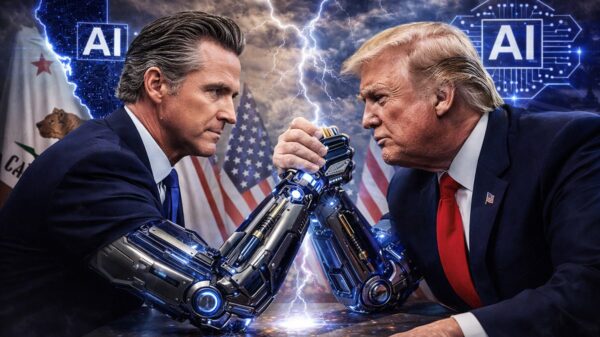
On December 11, President Trump signed a new executive order aimed at shaping the landscape of artificial intelligence (AI) regulation across the United States. The order, titled “Ensuring a National Policy Framework for Artificial Intelligence,” empowers the Attorney General (AG) to challenge state-level AI laws that are deemed unconstitutional or inconsistent with federal policy objectives. This move operationalizes the AI Action Plan announced by the administration in July, which sought to minimize regulatory barriers and enhance federal oversight over state AI regulations.
The executive order establishes an AI Litigation Task Force within the Department of Justice (DOJ) tasked with scrutinizing and potentially suing states over AI regulations. This includes laws that may interfere with interstate commerce, contradict federal statutes, or are otherwise deemed unlawful. The AG is expected to take a firm stance against state laws perceived as restrictive to innovation and economic growth in the AI sector.
Furthermore, the Secretary of Commerce is mandated to publish an evaluation by March 11, 2026, identifying state AI laws that either compel AI models to distort truthful outputs or violate First Amendment rights by requiring developers to disclose conflicting information. Such laws could be referred to the AI Litigation Task Force for further action. The evaluation may also spotlight state laws that promote AI innovation, aligning with the federal administration’s goal of establishing a “minimally burdensome” regulatory environment.
States that enact “onerous” AI laws face significant financial implications. By the same deadline of March 11, 2026, the Secretary of Commerce will announce a policy that renders states ineligible for federal non-deployment funds under the Broadband Equity Access and Deployment (BEAD) program. This policy underscores the administration’s aim to tie federal funding to the regulatory landscape of AI within states, potentially incentivizing states to align their laws with federal objectives.
In addition to financial penalties, federal agencies are expected to evaluate whether discretionary grants can be linked to states’ compliance with the executive order. States may be required to refrain from enacting conflicting AI laws or enter binding agreements to not enforce such laws to remain eligible for these grants.
The executive order also sets the stage for the establishment of federal standards for AI regulation. The Federal Communications Commission (FCC) will develop a uniform reporting and disclosure standard for AI models, while the Federal Trade Commission (FTC) plans to issue guiding principles on applying its existing prohibition on unfair and deceptive practices to AI technologies. These new standards aim to create a cohesive regulatory framework that prevents state regulations from obstructing federal mandates.
In a further effort to streamline AI governance, presidential advisors will prepare recommendations for a uniform federal AI framework that would preempt conflicting state laws. However, these recommendations will specifically refrain from proposing laws that could override state-level regulations related to child safety, AI data center infrastructure, and state procurement of AI technology.
The implications of this executive order could deeply affect recent state legislation surrounding AI. For instance, California’s SB 53 mandates large AI developers to publish safety plans to mitigate “catastrophic risk,” while Colorado’s SB 205 requires transparency notices and bias audits. Illinois’s HB 3773 prohibits AI discrimination in employment decisions. Each of these laws could face legal challenges under the new framework set forth by the federal government.
In reaction to the executive order, thirty-six state attorneys general have expressed their opposition to any overarching federal moratorium on state AI laws, arguing that such a measure would hinder states’ ability to address emerging risks effectively. They warn that this move could stifle both existing protections and future regulatory innovation.
The executive order represents a culmination of months of speculation surrounding the Trump administration’s intentions to regulate AI comprehensively. As the landscape evolves, the order is likely to spur significant controversy among state lawmakers and regulators, with the prospect of legal battles looming large. The broader implications for AI innovation and regulation in the United States will continue to unfold as the administration seeks to reshape the regulatory environment.
Domenic Boresta contributed to this article.
See also Anthropic Launches Open-Source Agent Skills Framework to Compete with OpenAI
 Notre Dame Secures $50.8M Grant to Pioneer Faith-Based AI Ethics Framework
 BigBear.ai Jumps on C Speed Defense Partnership Amid Share Vote and Market Volatility
 OpenAI Launches “Your Year with ChatGPT” Feature for Personalized Annual Reviews