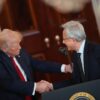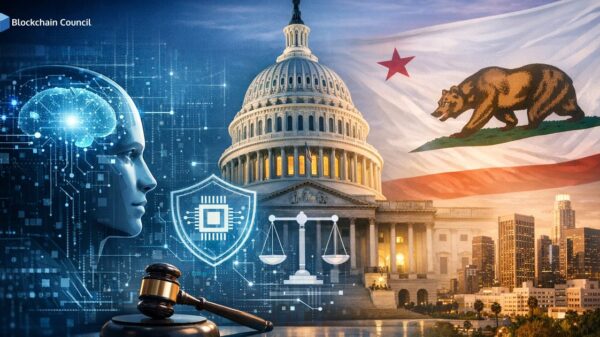


















































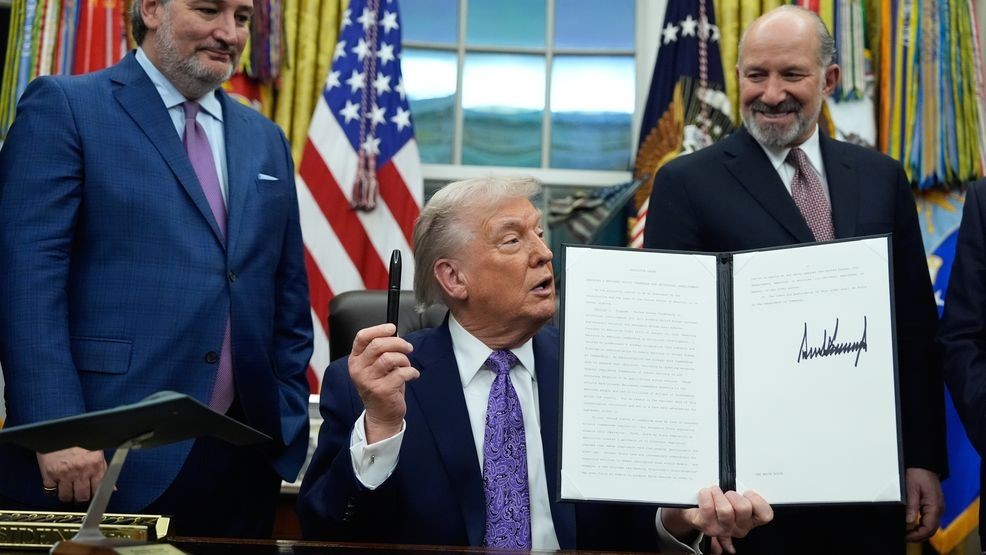
WASHINGTON (TNND) — President Donald Trump signed an executive order this week, prohibiting states from regulating artificial intelligence (AI). The order aims to establish a uniform national framework for AI, aligning with the U.S. strategy to secure global leadership in the burgeoning AI sector.
“Every time you make a change, and it could be a very reasonable change. You still won’t get it approved if you have to go to 50 states, so this centralizes it,” Trump stated from the Oval Office on Thursday. This directive comes as various states have developed their own AI regulations, which Trump argues could hinder innovation and threaten U.S. competitiveness against countries like China.
“There’s only going to be one winner here, and that’s probably going to be the U.S. or China, and right now, we’re winning by a lot,” Trump added, underscoring the urgency of a cohesive regulatory approach.
Backing the President’s initiative, U.S. Secretary of the Interior Doug Burgum emphasized the importance of AI for national security. He recounted a recent incident involving missile threats from Iran, stating, “Just go back to last spring, I mean, Iran launched 500 missiles at Iran…I mean from Iran to Israel in one day. 498 were shot down because of AI,” during his appearance on Fox & Friends on Thursday.
Former Arizona Senator Kyrsten Sinema supported the initiative, asserting that the U.S. must not only win the AI race but also invest in domestic data centers and infrastructure. “We’ve got to double down and make sure that American values are the values of the world and that we control this global AI agenda, and that’s why these AI data centers are so important all across the country,” she told Fox & Friends.
However, the executive order has drawn criticism from some Democratic lawmakers, who label it as dangerous and unconstitutional. They argue that eliminating state-level safety regulations could expose citizens to risks related to discrimination and surveillance abuses. Senator Amy Klobuchar (D-MN) articulated concerns over existing protections, stating, “We’re talking here about laws that are protecting kids. Things that red states have done, not just blue state governors.”
According to the National Conference of State Legislatures, at least 31 states enacted some form of AI legislation or resolutions during the 2024 legislative session. These laws predominantly addressed issues such as deepfakes, data privacy, and policies governing AI use in law enforcement. While Trump’s order does not immediately erase existing state laws, it instructs federal agencies to take action against some of them.
“AI can unleash great things. Cures for rare diseases and alike. But not if all the bad is what everyone sees,” Klobuchar cautioned, emphasizing the dual-edged nature of AI technology.
The executive order represents a significant win for major tech companies, including OpenAI and Google, which have lobbied for reduced regulations they deem excessive. States that do not comply with the new federal guidelines could face funding restrictions, though legal challenges to the order are anticipated.
As the U.S. forges ahead in its quest for AI supremacy, the implications of this executive order will likely resonate across various sectors, prompting a reevaluation of the balance between innovation and consumer protection. With the global race for AI intensifying, the outcome of this regulatory shift could define the landscape of technology and national security for years to come.
See also AI Stocks Drop 1.69% as Broadcom, Oracle Spark Profitability Concerns Amid Rising Costs
 Bloom Energy (BE) Plummets 10% Amid AI Infrastructure Selloff Post-Oracle Update
 AI’s Energy Demands Threaten U.S. Infrastructure and Market Stability Amid Growing Vulnerabilities
 Google DeepMind Launches Gemini AI Lab in UK to Accelerate New Materials Discovery by 2026
 AI Wildlife Videos Surge as Realism Blurs; Experts Warn of Authenticity Crisis