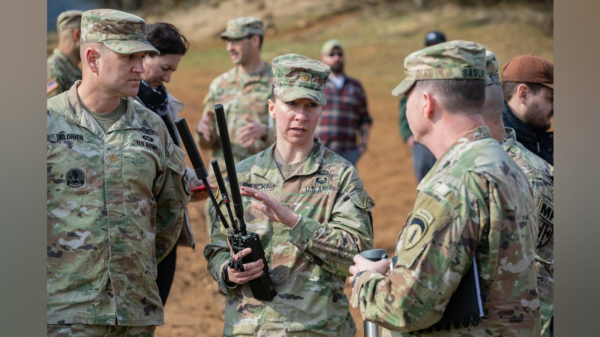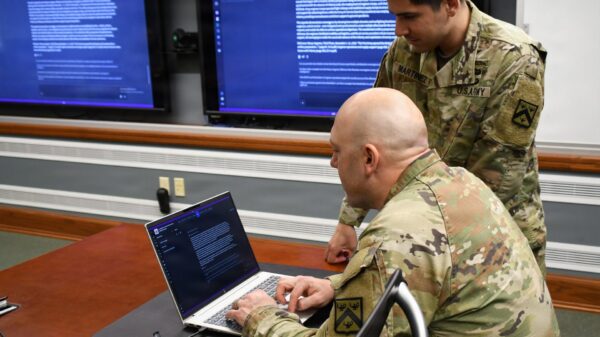












































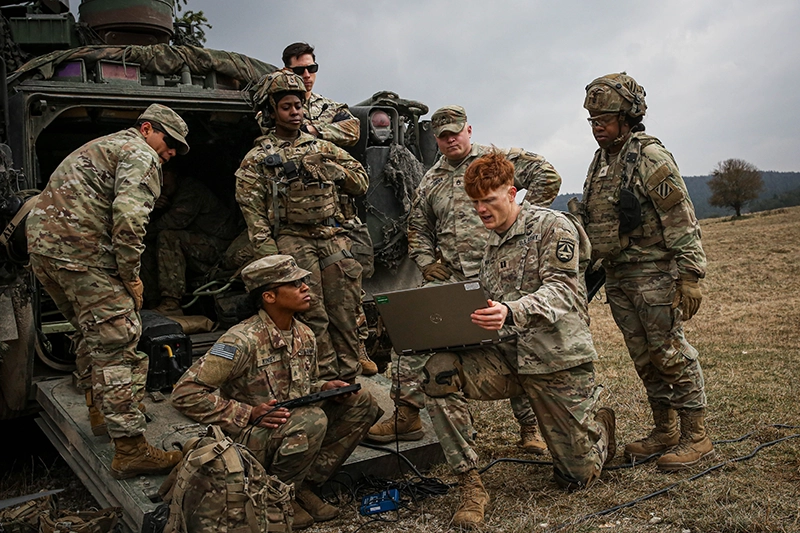
The U.S. Army is set to establish a new career path focused on artificial intelligence (AI) and machine learning (ML) by officially designating the 49B AI/ML Officer as a specialized area of concentration. This initiative aims to enhance the Army’s transition into a more data-driven and AI-enabled military force.
The rollout of this new specialty will occur in phases, with the first group of officers being selected through the Army’s Volunteer Transfer Incentive Program (VTIP) starting in January 2026. Reclassification of these officers is anticipated to be completed by the end of fiscal year 2026.
“This is a deliberate and crucial step in keeping pace with present and future operational requirements,” stated Lt. Col. Orlandon Howard, a spokesperson for the U.S. Army. “We’re building a dedicated cadre of in-house experts who will be at the forefront of integrating AI and machine learning across our warfighting functions.”
Initially, the 49B area of concentration will be accessible to all officers eligible for VTIP, with a focus on candidates possessing advanced academic or technical backgrounds related to AI and ML. The Army is also exploring the possibility of expanding this specialty to include warrant officers in the future.
Officers selected for the 49B designation will undergo graduate-level education and gain hands-on experience in the development, deployment, and maintenance of AI-enabled systems. Their primary objective will be to translate advanced technologies into operational capabilities applicable across a wide range of military missions.
The introduction of the 49B career path aims to cultivate a core group of uniformed specialists in AI and ML, expediting the adoption of these technologies within the military framework. The initiatives are expected to enhance battlefield decision-making speed, optimize logistics and sustainment, and promote the utilization of robotics and autonomous systems.
“Establishing the 49B AI/ML career path is another key investment to maintain our decisive edge as an Army,” Howard added. “Ultimately, it’s about building a force that can outthink, outpace, and outmaneuver any adversary.”
The Army’s strategic shift towards integrating AI and ML into its operational structure reflects a broader trend within military organizations globally, as they increasingly recognize the critical role these technologies play in modern warfare. As AI capabilities continue to evolve, military forces worldwide are working to incorporate them into various aspects of their operations, including logistics, command and control, and real-time data analysis. The establishment of the 49B career path is a significant step in this ongoing transformation.
In an era where technological superiority is essential, the U.S. Army’s commitment to developing a specialized workforce in AI and ML not only enhances its operational capabilities but also sets a precedent for other military branches. The focus on advanced technologies is indicative of a wider understanding that the future of warfare will rely heavily on data-driven decision-making and automation. This initiative could pave the way for increased collaboration between military and civilian sectors, particularly in fields such as robotics and autonomous systems.
As the Army embarks on this new journey, it will be crucial to monitor how effectively these officers can integrate AI and ML into military operations, ensuring that they contribute meaningfully to the Army’s mission of maintaining national security. The implications of this shift extend beyond the battlefield, as the lessons learned and innovations developed by the Army could influence the commercial sector and the broader technological landscape.
The establishment of the 49B AI/ML Officer career path marks a pivotal moment in military history, positioning the U.S. Army at the forefront of technological advancement in defense. As this program develops, it will be essential to observe its impact on military readiness and strategic capabilities, ultimately shaping the future of armed conflict and national defense.
See also Microsoft’s AI Strategy Faces Backlash as “Microslop” Trends Amid Public Concerns
 Global Tech Titans to Convene at India AI Impact Summit 2026, Shaping AI Policy & Innovation
 2026: Robinhood, JPMorgan, and PayPal Unleash Game-Changing AI Innovations
 Google’s DeepMind Plans AI-Powered Smart Glasses with In-Lens Display for 2026 Launch
 Meta Acquires AI Startup Manus for $3B, Boosting Growth Amid Regulatory Challenges