





































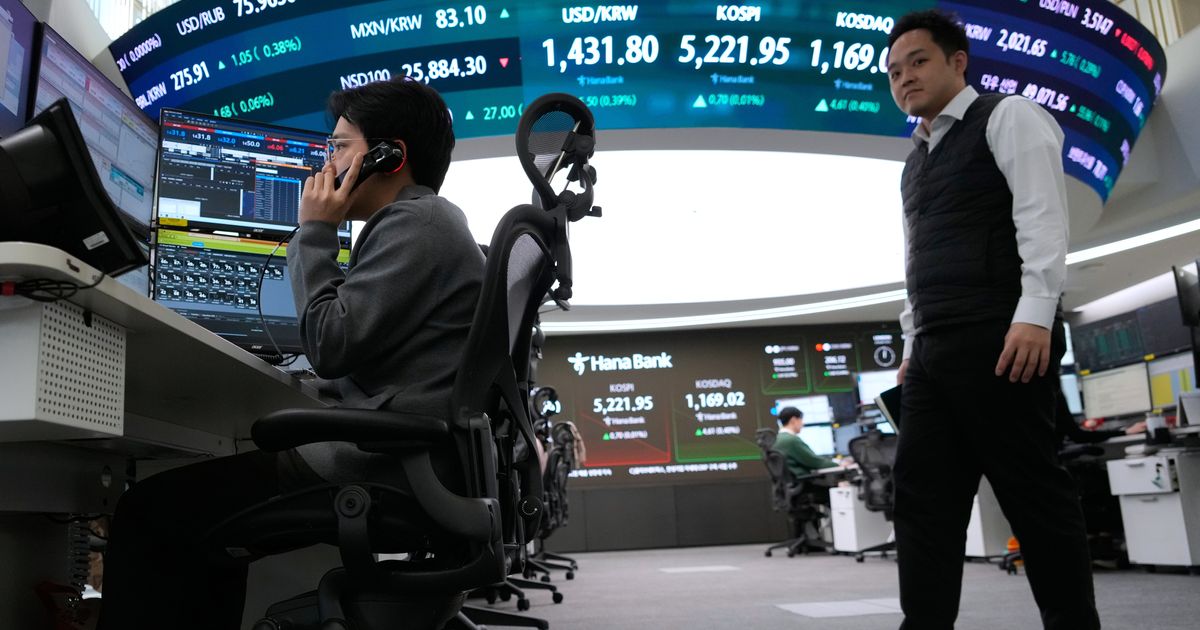
U.S. futures and Asian shares fell sharply on Monday as concerns surrounding President Donald Trump’s nominee for the next Federal Reserve chair intensified anxieties over a potential bubble in the artificial intelligence sector. The uncertainty was reflected in the South Korean exchange, which briefly suspended trading as its benchmark Kospi plummeted 5.1%, closing at 4,958.51. Major technology stocks suffered, with Samsung Electronics losing 5.6% and SK Hynix declining 7.6%.
The Kospi had recently been setting records, buoyed by the AI boom and partnerships with industry heavyweights like Nvidia and OpenAI.
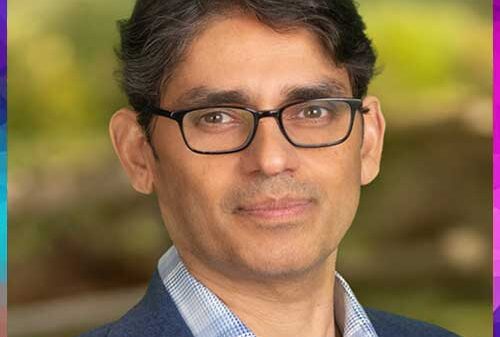
Investor sentiment was further dampened as the market grappled with how Kevin Warsh, Trump’s new nominee to lead the Federal Reserve, would manage interest rates. Futures for the S&P 500 dropped 1.2%, while those for the Dow Jones Industrial Average fell 0.8%. Concerns that the Fed might lose some of its independence under Trump have contributed to fluctuations in the financial markets, pushing gold prices higher and weakening the U.S. dollar over the past year.
On Monday morning, gold prices fell 3.5%, and silver dropped 2.1%, following a significant decline on Friday that brought to an end record highs in precious metals. Meanwhile, U.S. benchmark crude oil prices fell $3.46 to $61.75 per barrel. During a press event aboard Air Force One, Trump mentioned that Iran should negotiate a satisfactory deal to prevent the country from acquiring nuclear weapons. His remarks seemed to alleviate some fears about potential disruptions in oil supplies, which had previously driven prices upward. Consequently, Brent crude also decreased by $3.58 to $65.74 per barrel.
In Tokyo, the Nikkei 225 index surrendered early gains, decreasing by 1% to 52,791.59. Other key Asian markets declined as well, with Hong Kong’s Hang Seng dropping 2.9% to 26,580.78, and the Shanghai Composite index sinking 1.8% to 4,043.68. In Australia, the S&P/ASX 200 fell 1% to 8,778.60, while Taiwan’s Taiex lost 1.4%.
On Friday, major U.S. indices also closed lower; the S&P 500 dropped 0.4% to 6,930.03, the Dow lost 0.4% to 48,892.47, and the Nasdaq composite fell 0.9% to 23,461.82. However, Tesla provided some respite for the markets, rising 3.3% after reporting better-than-expected quarterly profits. Apple also gained 0.5% following a stronger-than-anticipated profit report.
Warsh’s nomination by Trump requires Senate approval, and the selected Fed chair will play a critical role in shaping economic policies that influence global markets, particularly by determining interest rate changes. Trump has been advocating for lower interest rates, which can stimulate economic activity but also risk higher inflation. A report released on Friday indicated that U.S. wholesale inflation outpaced economists’ expectations last month, potentially pressuring the Fed to maintain steady interest rates for an extended period instead of implementing cuts as it did late last year.
The long-held belief among economists is that the Fed should operate independently from political influence to make decisions that may be unpopular in the short term but necessary for long-term economic health. For example, achieving the Fed’s inflation target of 2% might necessitate keeping interest rates elevated, which could slow economic growth.
On Wall Street, mining stocks also took a hit as gold prices tumbled 11.4% to settle at $4,745.10 per ounce, following a year-long rally that saw gold prices nearly double. The price of gold peaked above $5,000 for the first time on Monday, only to retreat significantly by Thursday. Silver, which had experienced a similar surge, fell sharply by 31.4%.
In other early trading, the U.S. dollar fell to 154.81 Japanese yen from 154.94 yen, while the euro lost ground against the dollar, slipping to $1.1851 from $1.1853. As uncertainties continue to shape market dynamics, investors remain vigilant in assessing the implications of Fed policies and geopolitical developments.
See also Oracle Plans $50 Billion Capital Raise to Expand Cloud Infrastructure Amid AI Demand Surge
 Alibaba Accelerates AI and Logistics: Unveils New Chips, Merges Autonomous Division
 South Korea Launches AI-Driven Strategy to Attract 30 Million International Tourists by 2028
 Grok AI Restricted from Editing Revealing Images Amid Legal Scrutiny and User Safety Concerns
 U.S. Air Force Awards $15M to Matrix Research for AI-Powered Combat Identification System