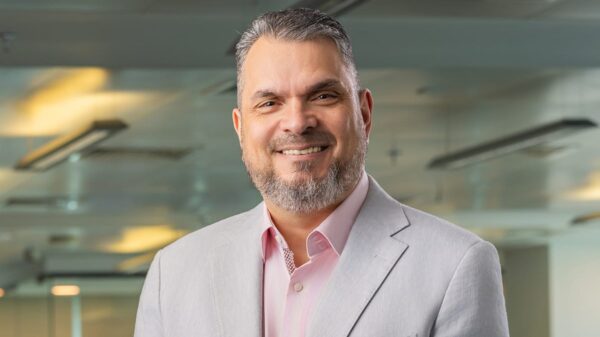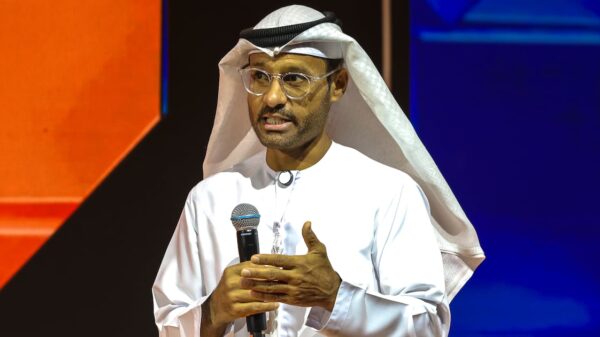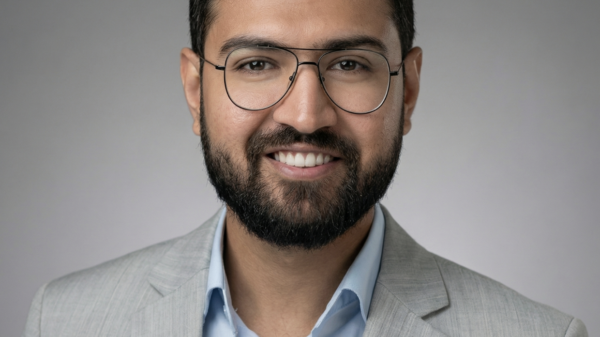


































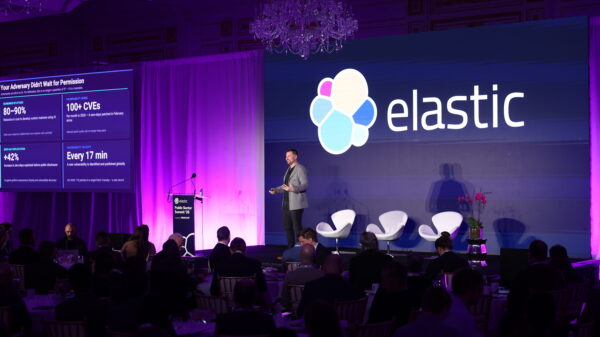







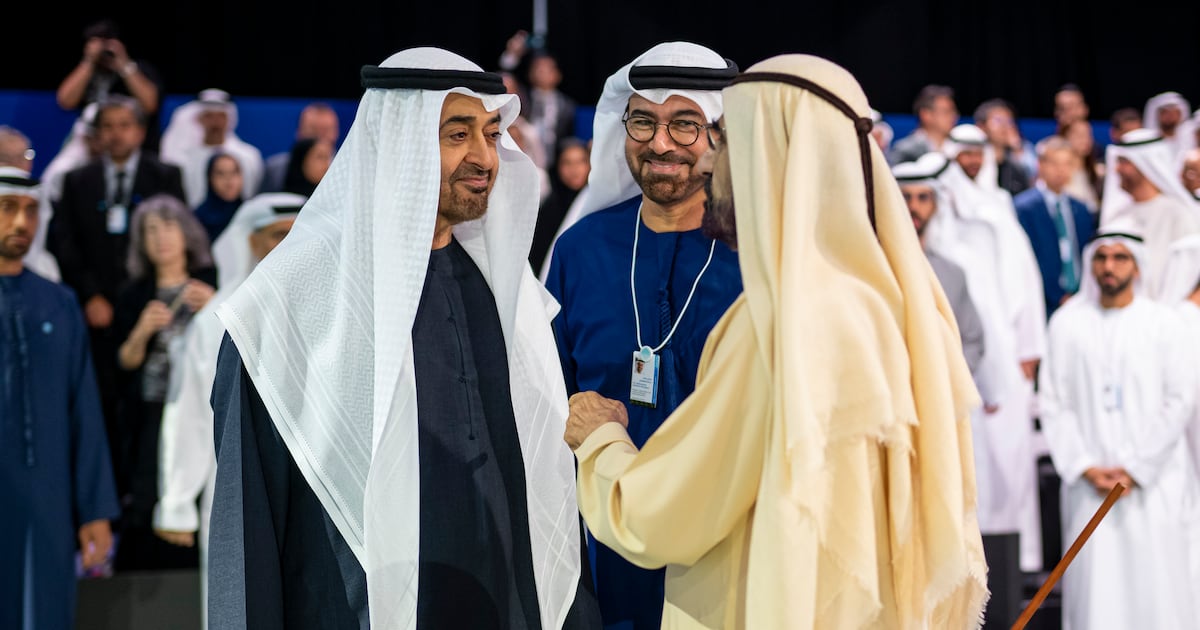
President Sheikh Mohamed and Sheikh Mohammed bin Rashid, Vice President and Ruler of Dubai, inaugurated a significant gathering of over 150 top scientists on Sunday, setting the stage for the World Governments Summit (WGS). The three-day World Laureates Summit, featuring Nobel Prize winners and recipients of prestigious scientific awards, aims to examine the increasing influence of advanced technology.
In comments reported by the Emirates news agency Wam, Prof Roger Kornberg, president of the World Laureates Association, announced that the organization plans to establish a new base in the UAE. “The UAE is not following the future of science, it is setting its direction,” he stated. The event, held at Dubai’s Madinat Jumeirah, brought together experts to discuss pressing issues surrounding artificial intelligence (AI) and its applications.
Experts warned that AI could “take control of 98 percent of everything” by 2050, making it as difficult to challenge as a government. While a conflict reminiscent of the Terminator franchise was deemed unlikely, scientists acknowledged that AI is set to become an indispensable part of daily life. Prof Whitfield Diffie, an American cryptographer known for his groundbreaking contributions to digital security, shared an optimistic view on AI’s trajectory.
“Artificial intelligence is already tremendously useful,” said Prof Diffie, a Turing Award laureate recognized as the Nobel Prize of computer science. He added, “Given what is invested, unless there’s some amazing error that doesn’t show, we are going to find it much more useful in each succeeding year.” He emphasized that many AI programs may currently be flawed, yet he anticipates that AI will perform “98 percent of everything” by 2050.
Prof Diffie elaborated on the challenges that may arise as AI becomes more integrated into various aspects of life. “Suddenly, you will find that trying to throw them out is like trying to throw the government out,” he remarked, suggesting that society will come to rely heavily on AI solutions, making them nearly impossible to eliminate.
Touching on safety concerns, Prof Diffie referenced Asimov’s Second Law of Robotics, which asserts that a robot must follow human orders unless they conflict with the First Law, which prohibits harm to humans. He noted that while such guidelines could help protect humanity, society is currently struggling over issues like whether autonomous drones should be permitted to act without oversight.
Dr Stuart Haber, a pioneering cryptographer known as a co-inventor of blockchain technology, also contributed to the discussions. He introduced a new project aimed at combating AI-driven deepfakes and impersonation scams. His initiative, SureMark Digital, focuses on proving the authenticity of a person or piece of content, rather than merely detecting fakes. This technology utilizes public-key cryptography to verify an individual’s identity in real time, allowing users to confirm the identity of people they engage with online.
“There is a need for global cooperation in regulating AI,” stated Dr Haber, emphasizing that international collaboration is currently facing obstacles. He argued that technology can provide solutions, particularly through cryptographic tools that demonstrate the authenticity of information. “The biggest benefit to AI is improved science and technology,” he noted, while also cautioning about the potential for misuse, including the proliferation of deepfakes and scams.
In a notable recognition during the summit, the UAE President conferred the Order of the Union, one of the country’s highest civilian honors, to Mohammed Al Gergawi, Minister of Cabinet Affairs and chairman of the WGS. This honor reflects Al Gergawi’s contributions to advancing government performance and national development. Sheikh Mohamed commended him for exemplifying public service and Al Gergawi expressed pride in receiving the medal.
Highlighting the significance of the WGS, which was first held in 2013, Al Gergawi remarked, “Given its significant influence on global intergovernmental dialogue, the World Governments Summit serves as an unparalleled hub for science-based solutions and innovative strategies designed to drive transformation in the face of mounting global challenges.” He underscored that the summit brings together over 60 heads of state and government, along with more than 150 delegations and thought leaders, to showcase a collective human resolve to collaborate in shaping a better future.
As the discussions continue, the implications of AI on society and governance are expected to take center stage, drawing attention to both the benefits and challenges of this rapidly evolving technology.
See also AI Revolutionizes U.S. Labor Market: 25% of Jobs Face Automation as Skilled Trades Surge
 Agentic AI Achieves Enterprise Inflection Point: 7 Key Developments and Future Insights
 AI Regulations Surge: SaaS Firms Risk $10B in 2026—Ensure Compliance Now
 Amazon’s $50 Billion AI Investment in OpenAI Signals Major Strategic Shift Amid Job Cuts
 Nvidia’s H200 Chips Supplied to Chinese Military Firms Amid Rising Security Concerns