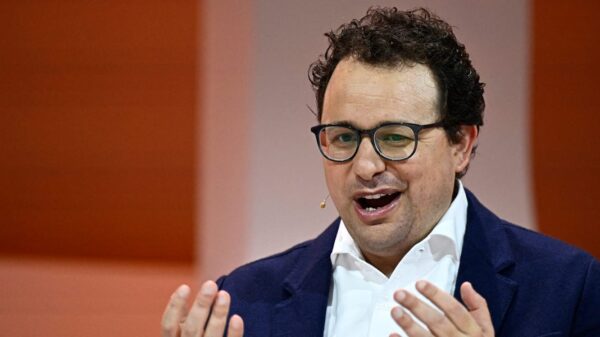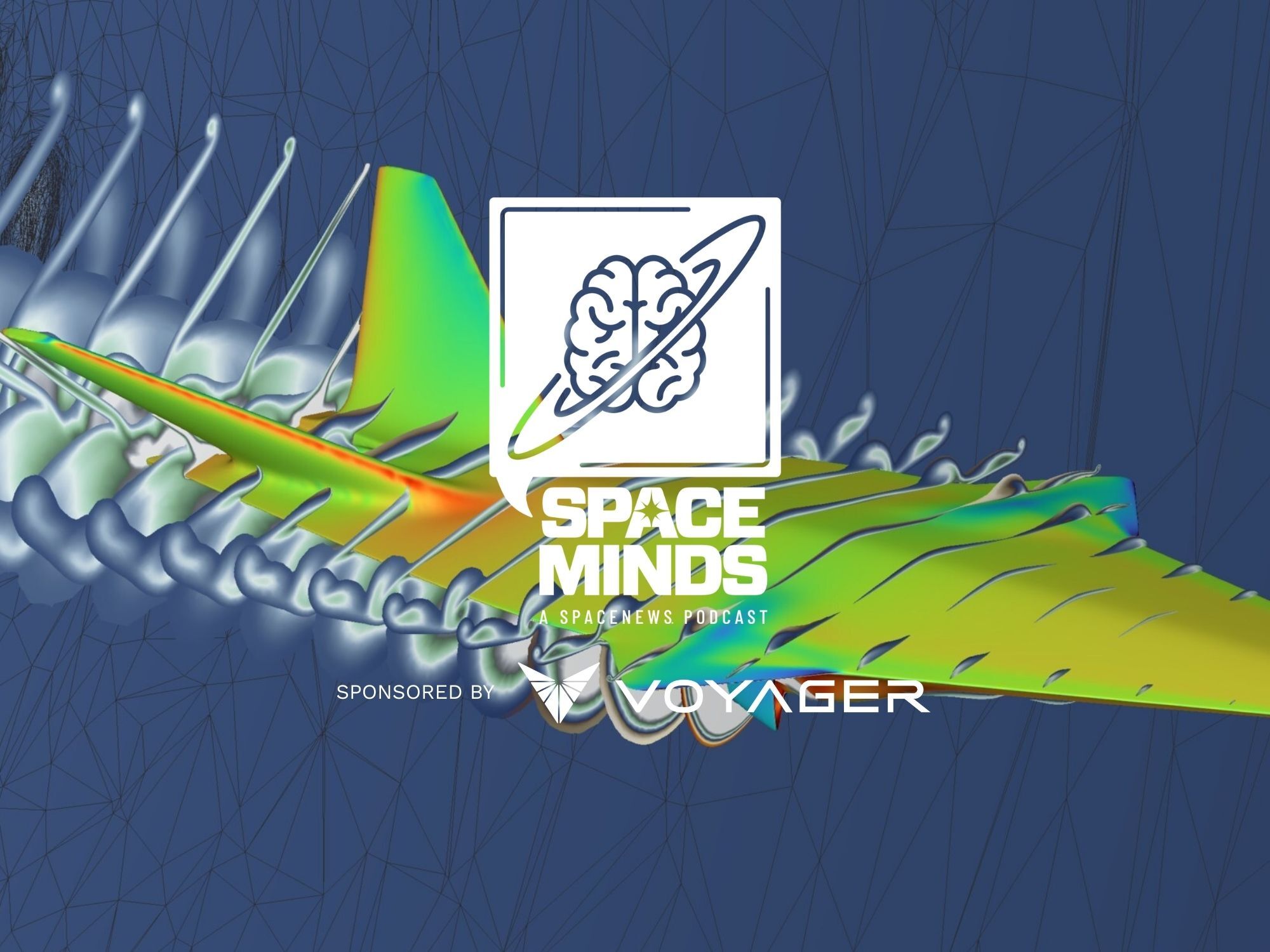
In a recent episode of Space Minds, David Ariosto interviewed Juan Alonso, the CTO and co-founder of Luminary Cloud and a professor at Stanford University, discussing the rapid advancements in aerospace engineering. Alonso emphasized how innovations in computational fluid dynamics (CFD) and physics-driven artificial intelligence (AI) are revolutionizing the design and testing of aerospace systems, enabling simulations of complex aerodynamic behaviors in mere seconds.
The conversation delved into the ecosystems that foster these developments, highlighting the unique concentration of interdisciplinary talent in Silicon Valley and the global collaborations that are shaping the aerospace landscape. Alonso pointed out that the collaboration between industry, academia, and defense partners is essential for rethinking traditional workflows to maintain competitiveness amidst rising international challenges.
Starlab Space, a leading U.S.-based global joint venture led by Voyager Technologies, is pioneering the development of the most advanced commercial space station, ensuring a sustained human presence in low-earth orbit. By leveraging decades of experience from the International Space Station (ISS), Starlab aims to combine AI-driven design and international partnerships to facilitate scientific exploration and industrial manufacturing in space.
Alonso described Luminary Cloud as a company designed to provide end-to-end capabilities for generating physics AI models, specifically in areas like CFD. He explained that CFD involves solving equations related to airflow around rockets or inside rocket engines, a process traditionally requiring significant time and computational resources. At Luminary, the goal is to expedite this process, allowing engineers to produce accurate models at a dramatically faster rate.
Alonso highlighted the transformative potential of physics-driven AI, which integrates vast amounts of simulation and experimental data into single models to enhance design processes. This development is not merely about speeding up workflows but rather about enabling significant leaps in capability—essential for addressing both commercial and defense needs swiftly.
When asked about the implications of such rapid advancements, Alonso acknowledged the inherent risks associated with increased reliance on simulations. He noted that while simulations have improved in accuracy, they are not infallible. The new paradigm of physics AI allows for a more nuanced understanding of data, combining various sources to enhance prediction reliability.
The geographical context also plays a critical role in innovation. Alonso asserted that while Silicon Valley remains a unique hub for talent and collaboration, the rise of remote communication tools like Zoom has enabled global talent to contribute significantly to aerospace advancements. However, proximity still matters in fostering the kind of interdisciplinary collaboration necessary for breakthroughs.
Reflecting on his personal journey, Alonso shared how his childhood inspirations, including a desire to become an astronaut and an early exposure to aerospace through his father’s career, shaped his professional path. He expressed optimism about the current era, where access to space and the means to innovate are more accessible than ever.
However, as competition intensifies—especially concerning hypersonics and national defense—Alonso underscored the necessity for advanced simulation technologies to keep pace. He pointed out that the collaboration with Northrop Grumman exemplifies how organizations are reimagining engineering workflows to explore new design possibilities rapidly.
As the lines between atmospheric and orbital technologies blur, Alonso noted that understanding physical principles remains paramount across disciplines. He believes the ongoing revolution in data and physics AI will reshape engineering design, facilitating exploration of numerous alternatives to find optimal solutions.
Looking ahead, Alonso emphasized the need for companies to rethink how they integrate these advanced tools into their workflows. With the potential for transformative changes in design processes, he foresees a future where companies that strategically manage their data will emerge as industry leaders. The investment in data centers and strategies to handle vast amounts of data will be critical for success.
As the aerospace sector evolves, the ability of engineers and policymakers to adapt will be tested. Alonso sees technological advancements not as replacements for human creativity but as tools that augment human decision-making, helping engineers to navigate increased complexities in design and innovation.
In conclusion, the insights shared by Alonso reveal a transformative moment in aerospace engineering, driven by advancements in AI and data management. As the industry faces both opportunities and challenges, the collaboration between academia, industry, and defense will be vital in shaping the future of aerospace.
For further details on these developments, explore Luminary Cloud and Northrop Grumman. To learn more about ongoing aerospace initiatives, visit Starlab Space.
See also Retail AI Surge: 2025 Sees 758% E-Commerce Growth Amid Industry Adoption Struggles
 Demis Hassabis and Yann LeCun Debate AGI’s Definition Amid AI’s Human-Level Capabilities
 Banking Transformation Ahead: AI and Stablecoins Set to Disrupt Industry by 2026
 India’s Job Market in 2026: Surge in High-Skill Roles Amid Salary Normalization and AI Integration
 Tsinghua University Launches TurboDiffusion, Achieving 200x Acceleration in AI Video Generation