The rapid expansion of the artificial intelligence (AI) sector has begun to raise alarms among investors, who are increasingly wary of a potentially precarious cycle of circular financing within the industry. Max Wasserman, co-founder of Miramar Capital, highlighted these concerns during an interview with Yahoo Finance, indicating that the concentration of investment in AI necessitates a more diversified portfolio to mitigate risks.
“I would be cautious on the financing aspect of OpenAI, the circular financing,” Wasserman remarked, emphasizing the need for investors to thoroughly understand their asset holdings. He warned that should the AI market “go south,” it could adversely impact broader market indices.
This circular financing cycle is exemplified by major tech companies investing substantial sums into AI startups, which in turn utilize those funds to purchase cloud services or hardware from their investors. An illustration of this dynamic is OpenAI (OPAI.PVT), named Yahoo Finance’s 2025 Company of the Year, which committed to acquiring 10 gigawatts of Nvidia’s (NVDA) chips. Nvidia, in a reciprocal manner, plans to invest up to $100 billion into OpenAI.
Wasserman cautioned that such financial arrangements might obscure significant cash burn, leading to inflated stock market valuations that do not accurately reflect underlying risks. “The stock market valuations are still elevated, given the AI trade, which skews market indices and ignores many inherent risks of the market,” he added.
As economic indicators suggest a cooling landscape — with manufacturing activities declining and layoffs on the rise — AI valuations appear increasingly detached from fundamental business realities. Wasserman warned investors to temper their expectations, stating, “I don’t think you’re going to get these double-, triple-digit returns like you have. I think you have to go to other parts of the market.”
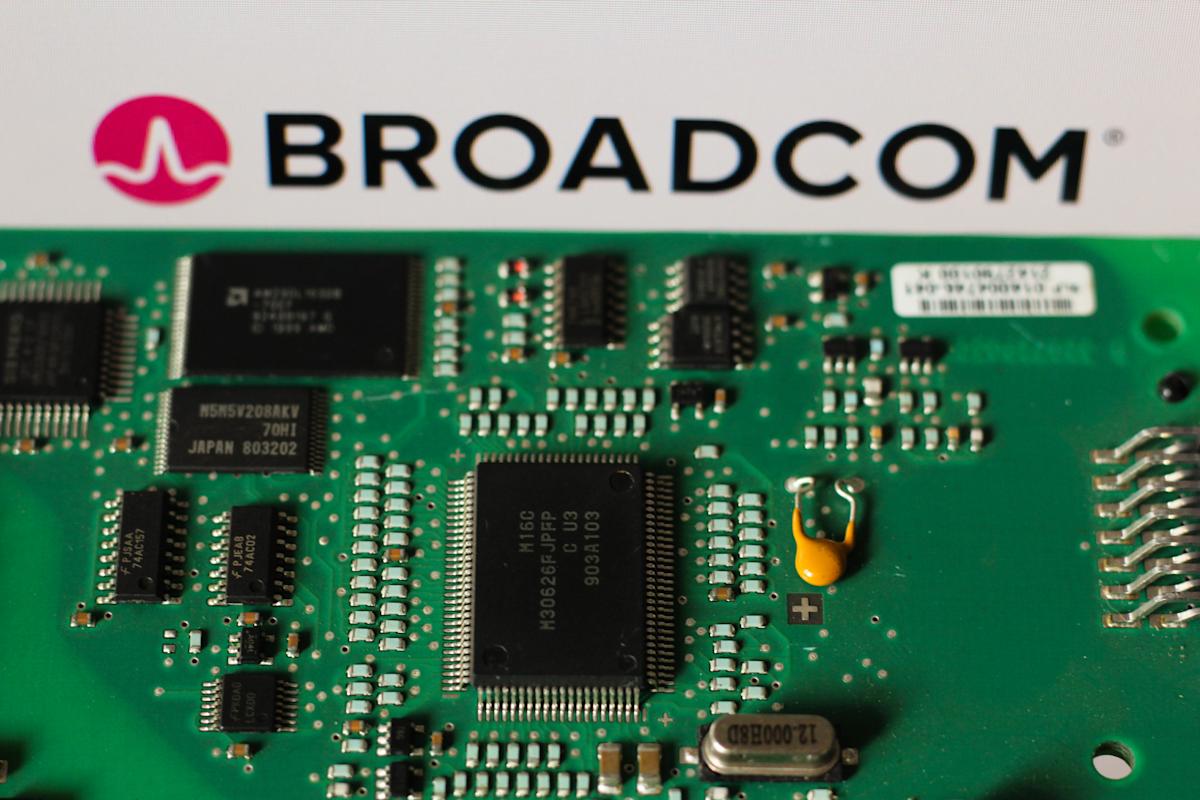
For those looking to maintain exposure in the semiconductor sector, he pointed to Broadcom (AVGO) as a more stable choice. Unlike many AI-focused firms that rely on speculative projections of future software revenue, Broadcom has cultivated a defensive edge through hardware specialization and high-margin integration strategies. This approach has yielded tangible results: Broadcom’s shares are up approximately 51% year-to-date, significantly outperforming the S&P 500’s (^GSPC) 17% gain.
Wasserman noted that Broadcom “is a little misunderstood,” highlighting its differentiated value proposition compared to AI-centric companies like Nvidia. He identified three key areas where Broadcom excels: VMware integration, customized silicon through specialized chips, and a commitment to consistent dividend distribution. “I think their growth rate and the ownership has been tremendous,” he reflected, although he acknowledged that his firm has begun to trim its position due to the stock’s substantial gain.
Looking ahead, Wasserman forecasts a shift in 2026 that could broaden market dynamics. He anticipates that the Federal Reserve may cut interest rates in response to slowing growth, potentially allowing the “other 493” stocks in the S&P 500 to gain traction. This market rotation could favor more traditional, yet reliable, cash-generating sectors, including retailers and consumer staples like Home Depot (HD) and McDonald’s (MCD), which are expected to flourish in a lower short-term interest rate environment.
Conversely, defensive stalwarts such as Chevron (CVX), AbbVie (ABBV), and Waste Management (WM) might provide a refuge of dividends should the AI bubble start to deflate. Ultimately, while Wasserman advises against outright opposition to AI investments, he underscores the importance of not overconcentrating portfolios in technology. “We continue to caution investors not to become too concentrated in technology,” he concluded, advocating for a more balanced investment strategy as the landscape evolves.
See also Meta Acquires AI Startup Manus to Enhance Platforms Amid Mixed Market Response
 Nvidia in Talks to Acquire AI 21 Labs for $3 Billion as Trump Media Launches ETFs
 Investment Firm Disruptive Warns of Imminent $20B Crisis in AI Data-Center Financing
 AI Transforms Personal Finance Management: Balancing Automation with Human Insight
 Origin Launches SEC-Regulated AI Financial Advisor Scoring 98.3% on CFP® Exam