






















































As automation rapidly advances, the labor market in the United States is poised for a transformative shift, reminiscent of the upheaval seen during the Industrial Revolution. The implications of this change, driven primarily by artificial intelligence (AI), are profound and far-reaching, presenting both opportunities and risks for workers and investors alike.
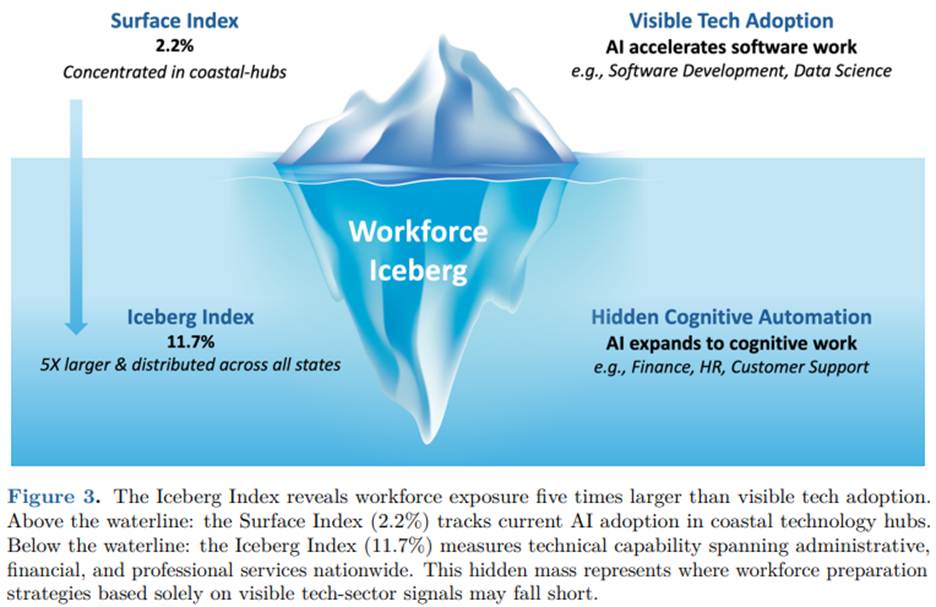
According to research conducted by the Massachusetts Institute of Technology in partnership with Oak Ridge National Laboratory, an alarming 12% of existing U.S. jobs could be replaced by AI technologies at present. This translates to approximately one in nine workers whose economic contributions could soon be matched by AI systems that require neither health insurance nor breaks. The report raises urgent questions about the future of labor in an era marked by unprecedented technological advancement.
As AI continues to evolve, its ability to perform tasks traditionally managed by humans is becoming increasingly sophisticated. For instance, AI agents may soon be capable of not only drafting emails but also managing projects and executing complex coding tasks independently. This shift threatens to eliminate the need for middle management roles, further exacerbating job displacement.
Recent layoffs across prominent companies illustrate this trend. For example, HP Inc. has announced plans to cut up to 6,000 jobs by 2028 to fund its AI initiatives. Similarly, United Parcel Service Inc. laid off 12,000 corporate positions earlier this year, explicitly linking these cuts to increased automation efforts. Meanwhile, Amazon.com Inc. is undergoing its largest corporate layoff to date. These shifts reflect a significant pivot in corporate strategy, where companies are increasingly prioritizing fixed-cost, high-efficiency AI systems over variable-cost human labor.
The traditional relationship between productivity and wages is also under strain. Historical trends suggest that as technology improves, productivity increases, leading to rising wages. However, the introduction of AI threatens to decouple this relationship. When a company leverages AI to double its output without hiring additional staff, the additional value generated typically accrues to the company’s profits rather than to employee wages. This shift raises concerns about the long-term value of human labor in a rapidly automating economy, particularly as companies pursue aggressive cost-cutting measures in response to economic downturns.
To navigate this changing landscape, workers must adapt by shifting their mindset from labor-centric thinking to a capital-oriented approach. In the face of declining labor value, investing in companies that are developing the technologies of the future may provide a more secure financial strategy. The booming AI sector represents a wealth transfer opportunity, where those who understand and invest in these changes could stand to benefit significantly.
The urgency of this situation cannot be overstated. As automation accelerates, the potential for job loss grows, leading to a bifurcated labor market divided between commodity labor and specialized “agency” roles. Workers who can leverage AI technologies to enhance their contributions will be more likely to thrive in the new economy. This necessitates a reevaluation of skill sets and a commitment to continuous learning and adaptation as the labor market evolves.
In the backdrop of this transformation, U.S. government initiatives aimed at strengthening the AI sector may further alter the economic landscape. With significant investments directed towards select American companies deemed essential for maintaining a competitive edge in AI, those who identify and invest in these firms could find themselves at the forefront of the next economic wave. The rapid rise of smaller firms following government contracts underscores the potential for lucrative returns in the AI arena.
In summary, as the United States embarks on a modern-day “Manhattan Project for AI,” the interplay between automation and labor will shape economic realities for years to come. Both workers and investors must act swiftly to adapt to a landscape marked by rapid technological change, where the only certainty is that those who fail to evolve may be left behind. The transition period will require strategic positioning to either harness the benefits of AI or mitigate its disruptive impacts.
See also Instagram’s Mosseri Calls for Urgent AI Verification Standards Amid Eroding Trust
 AI Boom: Is the $1 Trillion Spending Surge a Recipe for Market Collapse?
 Akakū Announces AI Workshop on Jan. 24 Featuring Suno, Midjourney, and ElevenLabs
 Urgent AI Safety Risks Emerge as Breakthroughs Accelerate, Warns UK Research Director















