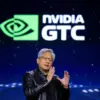
On December 24, 2025, a brief announcement in Silicon Valley signaled the end for a prospective contender in the AI chip market. The company, Groq, previously valued at $6.9 billion just three months prior, saw its founder and key team members join NVIDIA, while the remaining structure continued to operate independently under the leadership of a newly appointed CEO, the CFO.
Despite a recent financing round that attracted significant investment from firms like Blackstone, Samsung, and Cisco, the potential of Groq diminished rapidly. NVIDIA executed a historic $20 billion deal, its largest acquisition to date, eclipsing the $6.9 billion purchase of Mellanox in 2019. Approximately 90% of Groq’s workforce received cash settlements as part of the transition, leaving only a skeletal team behind.
The founder of Groq, known as the “father of TPU” for designing Google’s Tensor Processing Unit, was seen as the only serious competitor to NVIDIA in the AI inference market. Groq’s LPU chip boasted an inference capability ten times faster than NVIDIA’s GPU for specific workloads, with significantly lower energy consumption, processing up to 500 tokens per second. With the acquisition of Groq’s talent and technology, NVIDIA effectively neutralized this competitive threat.
NVIDIA refrained from issuing a press release regarding the acquisition, referring to the arrangement as “non-exclusive technology licensing + talent recruitment.” However, industry observers interpreted it as a strategic maneuver to eliminate competition while maintaining a veneer of market presence. This practice, known in Silicon Valley as “acqui-hire,” has evolved over the years, transitioning from a benign talent procurement strategy to a tool for larger companies to stifle competition.
Changing Landscape of Acquisitions
The dynamics of Silicon Valley acquisitions have shifted since earlier, more favorable transactions, such as Facebook’s $1 billion acquisition of Instagram in 2012. At that time, Instagram had only 13 employees and no advertising revenue, yet the deal was celebrated, as all employees were retained and compensated while maintaining operational independence. In contrast, recent acqui-hire transactions have seen a decline in employee benefits, with many being left without a stake following the acquisition.
In 2024, a series of significant deals, including Microsoft’s $650 million recruitment of the founder of Inflection AI and Google’s $2.7 billion acquisition of key personnel from Character.AI, highlighted this trend. These deals were structured as technology licensing and talent recruitment, allowing major corporations to acquire essential talent without formal acquisitions that might raise regulatory scrutiny. For instance, the Character.AI arrangement involved a payout to the founder and core engineers but left the majority of employees with little to show for their contributions.
The changing nature of these transactions has left many early-stage employees at a disadvantage. A partner at Khosla Ventures remarked that “early-stage employees are the biggest losers in this kind of deal,” as they find themselves with worthless stock options after lucrative buyouts for founders and core teams.
Meanwhile, in China, a contrasting ecosystem has emerged. In October 2024, OPPO’s acquisition of AI writing assistant Waveform Intelligence exemplified a different approach. This smaller acquisition, which took place just months after the company’s launch, hinted at a compressed acquisition landscape in China, where established companies more frequently opt to poach talent rather than pursue formal acquisitions. The legal environment in China also facilitates direct recruitment without significant risk, allowing companies to bypass lengthy acquisition processes.
As the AI landscape evolves, the implications of these trends are becoming increasingly evident. The shift away from traditional acquisition models risks disincentivizing talent at startups, leaving many employees feeling like bystanders in a landscape dominated by major corporations. This alteration in the startup ecosystem could have lasting repercussions, particularly as competition for skilled engineers intensifies and startup prospects dim.
In the long term, the disparity between large firms and startups raises questions about the sustainability of innovation in the tech sector. As the balance of power continues to tilt towards established giants, the path for new entrants becomes more precarious, potentially stifling the next wave of technological advancements that Silicon Valley has long been known for.
See also NVIDIA Unveils BlueField-4 AI Storage, Boosting Inference Efficiency by 5x for 2026
 Boston Dynamics Unveils Production-Ready Atlas Robot at CES 2026: 56 Degrees of Freedom, 110-Pound Lift Capacity
 Microsoft Reports $77.7B Q1 Revenue Amid Rising AI Scrutiny and Market Debate
 Finpace Unveils AI-Driven Workflow Automation, Transforming Financial Advisory Efficiency
 Invest Smart: Invest in AI Infrastructure Firms, Avoid NVIDIA’s Bubble Risk