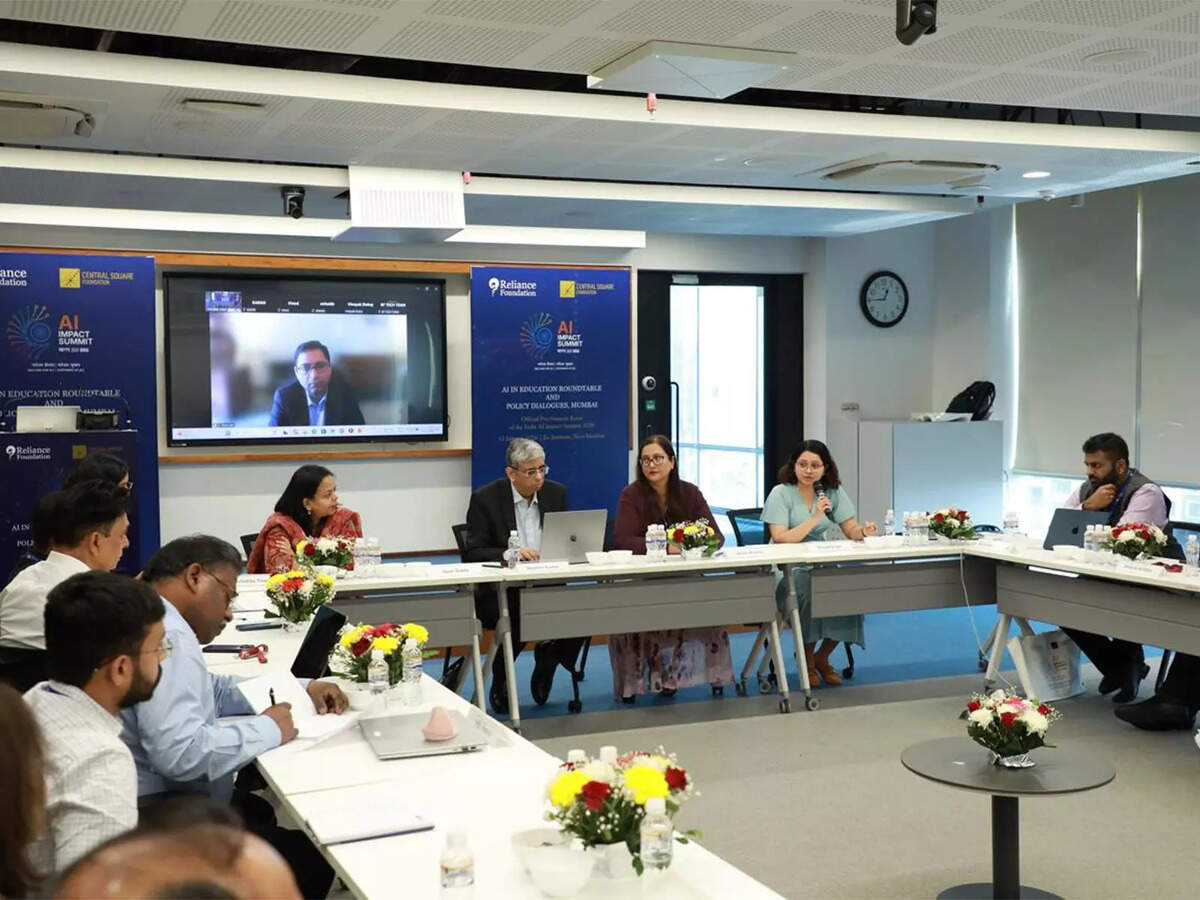
A high-level dialogue co-hosted by the Reliance Foundation and Central Square Foundation has underscored the pressing need to reimagine education systems to effectively leverage artificial intelligence for equitable and scalable learning outcomes. The half-day roundtable, held at Jio Institute in Navi Mumbai, convened over 50 leaders from philanthropy, edtech firms, academia, and the private sector as part of the official pre-summit activities for the India AI Impact Summit 2026.
During the event, participants explored how AI-enabled educational tools can transition from pilot programs to deliver tangible learning improvements, particularly in environments characterized by low resources and multilingual challenges. The discussions concluded with strategic insights aimed at guiding both national and global conversations at the forthcoming summit. Speakers emphasized the importance of sustained collaboration among governments, innovators, researchers, funders, and industry stakeholders to ensure that AI is effectively integrated into education systems, rather than treated as a standalone solution.
Delivering the keynote address, Shailesh Kumar, Chief Data Scientist at Jio and Dean of Jio Institute, called for a fundamental redesign of education systems tailored for a digital and AI-first world. “It is time to re-imagine our education system—what should it look like if it were born today—in the post-connectivity and AI era,” he stated, advocating for a transition from traditional one-size-fits-all educational models to personalized and mastery-based learning methodologies powered by AI.
Participants identified emerging AI applications in areas such as personalized instruction, teacher support, assessment, and home-based learning, with a particular focus on early childhood education and foundational literacy and numeracy. However, they cautioned that mere technological innovation does not assure enhanced learning outcomes. The importance of aligning technology with learning science, implementing inclusion safeguards, and employing outcome-based measurement was stressed as critical to realizing the full potential of these tools.
A pivotal focus of the dialogue centered on the role of philanthropy in facilitating systemic change. Speakers highlighted its significance in mitigating risks associated with early-stage innovation, supporting long-term evidence generation, and bolstering institutional capacity. Insights were shared from the LiftEd EdTech Accelerator, a multi-year initiative that has positively impacted over 3 million children, backed by the Michael and Susan Dell Foundation, Reliance Foundation, and UBS Optimus Foundation.
“Building AI and EdTech for impact is not just about the technology itself—it is about understanding the ground realities of implementing it in classrooms, homes, and communities,” remarked Vanita Sharma, advisor for strategic initiatives at Reliance Foundation. The discussion also illuminated challenges related to scaling AI-enabled learning, such as the need for multilingual content, low-bandwidth environments, shared-device usage, and seamless integration with existing government education systems.
“The next frontier for EdTech is not just innovation, but scaling proven, contextualized solutions through government systems and community adoption to drive learning outcomes at scale,” noted Gouri Gupta, senior project director for EdTech at Central Square Foundation. The consensus among participants was that AI should function as an enabler for teachers and parents, supporting equity rather than focusing solely on efficiency.
The recommendations generated from this dialogue will inform the education agenda at the India AI Impact Summit 2026, scheduled to take place in New Delhi in February. This summit aims to address the evolving intersection of technology and education, emphasizing the role of AI in shaping a more inclusive and effective educational landscape.
See also Pat Yongpradit Joins Microsoft as GM of Global Education and Workforce Policy
 Sazience and MIT AGA Launch AI System to Accelerate Medical Image Interpretation
 AI’s Role in Education Expands: 644% Surge in Job Postings Requiring Generative AI Skills
 Renaissance Appoints Gerri Martin-Flickinger as Board Chair to Drive K–12 Innovation
 AI + Education Sector Surges as Open-Source Models Drive $160 Billion Market Expansion