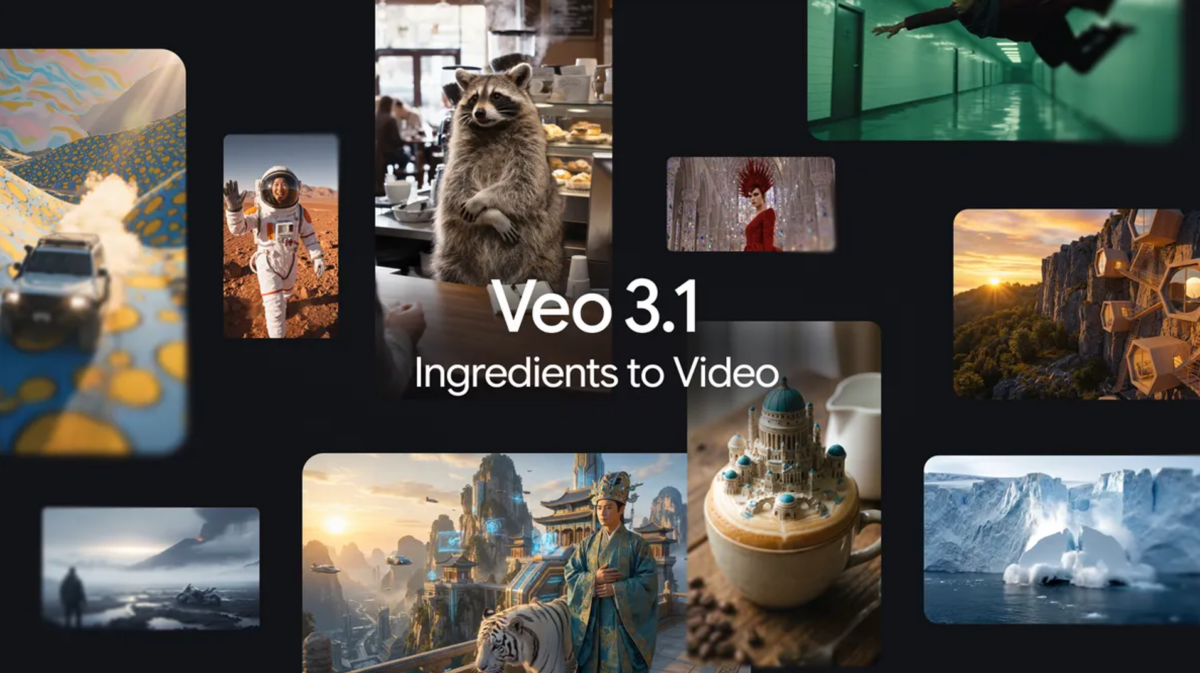
Google DeepMind has launched an update for its video generation tool, Veo 3.1, enhancing its capabilities to produce more dynamic and expressive videos from reference images. This update, which is now available across various platforms, aims to simplify the process of video creation, allowing users to maintain character consistency across scenes and seamlessly blend different elements such as textures, objects, and backgrounds. By incorporating simple text prompts, the new features enable a broader range of creative possibilities for users.
The update also introduces native support for vertical video formats, specifically 9:16, which is optimized for YouTube Shorts and the YouTube Create app, as well as other mobile platforms. With the addition of upscaling capabilities to 1080p and 4K resolution, Veo 3.1 positions itself as a strong tool for professional-grade video production. This move is likely to lead to an influx of AI-generated content on YouTube, especially within the popular Shorts format, which has rapidly gained traction among content creators.
Veo 3.1’s updates can be accessed through the Gemini app, YouTube, Flow, Google Vids, and via the Gemini API and Vertex AI. All videos generated through this platform will feature an invisible SynthID watermark, allowing viewers to identify AI-generated content. Users can verify whether a video was created using Google AI by checking the details in the Gemini app. This transparency is a notable aspect of the update, as it seeks to address growing concerns about the authenticity of digital content.
The introduction of these features reflects a broader trend in the tech industry, where generative AI tools are gaining prominence. As creators increasingly seek efficient methods to produce engaging content, tools like Veo 3.1 are positioned to meet that demand. The ability to customize and enhance videos with AI could streamline workflows for many professionals, from marketers to filmmakers, potentially altering the landscape of content creation.
As AI-generated content becomes more prevalent, the implications for creators, consumers, and platforms are significant. The ease of producing high-quality videos could democratize content creation, enabling a wider range of voices and ideas to reach audiences. However, this also raises questions about originality, copyright, and the potential for misinformation. For platforms like YouTube, navigating these challenges while fostering creativity will be critical.
Looking ahead, the advancements in Veo 3.1 align with ongoing developments in the AI landscape, where the balance between innovation and ethical considerations remains a focal point. As tools evolve, so too will the discussions surrounding their impact on society, creativity, and the digital marketplace. Google DeepMind’s updates may not only enhance personal and professional video projects but could also signal a shift in how audiences engage with AI-generated content, making it essential for all stakeholders to adapt to this changing environment.
See also DeepSeek’s Engram Breakthrough Enhances AI Performance by 3.4-5 Points, Reduces HBM Dependency
 US Approves Nvidia’s H200 Chip Sales to China Amid Ongoing Tech Rivalry
 Google AI Overviews Spread Misinformation, Forcing Brands to Revamp Digital Strategies
 Arkansas AG Tim Griffin Appoints AI Advisor to Enhance Legal Framework and Public Safety