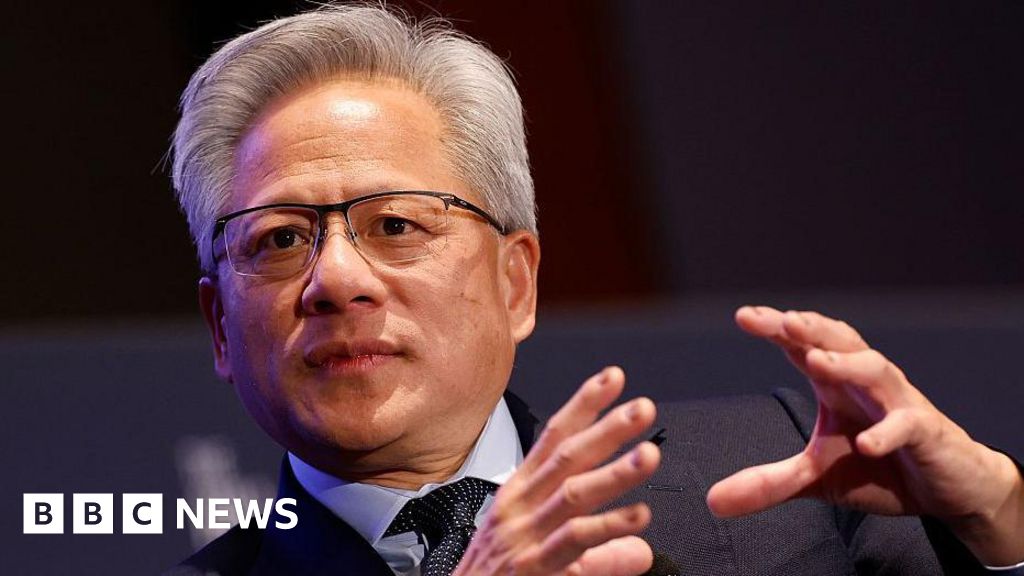
The US government has approved chip manufacturer Nvidia to sell its advanced artificial intelligence (AI) processors in China, according to a statement from the Department of Commerce on Tuesday. This decision marks a significant shift in US policy, as the H200, Nvidia’s second-most-advanced semiconductor, had previously faced restrictions due to concerns over its potential use in enhancing China’s technology sector and military capabilities.
The Commerce Department indicated that the approval for shipping the chips to China hinges on ensuring sufficient supply of the processors within the US. This move comes after former President Donald Trump expressed last month his intention to permit chip sales to “approved customers” in China, accompanied by a 25% fee on earnings generated from these sales.
The Bureau of Industry and Security within the Commerce Department clarified that the revised export policy encompasses the H200 chips as well as less advanced processors. Although the H200 chip is a generation behind Nvidia’s Blackwell processor—currently regarded as the world’s most advanced AI semiconductor and still prohibited from being sold to China—the approval reflects a complex geopolitical landscape surrounding technology exports.
Nvidia has found itself at the center of a geopolitical tug-of-war between the US and China, two competing powerhouses in the global AI race. Trump had eased chip-selling restrictions last July but mandated that Nvidia share a portion of its earnings from China with the US government. In response, Beijing reportedly urged its tech firms to boycott Nvidia’s chips intended for China and prioritize domestically manufactured semiconductors. This strategy aimed to strengthen China’s tech industry, though analysts consistently maintain that China’s semiconductor capabilities still lag behind those of the US.
Throughout 2025, Nvidia CEO Jensen Huang has actively lobbied Washington to authorize the sale of the company’s high-performance chips to China, arguing that maintaining a global market presence is crucial for US competitiveness in technology. Nonetheless, some US officials have voiced apprehensions that these chips could bolster Beijing’s military and impede American advancements in AI development.
The approval to sell the H200 chips signifies a potential reopening of market channels between the US and China, albeit under stringent conditions. As both nations continue to vie for supremacy in AI, the implications of this decision may reverberate across global technology markets, impacting innovation, supply chains, and international relations in the field of advanced computing.
See also Google AI Overviews Spread Misinformation, Forcing Brands to Revamp Digital Strategies
 Arkansas AG Tim Griffin Appoints AI Advisor to Enhance Legal Framework and Public Safety
 Microsoft Launches Community-First AI Infrastructure Plan with Five Key Commitments
 Good Tokens Expands Blockchain and AI Initiatives to Enhance Global Humanitarian Impact
 2026: Major Global Labor Law Reforms, AI Regulation, and Pay Transparency Shifts Ahead