With the significant reduction in technical barriers created by open-source large models, top-tier AI capabilities are becoming widely accessible, transitioning from the domain of major tech firms to a more inclusive infrastructure. The burgeoning billion-dollar market of “AI + Education” is attracting interest from technology giants, traditional educational institutions, and startups alike, all eager to deploy AI solutions effectively. This shift aims not to replace teachers but to enhance the educational experience through the smart integration of human and machine strengths.
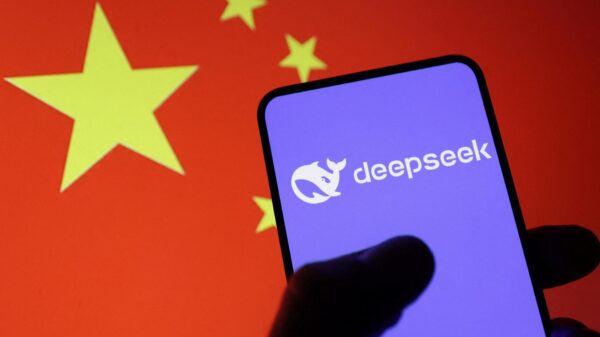
The STAR Market Daily reported on January 15 that the emergence of open-source models like DeepSeek is igniting the education ecosystem by drastically lowering the costs associated with utilizing large AI models. This transformation is leveling the playing field, allowing small and medium-sized institutions and startups to enter the market, thus achieving technological equity. As AI-powered search capabilities evolve, user decision-making paths are being reshaped. Students are beginning to transition from traditional search platforms to directly querying AI tools, such as asking, “DeepSeek, please explain Newton’s First Law in language suitable for middle schoolers.” This marks a significant transformation in knowledge acquisition methods and teaching interactions.
Generative AI technologies like ChatGPT and DeepSeek are sweeping across the global education sector, heralding a new trend in the digital education revolution. On December 30, 2025, Zhou Dawang, Director of the Department of Science and Technology and Informatization of the Ministry of Education, stated that plans are underway to issue relevant policy documents in 2026 to systematically deploy artificial intelligence education and applications, building a future-ready education system.
Under favorable policies, a total of 509 artificial intelligence education base schools are expected to be established nationwide by the end of 2025 to pilot AI-empowered educational practices. Minister of Education Huai Jinpeng has delivered AI-focused lectures to school principals and education leaders across the country, reaching over 400,000 stakeholders through a mix of online and offline methods.
While the systematic rollout of “AI + Education” is not yet fully implemented, many teachers are encouraged to incorporate AI tools into their teaching. AI technology has already been integrated into students’ daily learning and teachers’ lesson preparations. One Chinese language teacher shared her experience using AI software like DouBao and JiMeng to enhance lesson preparation, generating imagery for classical poetry and dynamically presenting content through video editing. She noted that this approach not only makes classes more engaging but also helps students concentrate better.
However, the teacher also pointed out a contradiction: despite schools discouraging early exposure to mobile phones, many students actively use AI tools to look up information and complete assignments. She emphasized that AI, as a tool, possesses no inherent qualities of good or bad. “On the positive side, it enables students to efficiently access information and inspire creativity; however, the risk lies in the over-reliance that may weaken their ability to develop deep thinking and holistic reasoning,” she noted.
The “AI + Education” wave is also impacting the offline hardware market, with AI learning devices gaining popularity among students and parents. By 2025, learning tablets will be included in the “National Subsidy” policy, reducing financial barriers and driving growth in the electronic education hardware market. A recent report from RUNTO predicts that sales of learning tablets in China will reach 6.5 million units in 2025, representing a 9.7% year-on-year increase.
The comprehensive explosion of open-source models like DeepSeek and the ecosystems fostered by platforms such as DouBao and ChatGPT are drastically lowering costs and leveling the playing field in the education sector. As traditional tech giants like Tencent and iFlytek focus on building open infrastructure, the market is rapidly welcoming various small and medium educational institutions and startups. A report from the Changjiang Securities Research Institute forecasts that the “AI + Education” industry could reach a market size of 160 billion yuan by 2027, approaching 180 billion yuan by 2030.
As the sector heats up, the competitive landscape is evolving. Companies are investing heavily in diverse areas from intelligent applications to online courses and educational hardware, leveraging their strengths in technology, content, and learning scenarios to create differentiated offerings. Traditional education technology leaders, such as TAL Education Group and New Oriental, are integrating AI hardware and software products with human emotional support wrapped around teaching content. According to China Merchants Securities International, the future of “AI + Education” will see integrated development in models, content, emotional support, and learning scenarios.
Innovative startups are seeking breakthroughs in niche areas such as AI-enabled learning lamps and writing tablets, as well as specialized tools for specific disciplines, employing multimodal AI technologies to enhance product experiences. By 2026, leading Chinese educational training companies are projected to balance revenue growth with profitability, with expected year-on-year increases in revenue and core net profit of 16% and 18%, respectively.
This transformation, driven by AI technology, supportive policies, and market dynamics, aims not to replace teachers but to enhance the educational experience itself. It signals a shift in the industry towards personalized student growth and competency development. The future of education appears poised for a harmonious integration of human and machine collaboration, suggesting a promising landscape for educational stakeholders.
See also AICertified Secures €1M to Establish Global AI Skills Certification Standard
 Mindset CoPilot Launches AI Literacy Platform to Enhance Educators’ Decision-Making
 Innovartan Technologies Launches Classview.AI, Transforming Classroom Insights with AI Analysis
 AI Transforms Education: Classrooms Embrace Chatbots for Enhanced Learning Experiences
 Schoser Talent Launches Free AI Education App to Bridge Digital Literacy Gap in Rural Areas