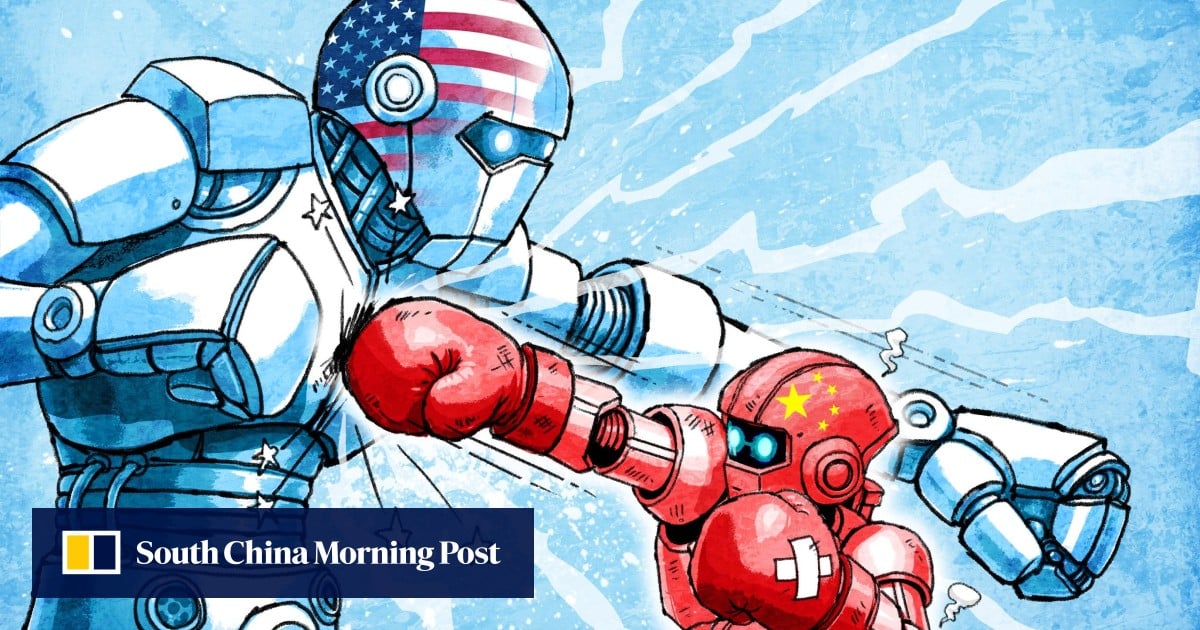
In a significant development within the ongoing U.S.-China tech rivalry, Beijing is taking steps to implement its own restrictions on advanced technology. Describing the American approach to technology policy, Jake Sullivan, the national security adviser to President Joe Biden, articulated that it resembles a “small yard, high fence,” aimed at limiting China’s access to sensitive U.S. technologies. This strategy has primarily focused on export controls, notably restricting Chinese firms’ access to products like Nvidia’s advanced chips, essential for the development of sophisticated artificial intelligence (AI) systems.
As the geopolitical landscape evolves, China appears to be shifting from a passive recipient of U.S. measures to an active participant in the decoupling process. Two notable actions at the beginning of 2026 illustrate this transition: China’s hesitancy regarding the importation of Nvidia’s high-end H200 chips, and its investigation into Meta Platforms‘ acquisition of the Chinese-founded AI startup Manus. These moves signal a broader strategy by the Chinese government to safeguard its technological sovereignty.
Earlier this week, reports emerged indicating that the Chinese government instructed domestic tech companies to refrain from purchasing Nvidia’s chips unless absolutely necessary. New regulations are expected to limit the number of advanced AI chips that local firms can import. This apparent crackdown on foreign technology aligns with a growing sentiment within China to bolster its domestic tech capabilities.
A Chinese data center employee revealed to the Post that preparations were underway to establish server stacks in Inner Mongolia utilizing H200 chips to cater to major clients, including Alibaba Group Holding and ByteDance. Despite these plans, government directives required the firm to prioritize space for domestic chips, highlighting the push for self-reliance in critical technology sectors. It is noteworthy that Alibaba owns the Post.
Experts suggest that China’s new restrictions mark a pivotal shift in the U.S.-China tech war, where the roles of offense and defense are evolving. “The offensive and defensive roles have shifted,” remarked Arisa Liu, chief director and research fellow at Taiwan Industry Economics Services, emphasizing the increasingly proactive stance that China is adopting in response to U.S. measures.
This unfolding narrative suggests a recalibration of strategies by both nations, entrenching a more competitive environment in the realm of technology. With both the U.S. and China increasingly fortifying their positions, the global tech landscape is poised for further fragmentation. The implications of these developments extend beyond national borders, raising questions about the future of international collaboration in technology and innovation.
As the U.S. and China navigate this complex interplay of competition and self-sufficiency, the potential for continued escalation looms large. Stakeholders across industries will be closely observing how these policies affect not only bilateral relations but also the broader technological ecosystem globally. The next chapters of this tech war will likely redefine the boundaries of cooperation and competition in an increasingly polarized world.
See also OpenAI Secures $10B Deal with Cerebras for 750 MW of AI Computing Power
 Nvidia’s H200 Chip Blocked by China Customs, Suppliers Halt Production Amid 1M Orders
 ST Engineering (S63.SI) Surges 2.24% to S$9.60 Amid Strong AI Contract Demand
 NVIDIA’s H100 Chip Power Consumption Hits 700W, Advanced Packaging Sector Surges 14%
 Geekom Launches GeekBook X16 Pro: Affordable 16-Inch AI Laptop Starting at $1,149