A hit song has been excluded from Sweden’s official chart after it was revealed that the “artist” behind it is an AI creation. The track, titled “I Know, You’re Not Mine” — or “Jag Vet, Du Är Inte Min” in Swedish — by a singer called Jacub, has experienced significant streaming success, topping the Spotify rankings in Sweden.
However, the Swedish music trade body, IFPI Sweden, has opted to exclude the song from the official chart, Sverigetopplistan, upon discovering its AI-generated nature. An IFPI Sweden spokesperson stated, “Jacub’s track has been excluded from Sweden’s official chart. While the song appears on Spotify’s own charts, it does not qualify for inclusion on the official chart under the current rules.”
Ludvig Werber, chief executive of IFPI Sweden, emphasized the organization’s stance: “Our rule is that if it is a song that is mainly AI-generated, it does not have the right to be on the top list.” The exclusion underscores the ongoing debate surrounding the legitimacy and authenticity of AI-generated music in the industry.
“I Know, You’re Not Mine” is characterized as an acoustic guitar-led folk-pop song, and Jacub’s profile on Spotify features a sketch of a bearded man in a T-shirt. The song has garnered over 5 million streams globally, with approximately 200,000 of those plays occurring in Sweden. It is part of a six-track EP titled “Kärleken är Bränd,” translating to “Love is Burned.”
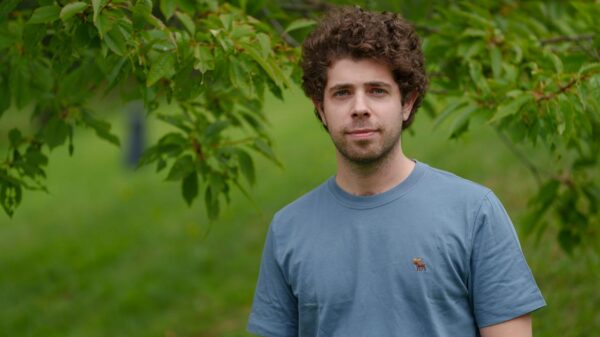
The controversy surrounding the song’s origins came to light following an investigation by journalist Emanuel Karlsten, who discovered that it was registered to a Danish music publisher, Stellar. Notably, two of the credited rights holders are employed in the company’s AI department. Karlsten remarked, “What emerges is a picture of a music publisher that wants to experiment with new music and new kinds of artists. Who likes to push the limits of the audience’s tolerance threshold for artificial music and artificial artists.”
In response, Stellar stated, “The artist Jacub’s voice and parts of the music are generated with the help of AI as a tool in our creative process.” They emphasized that they are “first and foremost” a music company run by creative professionals, rather than a technology or AI outfit. The company argued that creating a hit required more than simply using an AI tool to generate a tune.
“We are passionate and experienced music professionals who have invested large amounts of time, energy and dedication in the songwriting and production of this release, and the creation has been a process that has been guided by a clear artistic vision,” Stellar’s statement noted. They also expressed their opposition to what they referred to as “AI music slop,” a term for mass-produced AI content that lacks coherence and quality.
While Spotify does not mandate labeling music as AI-generated, the platform has been actively addressing the proliferation of AI-created spam tracks. Each play lasting more than 30 seconds generates a royalty, leading to concerns that such tracks dilute payments to legitimate artists. This development highlights the ongoing tensions between traditional music creators and the emerging landscape of AI-generated content.
Jacub is not the first AI artist to achieve popularity; a group named the Velvet Sundown amassed over 1 million streams on Spotify last year before it was revealed that the entire band, including its promotional images and backstory, was generated by AI. Its most popular song has since accumulated 4 million streams.
Ed Newton-Rex, a composer and advocate for artist copyright protection, articulated the necessity for mandatory AI labeling. He stated, “If Spotify told users when they were listening to AI music, this wouldn’t have made it so high in the charts, taking streams and royalties away from human musicians. Governments must require that AI-generated works be prominently labelled as a matter of urgency.”
In a significant move last year, Spotify, headquartered in Sweden, announced its support for a new industry standard aimed at disclosing AI usage in track creation. This initiative is being developed by a tech and music industry-backed nonprofit called DDEX, although Spotify has stated that participation in this labeling standard will be voluntary.
As the debate around AI in music continues to evolve, the case of Jacub highlights the challenges faced by the music industry in defining authenticity and artistic value in an age of rapid technological advancement. The outcome of this situation may influence future policies and perceptions regarding AI-generated content in the creative sector.
See also NYSE Pre-Market Update: Tech Gains on AI Demand; U.S. Options for MSCI Indexes by 2026
 Hudson Williams Opens Dsquared2 Runway with AI-Enhanced Carly Simon Classic
 Peter Thiel Shifts Investment from Nvidia to Apple and Microsoft Amid AI Evolution
 Peter Thiel Sells Nvidia, Invests in Apple and Microsoft Amid AI Market Shifts