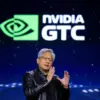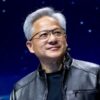
Peter Thiel has divested his entire stake in Nvidia, reallocating those funds into Apple and Microsoft as part of a strategic shift within his hedge fund, Thiel Macro. This move, documented in the fund’s recent 13F filing, comes at a time when Nvidia’s stock has surged nearly 1,000% amidst the ongoing artificial intelligence (AI) revolution, making it the most valuable company globally.
Thiel’s decision to exit Nvidia, particularly given the company’s recent valuation of approximately $4.5 trillion, may seem surprising at first glance. Nvidia has garnered immense popularity among both retail and institutional investors, leading some to view the stock as a cornerstone of tech investment. However, Thiel is known for his contrarian approach, often seeking opportunities in areas overlooked by the broader market.
Nvidia’s rapid ascent has transformed its stock into more of a macroeconomic indicator, increasingly influenced by geopolitical factors, tariffs, and capital expenditure trends. As the market becomes saturated with Nvidia holders, Thiel’s pivot suggests he is looking beyond the immediate gains associated with the AI boom. This change in strategy underlines a potential shift in Nvidia’s risk profile, as its growth narrative becomes entangled with broader economic variables.
In contrast, Thiel’s new investments in Apple and Microsoft may reflect a long-term vision. Both companies, previously viewed as slower-moving entities in the tech space, are well-positioned to capitalize on the evolving AI landscape. Apple, while not directly developing cutting-edge AI technologies, maintains a robust ecosystem encompassing over 2 billion devices. This extensive network allows Apple to derive revenue from third-party developers leveraging its infrastructure, effectively creating a “rental” model for AI products and services.
Microsoft’s strategy diverges significantly; it is actively integrating AI into its operating systems and cloud infrastructures. With Azure at the forefront and tools like GitHub and enterprise software including Office and Teams, Microsoft is establishing itself as a central player in AI development. The company’s enterprise lock-in creates significant barriers for customers considering alternatives, positioning it strongly against competitors.
The backdrop of Nvidia’s soaring value and the crowded nature of its investor base raises questions about the sustainability of its growth. Thiel’s investment choices may signal a belief that the immediate gold rush in AI, likened to the surge in demand for Nvidia’s GPUs, is inherently transient. Instead, he appears to favor companies that can sustain long-term value through established infrastructures and broad market reach.
To illustrate this concept, one might consider Nvidia as a “pick and shovel” supplier in a gold rush. While such suppliers can prosper in the short term, the broader landscape must be navigated with care. In contrast, companies like Apple and Microsoft could be seen as landowners, enjoying the compounded benefits of their extensive platforms long after the initial excitement subsides. As AI technology evolves, these companies are likely to dominate the ecosystem, enabling them to extract value from diverse AI applications.
Thiel’s recent moves may reflect a broader investment philosophy that prioritizes risk-adjusted returns, especially in an environment where Nvidia’s stock has become a widely accepted choice among investors. By reallocating his capital into Apple and Microsoft, Thiel could be positioning himself for the next phase of tech evolution, with an eye toward the substantial growth potential these companies represent as they adapt to the demands of an AI-driven future.
Ultimately, Thiel’s strategy offers insights into a shifting landscape within the tech sector, where the focus is increasingly on sustainable, long-term growth rather than immediate gains. As companies like Apple and Microsoft evolve into influential players in the AI domain, their ability to leverage existing customer bases and infrastructure could solidify their positions well into the next decade.
See also OpenAI Introduces Ads in ChatGPT for U.S. Users, Aims to Expand AI Accessibility
 Opera’s One R3 Launch: A Game-Changer for Investors Amid AI Risks and Growth Potential
 Ex-Google Engineer Accused of Stealing AI Trade Secrets for China in High-Stakes Trial
 Global Call for AI Regulation Urges Accountability to Safeguard Democracy, Says National Council Chair
 Booking Holdings Leverages AI Amid Visa Challenges; Earnings Growth at Risk