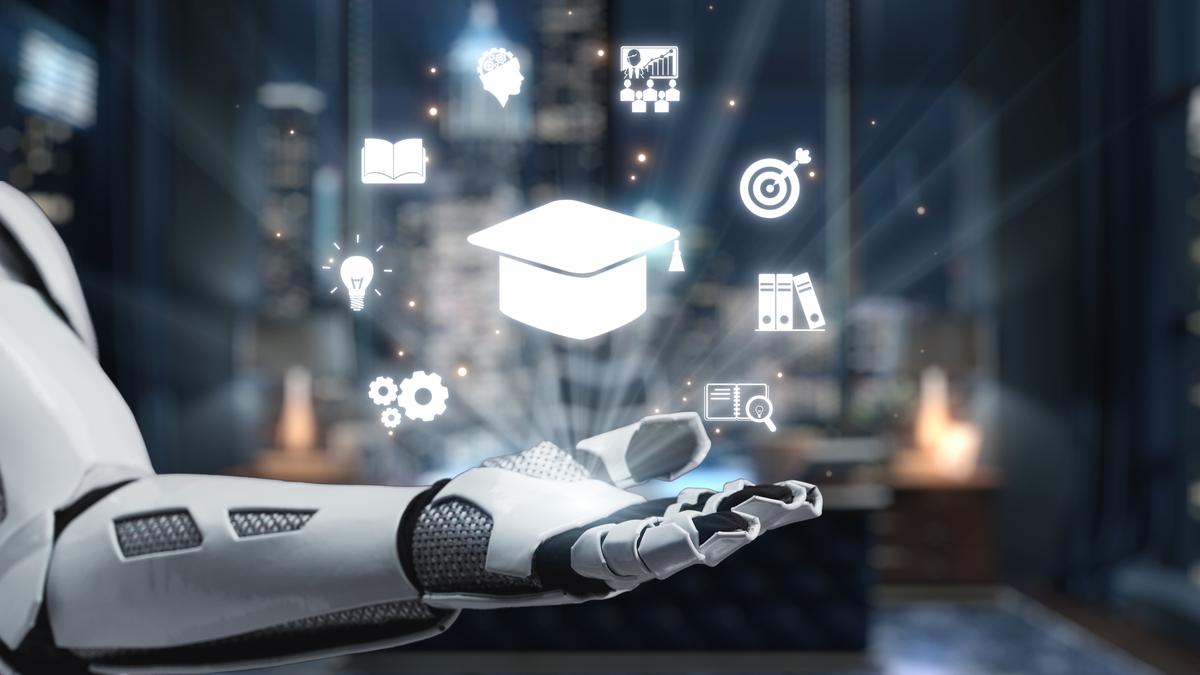
As artificial intelligence (AI) continues to reshape the global job market, the World Economic Forum (WEF) reports that AI-related roles are not only among the fastest-growing job categories but are expected to change employability skills by nearly 70% over the next five years. This evolution is particularly critical for India, where the National Education Policy (NEP) 2020 has highlighted the need for technology integration in educational curricula. The University Grants Commission (UGC) and the All India Council for Technical Education (AICTE) are already working on policies to incorporate AI courses into existing programs while also offering standalone AI degrees. While these initiatives are promising, their success hinges on establishing a robust digital infrastructure in higher education institutions (HEIs) to fully harness AI readiness.
AI readiness is crucial, as it directly influences student placements and long-term employability. Current reports indicate that the demand for graduates equipped with AI skills is growing faster than the number of students being trained in this field. This gap presents HEIs with a significant opportunity to cultivate a skilled AI workforce. However, they must also address challenges such as plagiarism, unethical AI usage, data privacy, and cybersecurity effectively.
AI can significantly impact HEIs in two primary areas. First, students trained in AI can secure premium corporate positions and lead digital or AI-driven entrepreneurship efforts. With nearly 50 million students enrolled in India’s higher education ecosystem, the nation holds the potential to bridge the global demand-supply gap for skilled manpower while also becoming a hub for research and innovations to address pressing challenges, including those posed by AI. Secondly, AI has the capacity to transform how HEIs deliver services, conduct training, and improve operations. This includes enabling personalized learning, streamlining administrative tasks, preparing teachers to teach AI courses, and implementing automated assessments to uphold academic integrity.
To realize these transformations, purpose-built digital infrastructure is essential. This encompasses high-speed networks capable of large-scale data transfers, robust data storage systems, and integrated learning management systems equipped with AI tools. A pressing need exists for an interconnected ecosystem that clearly defines the roles of each stakeholder. Government initiatives, such as the AI Workforce Acceleration Plan and the Multidisciplinary Education and Research Improvement in Technical Education (MERITE), aim to enhance digital infrastructure, smart classrooms, and faculty development.
Strategic collaboration among government bodies, industry leaders, and financial institutions is critical to fund necessary infrastructure investments, sponsor research, design relevant courses, and train educators. Additionally, a comprehensive policy framework governing and regulating AI is essential, especially in light of recent data privacy regulations. The establishment of a regulatory body to facilitate growth, audit institutional readiness, and provide standardized toolkits for AI digital infrastructure is worth discussing.
HEIs can position themselves as centers of excellence and innovation, conducting extensive research on AI, developing ethical, sustainable solutions, and training future workforces. The United States has been a pioneer in fostering partnerships between government, industry, and HEIs to enhance AI readiness. For instance, Arizona State University has collaborated with OpenAI to integrate AI into its curriculum, research, and operations. Furthermore, the Stargate Initiative aims to invest $500 billion in AI infrastructure by 2029, focusing on high-performance GPUs, AI accelerators, cooling systems, and high-bandwidth networks.
Building AI-ready institutions is vital for boosting economic competitiveness, enhancing student employability, and driving technological innovations. By prioritizing purpose-built AI infrastructure, learning from effective international models, and establishing strong partnerships, India has the opportunity to overhaul its higher education system and emerge as a global leader in AI innovation.
See also AI Challenges Educational Purpose, Shifting Focus from Inward Reflection to Future Outcomes
 Melania Trump Promotes AI in Education, Urges Human Curiosity for True Innovation
 Google Launches TranslateGemma: Open AI Models for Offline Translation in 55 Languages
 Anthropic Appoints Irina Ghose as Managing Director of India to Drive AI Adoption
 Bett London 2026 Spotlights AI with 15 Must-See Events for EdTech Leaders