Chemists at Yale University have developed a groundbreaking AI-powered platform called MOSAIC that aims to streamline the complex process of drug discovery. In collaboration with researchers from the Boehringer Ingelheim Pharmaceuticals US unit in Connecticut, the new framework offers a digital guide to generating experimental procedures for chemical synthesis, including for previously unreported compounds. This innovation addresses the challenges posed by the vast and ever-growing body of chemical research that often overwhelms practitioners.
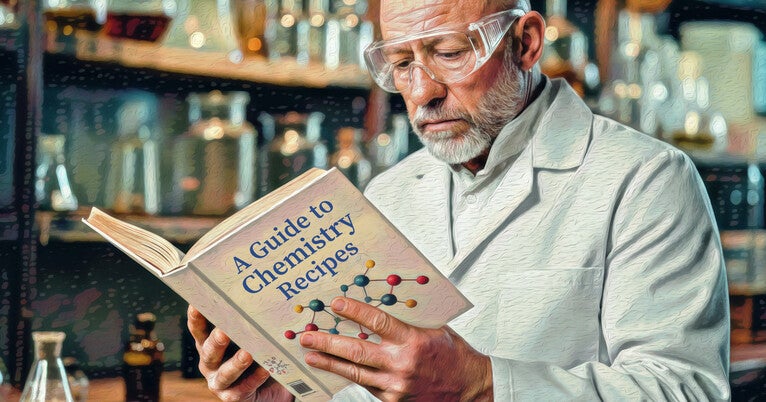
According to Victor Batista, a professor of chemistry at Yale and co-corresponding author of a study published in the journal Nature, “Chemistry has accumulated millions of reaction protocols, but making practical use of that knowledge remains a bottleneck.” The MOSAIC system is designed to convert this information overload into actionable laboratory procedures, akin to consulting a recipe book when preparing a meal.
The MOSAIC framework operates with the expertise of 2,498 individual AI “experts”, each representing specialized knowledge in various chemistry-related topics. This approach allows chemists to efficiently navigate the multitude of reaction protocols that exist, vastly improving the functionality compared to traditional AI chemistry systems that rely on a single, large model.
“Chemists follow recipes to synthesize molecules, just like chefs follow recipes from a cookbook,” said Timothy Newhouse, another co-corresponding author of the study. He emphasized that MOSAIC enables chemists to quickly retrieve protocols, making synthetic chemistry more accessible, similar to how platforms like ChatGPT have simplified recipe searches.
The researchers highlighted that MOSAIC was able to successfully synthesize over 35 previously unreported compounds, demonstrating its capability to realize diverse chemical spaces, including pharmaceuticals, catalysts, advanced materials, agrochemicals, and even cosmetic products. The system also features measurable uncertainty estimates to help users prioritize their experimental approaches.
MOSAIC’s open-source nature opens the door for future compatibility with emerging AI models, enhancing its utility in real-world experimentation. As Sumon Sarkar, a postdoctoral fellow in Newhouse’s lab, stated, “At a high level, MOSAIC functions like a smart cookbook for new recipes and Google Maps for navigating chemical synthesis.” This positions the platform to significantly advance how chemists turn extensive knowledge into detailed, reproducible synthetic procedures.
The study’s authors from Yale include Wenxin Lu, Patrick Loftus, Tianyin Qiu, Yu Shee, Abbigayle Cuomo, John-Paul Webster, and Robert Crabtree, the CP Whitehead Professor of Chemistry Emeritus. Additional contributions came from H. Ray Kelly, Vidhyadhar Manee, Sanil Sreekumar, and Frederic Buono at Boehringer Ingelheim Pharmaceuticals.
Support for this innovative research was partially provided by Boehringer Ingelheim Pharmaceuticals and the National Science Foundation‘s Engines Development Award. As the field of chemistry continues to evolve, tools like MOSAIC may reshape how researchers approach molecule synthesis, making it more efficient and accessible than ever before.
See also UAE Unveils AI-Powered Trade Platform to Transform Global Trade Dynamics
 China’s AI Investment Surges to $650B, Narrowing Tech Gap with U.S. Amid Power Shortages
 Yale’s MOSAIC AI Platform Accelerates Drug Discovery by Synthesizing 35 New Compounds
 Grok Faces Global Backlash Over Deepfake Nudes Amid Australia’s Regulatory Challenges