Chemists at Yale University, in collaboration with researchers from the U.S. unit of Boehringer Ingelheim Pharmaceuticals in Connecticut, have developed an innovative AI-powered platform called MOSAIC that aims to expedite the drug discovery process by providing a comprehensive guide for chemical synthesis. The platform, which leverages a series of digital “experts,” is designed to assist chemists in generating experimental procedures for both existing and novel compounds, addressing a significant bottleneck in the field.
Victor Batista, who leads the research and serves as the co-corresponding author of a recent study published in the journal Nature, explained that the wealth of reaction protocols available in chemistry has historically made practical application challenging. “Chemistry has accumulated millions of reaction protocols, but making practical use of that knowledge remains a bottleneck,” Batista stated. “MOSAIC is designed to transform that information overload into actionable laboratory procedures.”
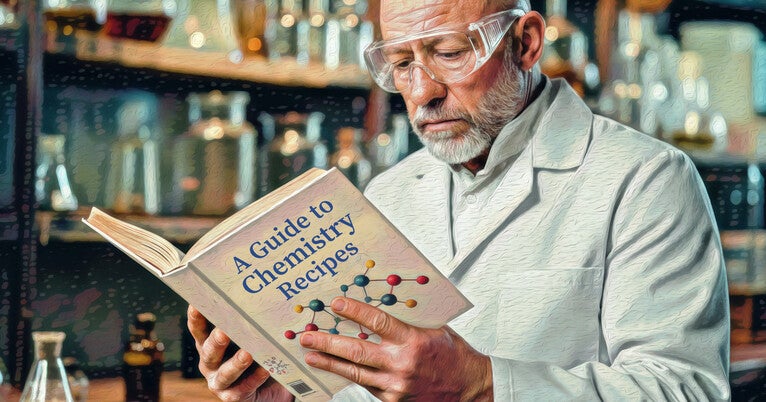
MOSAIC’s unique structure consists of 2,498 individual AI “experts”, each encapsulating the knowledge of leading practitioners in various chemistry-related topics. This approach contrasts with existing AI chemistry systems, which typically rely on a single, large model. Timothy Newhouse, a professor of chemistry at Yale and co-corresponding author of the study, noted, “Chemists follow recipes to synthesize molecules, just like chefs follow recipes from a cookbook.” He added that MOSAIC simplifies the process of finding protocols, likening its utility to how ChatGPT has made discovering new recipes easier.
The potential applications of the MOSAIC framework are vast, spanning sectors from pharmaceuticals to advanced materials. According to Haote Li, a key contributor to the study, MOSAIC outperforms commercial large language models by enabling users to access a diverse range of chemical reactions and syntheses. “We demonstrated in this work that such an approach outperforms commercial large language models on similar tasks while realizing vast compounds across truly diverse chemical spaces,” Li remarked.
The Yale team successfully synthesized over 35 previously unreported compounds using MOSAIC, highlighting the platform’s capabilities in generating actionable synthetic pathways. Additionally, the MOSAIC framework offers users measurable uncertainty estimates, providing insights into how closely a request fits into a particular expert’s domain. This feature allows chemists to prioritize their experimental efforts effectively.
Designed with open-source accessibility in mind, MOSAIC is also compatible with future AI models, facilitating ongoing advancements in the field. “Chemistry has evolved from books to databases, and now to AI-guided navigation,” said Sumon Sarkar, a postdoctoral fellow in Newhouse’s lab. “At a high level, MOSAIC functions like a smart cookbook for new recipes and Google Maps for navigating chemical synthesis.”
The research team includes several co-authors from Yale, such as Wenxin Lu, Patrick Loftus, Tianyin Qiu, Yu Shee, Abbigayle Cuomo, John-Paul Webster, and Robert Crabtree, along with contributors from Boehringer Ingelheim Pharmaceuticals, including H. Ray Kelly, Vidhyadhar Manee, Sanil Sreekumar, and Frederic Buono. Support for the study was provided in part by Boehringer Ingelheim and the National Science Foundation‘s Engines Development Award.
As the landscape of drug discovery continues to evolve, tools like MOSAIC represent a significant shift toward more efficient and informed experimental processes. By integrating vast amounts of chemical knowledge into a usable format, MOSAIC not only enhances the capabilities of chemists but also promises to accelerate the development of new compounds and therapies, potentially transforming the future of drug discovery.
See also Grok Faces Global Backlash Over Deepfake Nudes Amid Australia’s Regulatory Challenges
 World Economic Forum 2026 Opens Amid Geopolitical Tensions and AI Innovations
 Hassabis Reveals Trillion-Dollar Opportunity in Physical AI; 51WORLD Leads Breakthroughs
 OpenAI Achieves $20B Revenue as Computing Capacity Triples to 1.9 Gigawatts
 IBM’s Q4 Earnings Loom: Analysts Raise Price Targets Amid AI and Hybrid Cloud Growth