











































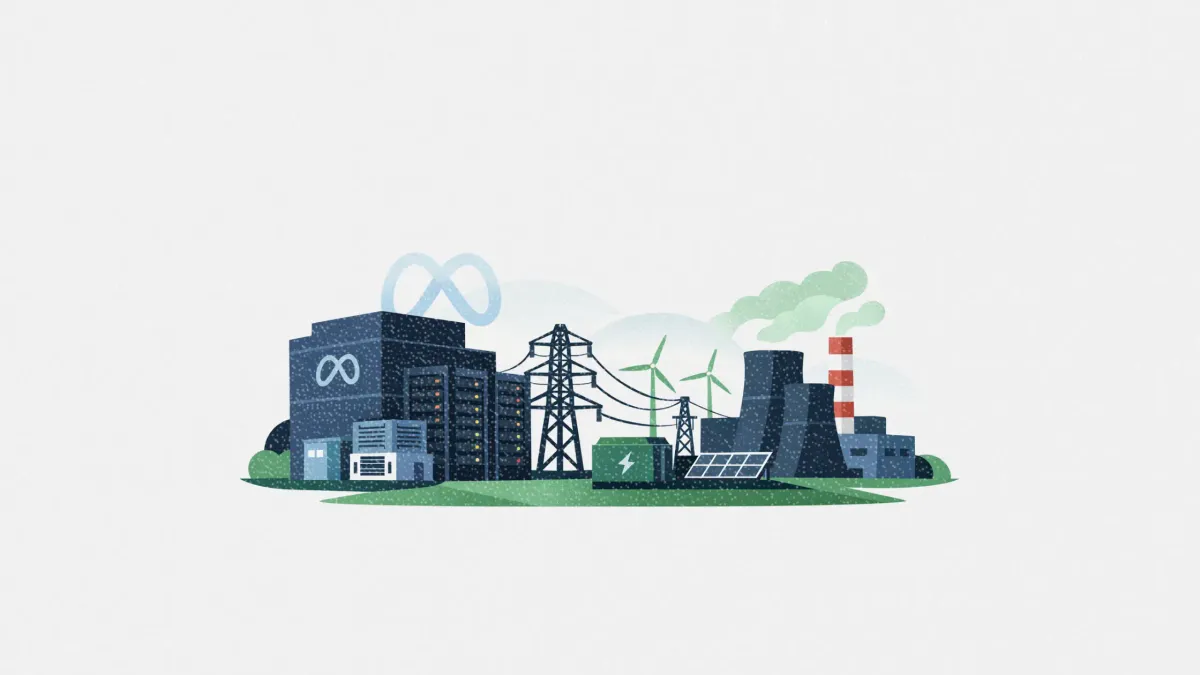
Meta is intensifying its commitment to artificial intelligence (AI) by embarking on an ambitious initiative called Meta Compute, aimed at establishing a robust energy-intensive infrastructure. Announced by CEO Mark Zuckerberg, this initiative signals Meta’s desire to not only train AI models but also to build the power sources necessary to run them, positioning the company as a serious contender in the rapidly evolving AI landscape traditionally dominated by tech giants like Microsoft, Amazon, and Google.
Meta Compute encompasses a broad spectrum of development, focusing on custom hardware, data centers, and partnerships with energy providers and governments. Zuckerberg emphasized the scale of this undertaking, stating that Meta plans to generate tens of gigawatts of energy in the upcoming decade, with potential growth into the hundreds of gigawatts. To put this in perspective, one gigawatt can power approximately 750,000 homes, showcasing the vast energy requirements that Meta anticipates as it scales its AI capabilities.
This strategic pivot towards infrastructure investment aligns with Meta CFO Susan Li’s previous comments during an earnings call, where she highlighted that such investments would become a “core advantage” in creating competitive AI products and experiences. The move is indicative of a broader trend within the tech industry, where companies are racing to secure their energy needs amidst soaring demands driven by generative AI technologies. Industry estimates suggest that data center energy consumption in the U.S. could balloon from 5 GW to 50 GW over the next decade, further underscoring the urgency of this initiative.
Three leaders have been appointed to spearhead the Meta Compute project, each bringing significant expertise to the table. Santosh Janardhan, who heads Global Infrastructure, will focus on technical architecture and operations across Meta’s data center fleet. Daniel Gross, a co-founder of Safe Superintelligence and former OpenAI executive, will manage long-term capacity strategy and supplier relationships. Dina Powell McCormick, Meta’s new President and Vice Chairman, will coordinate infrastructure investments with governments. This leadership team reflects Meta’s intent to treat infrastructure development as a strategic business differentiator.
Meta’s ambitions in the AI infrastructure space are not occurring in isolation. Microsoft has been making aggressive investments in supercomputing, particularly through its partnerships with OpenAI, while Alphabet has bolstered its capabilities by acquiring the data center firm Intersect. As generative AI continues to fuel energy demands, Meta’s proactive approach aims to preempt supply chain bottlenecks and decrease reliance on external vendors, potentially setting the stage for a more self-sufficient infrastructure.
For marketers, the implications of Meta Compute are multifaceted, even if they are not directly involved in the building of servers or energy grids. The initiative could significantly influence the development of Meta’s AI tools and platform performance. Notably, by controlling its hardware and software stack, Meta could deliver more efficient and exclusive tools across its platforms, including Facebook, Instagram, and WhatsApp. This could lead to quicker rollouts of proprietary language models and services, enhancing advertising technology and creative tools available for marketers.
Additionally, the possibility of Meta evolving its internal AI capacity into external cloud service offerings looms on the horizon. Although not currently positioned as a direct competitor to established cloud giants, the Meta Compute initiative suggests that the company may leverage its infrastructure to provide B2B services down the line.
As the energy consumption associated with AI grows, brands with strong environmental, social, and governance (ESG) commitments may begin to scrutinize Meta’s role in energy production. While some may find Meta’s involvement in energy infrastructure appealing, others could perceive it as a concern, urging brands to evaluate how this aligns with their own sustainability goals.
Zuckerberg’s announcement reveals a clear intention for Meta to transition from merely consuming AI infrastructure to taking a commanding role in its development and management. As this initiative unfolds, it places Meta in direct competition with cloud service leaders, reshaping how marketers will interact with AI services and tools in the coming years. Ultimately, Meta Compute aims to establish a foundational infrastructure that could become a critical aspect of Meta’s business strategy, influencing not just the company’s future but also the broader landscape of AI and digital marketing.
See also Notre Dame Secures $50.8M Grant to Advance Ethical AI Framework Amidst Tech Revolution
 AI Leaders Warn: Junior Roles Risk Decline as Anthropic and DeepMind See Early Signs
 Trump Shares AI Image of US Claiming Greenland, Leaks Flattering Texts Before Davos Summit
 Markets Defy Geopolitical Turmoil as AI and Data Centers Propel U.S. Growth, Blackstone CEO Says
 Samsung Reveals Major Bixby Overhaul with Perplexity AI for One UI 8.5