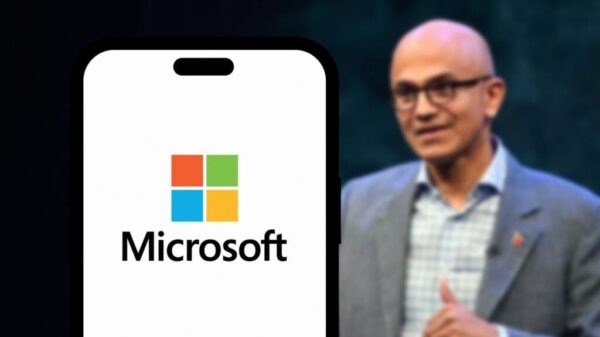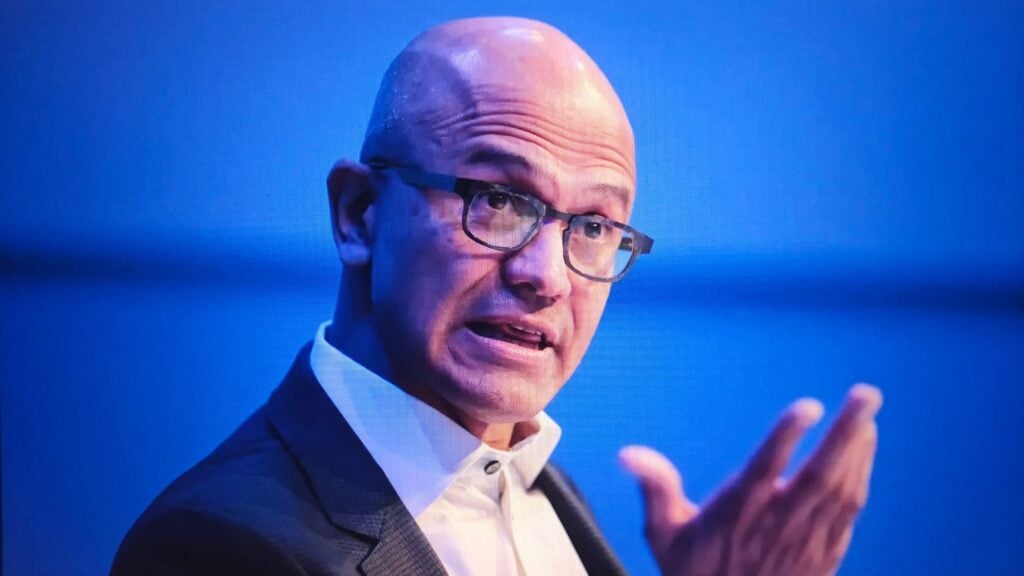
Microsoft Corp. (NASDAQ:MSFT) CEO Satya Nadella remarked that the fierce competition in the artificial intelligence (AI) sector is not only beneficial but also a catalyst for growth within the technology industry. Speaking during a recorded appearance on the “All-In” podcast from Davos, Nadella characterized the current AI landscape as “pretty intense,” but he maintained that this intensity is not necessarily negative.
Nadella expressed that the influx of new competitors every decade helps keep Microsoft “fit,” and he welcomed this pressure as a means to foster innovation. “The way I always think is it’s always helpful when you have a complete new set of competitors every decade because that keeps you fit,” he said, adding, “It’s a pretty intense time. I’m glad there’s the competition.”
Reflecting on his tenure at Microsoft since joining in 1992, Nadella recalled that Novell was then viewed as a significant competitor. Novell later lost its market dominance and was acquired in 2011. He framed current competition within the broader context of an evolving economy, predicting that technology’s role as a share of U.S. GDP will grow in the coming years. “At the end of the day, when I look at it as a percentage of GDP, five years from now, where will tech be? It will be higher,” he stated.
Moreover, Nadella emphasized Microsoft’s strategy of prioritizing customer needs over viewing every company as a rival, which contrasts with the competitive mindset championed by entrepreneur Peter Thiel.
In the backdrop of Nadella’s comments, the AI sector continues to heat up, with companies like Alibaba Group Holding Ltd. (NYSE:BABA) and Alphabet Inc. (NASDAQ:GOOG) navigating the challenges of increasing demand. Earlier, Alibaba’s stock saw a rise following news that China might permit limited imports of Nvidia Corp. (NASDAQ:NVDA) H200 AI chips, although those gains subsequently moderated. Nvidia had previously restricted sales of the H200 chips to China as regulators considered limitations and domestic chip requirements. Reports indicated that Alibaba is seeking over 200,000 units of the H200.
On the other hand, Google executives indicated that the company would need to double its AI serving capacity every six months to keep pace with surging demands. Despite having raised capital spending, Google CEO Sundar Pichai stated the company does not intend to make drastic increases in spending in 2026, opting to focus instead on enhancing infrastructure efficiency. Pichai labeled 2026 as an “intense” year for AI competition, underscoring the growing stakes in the sector.
As the AI race intensifies, investor and entrepreneur Mark Cuban has drawn parallels between the current landscape and the 1990s search-engine boom. He cautioned that this fervent competition could lead to one dominant player emerging, while excessive spending might trigger a bubble in the industry.
As companies vie for supremacy in the rapidly evolving AI sector, the implications for innovation, market dynamics, and economic growth are profound. Nadella’s insights, along with the actions of major players like Alibaba and Google, illustrate the strategic adjustments being made in response to both the challenges and opportunities presented by this transformative technology.
See also FlashLabs Launches Chroma 1.0, First Open-Source Real-Time Voice AI with 135ms Latency
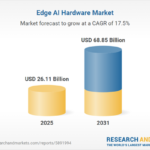 Edge AI Hardware Market to Reach $68.85 Billion by 2031, Driven by IoT Growth and AI Demand
 Neurophos Raises $110 Million to Advance Exaflop-Scale Photonic AI Chips for Data Centers
 Stanford HAI and Swiss National AI Institute Form Alliance for Human-Centered AI Research