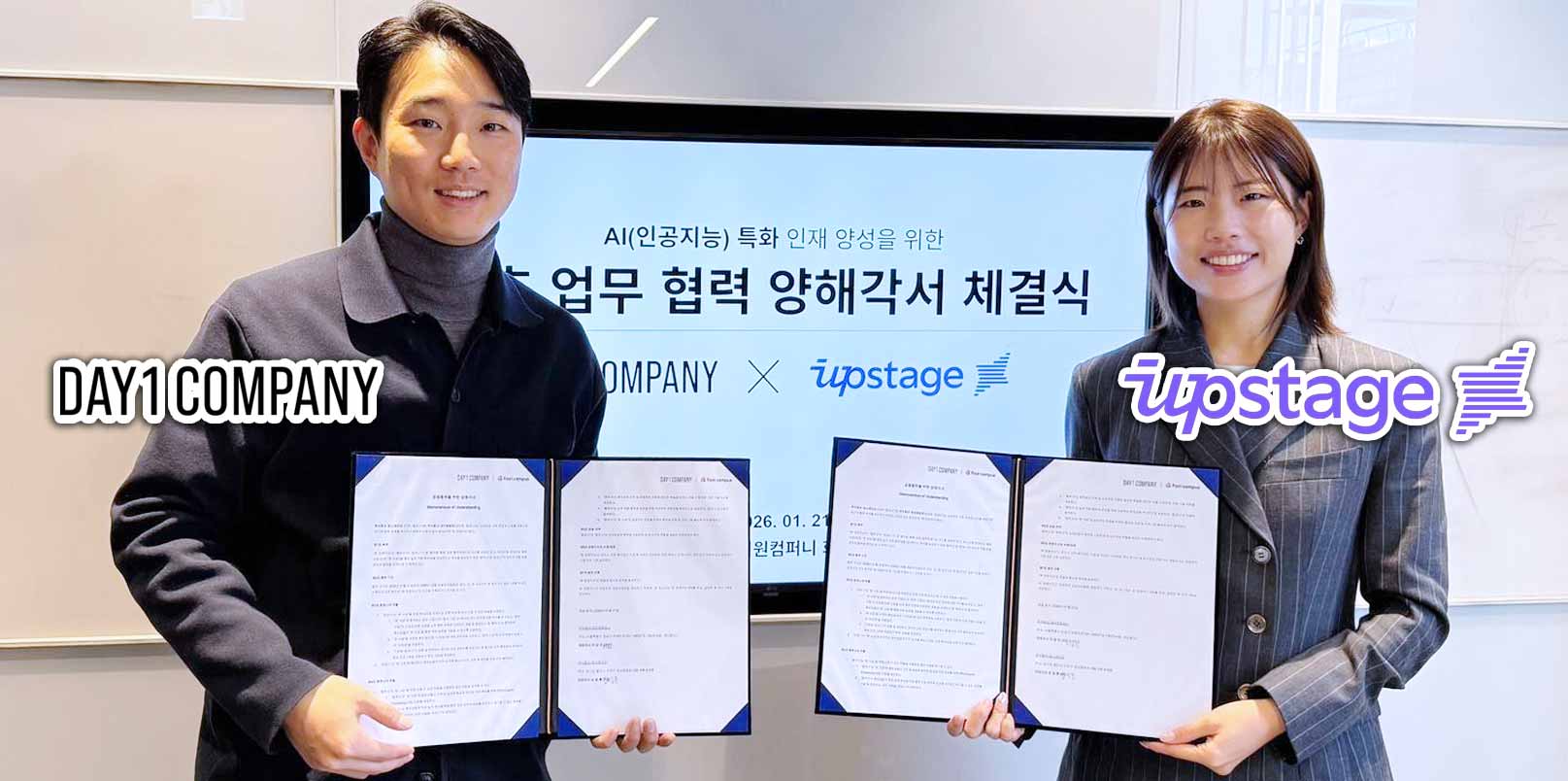
Korea is intensifying its focus on aligning AI education with job market demands through a new partnership between Upstage, an AI startup, and Day1 Company, which operates FastCampus. This collaboration aims to train practical AI professionals who can be deployed directly into the industry, marking a significant step in Korea’s broader initiative to integrate education and innovation within its burgeoning startup economy.
On January 23, 2026, Upstage and Day1 Company formalized their alliance by signing a memorandum of understanding (MOU) at Day1 Company’s headquarters. This agreement establishes a structured training framework designed to connect AI education with actual job opportunities, addressing a pressing need for skilled professionals in the sector.
Under the terms of the partnership, Day1 Company will be responsible for developing demand-driven education and training programs tailored to corporate needs. This includes conducting job analyses, offering scholarships, connecting graduates with internships, and expanding access to online AI courses. Meanwhile, Upstage will provide the necessary technical infrastructure, including GPU-based computing support, the creation of training evaluation systems, datasets, and ongoing technical mentoring to ensure practical learning experiences.
This collaboration emerges as Korea accelerates efforts to close its AI talent gap. The government is actively working to integrate AI training into workforce development, as evidenced by recent agreements between the Ministry of SMEs and Startups (MSS) and the Ministry of Employment and Labor (MOEL). These agreements are focused on aligning national training programs with the labor needs of startups.
Although the Upstage-Day1 Company partnership is a private-sector initiative, it complements national efforts by demonstrating how businesses can implement hands-on, job-linked AI training that supports the growing demand for skilled professionals within the startup ecosystem. Day1 Company is also part of the Upstage-led consortium that has progressed in the government’s “National AI Foundation Model” project, which includes leading AI literacy education for the general public, further emphasizing its role in linking AI learning with employability outcomes.
Shin Hae-dong, Head of FastCampus at Day1 Company, emphasized the importance of this initiative, stating, “The essence of AI talent development lies in the practical connection between industry and education. From job analysis to employment linkage, we will design the entire process systematically to cultivate people who can deliver immediate results together with Upstage.”
The two companies confirmed that their collaboration is aimed at filling Korea’s AI skills gap by training professionals who can transition seamlessly from academic environments to the workplace, thereby reducing the time required for companies to integrate new talent into their operations.
This partnership represents one of the first industry-led efforts in Korea to bridge the gap between AI education and the workforce demands of startups. It directly responds to a structural challenge faced by many Korean startups and small to medium-sized enterprises (SMEs): the shortage of talent capable of applying AI technologies effectively in production settings.
By combining Upstage’s deep tech expertise with Day1 Company’s educational platform, the initiative creates a model of public-private complementarity. It illustrates how private education providers and AI startups can align their resources to enhance Korea’s AI-driven innovation economy. For global observers and investors, this alliance reflects the evolution of Korea’s AI talent ecosystem from policy frameworks to execution-led partnerships that expand real hiring pathways.
The Upstage-Day1 Company MOU highlights how corporate partnerships are reinforcing Korea’s national objective of building a sustainable, job-ready AI talent pipeline. While public policy sets the overarching direction, such alliances demonstrate how industry engagement can accelerate training outcomes to align with the needs of startups and SMEs.
As AI adoption continues to proliferate across various industries in Korea, collaborations like this will be crucial for maintaining competitiveness—not merely through technological innovation, but through the skilled individuals capable of leveraging these advancements.
See also Huntington University Secures $125,000 Grant to Advance AI in Education and Career Preparation
 Former Google Team Launches Sparkli: $5M AI Learning App for Kids Aged 5-12
 AI Enhances Student Creativity and Strategic Thinking in Marketing Courses
 AI Revolutionizes Education by 2026: Personalized Learning and Smart Assessment Tools Lead Changes
 AI in Schools: 95% of Educators Warn of Risks from Unchecked Adoption of Technology