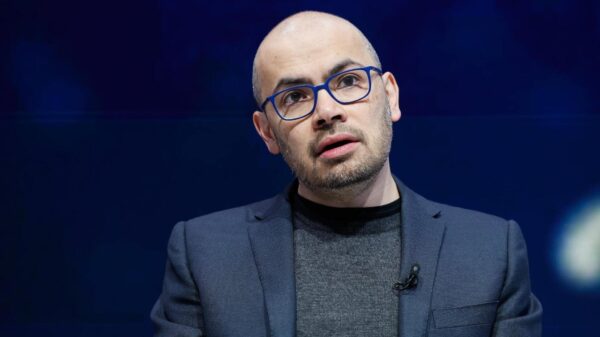
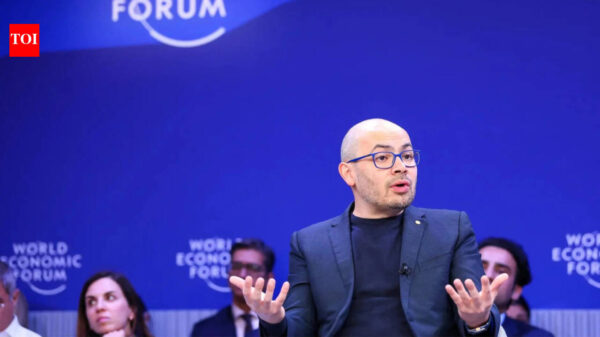
The Royal Swedish Academy of Sciences awarded the 2024 Nobel Prizes in Physics and Chemistry to pioneering figures in artificial intelligence, marking a significant turning point in the history of science. Geoffrey Hinton and John Hopfield received the Physics prize for their foundational work on neural networks, while Demis Hassabis and John Jumper were honored in Chemistry for their breakthrough in protein folding with AlphaFold. This dual recognition signified a shift from viewing AI as a mere tool to acknowledging it as an integral part of scientific inquiry, effectively heralding the “AI Age” where complex mysteries of the universe are addressed through machine intelligence.
The importance of these awards is profound. Historically, AI research was often isolated within computer science, distinct from disciplines like physics and biology. The 2024 Nobel Prizes dismantled these barriers, affirming that the mathematical models underlying machine learning are as essential to our understanding of the physical world as the laws of thermodynamics or molecular biology. As we reflect in early 2026, this event is seen as the dawn of a new scientific epoch where human creativity is systematically enhanced by AI, enabling breakthroughs once thought unattainable.
The Physics of Learning
The Physics prize was awarded to Hinton and Hopfield for their pioneering contributions to machine learning, rooted in statistical mechanics. Hopfield introduced the Hopfield Network, a model simulating associative memory by treating patterns as physical systems seeking their lowest energy states. Hinton expanded this concept with the Boltzmann Machine, which incorporated stochastic elements and “hidden units,” allowing networks to learn intricate internal representations. This framework, influenced by thermodynamic principles, laid the groundwork for the modern Deep Learning revolution that powers contemporary AI systems. The Nobel committee’s recognition of this work validated the view that information possesses physical properties and that understanding its processing is a core concern of physics.
The Chemistry award highlighted the achievements of Hassabis and Jumper, alongside David Baker from the University of Washington, for their work with AlphaFold 2. This AI system resolved the long-standing “protein folding problem,” a significant challenge in biology for over five decades. By accurately predicting the three-dimensional structure of nearly all known proteins from their amino acid sequences, AlphaFold has drastically accelerated biological research. Baker’s contribution involved using AI for de novo protein design, enabling the creation of entirely new proteins that do not exist in nature. These advancements transition chemistry from a purely experimental discipline to a predictive and generative science, where new molecules can be designed digitally before laboratory synthesis.
The recognition of Hassabis and Jumper underscored the increasing influence of corporate research labs in the scientific arena. Alphabet (NASDAQ: GOOGL), through its DeepMind division, demonstrated that a powerful integration of computational resources, elite talent, and specialized AI models could tackle problems that had remained unsolved for decades. This has led to strategic shifts among other tech giants; for instance, Microsoft (NASDAQ: MSFT) has rapidly expanded its “AI for Science” initiative, while NVIDIA (NASDAQ: NVDA) has solidified its role as a crucial player in this revolution, providing the H100 and Blackwell GPUs that serve as modern “particle accelerators” for AI-driven research.
The 2024 Nobel wins acted as a catalyst for the biotechnology sector, generating a notable uptick in funding for AI-focused drug discovery ventures like Isomorphic Labs and Xaira Therapeutics. Traditional pharmaceutical companies, such as Eli Lilly and Company (NYSE: LLY) and Novartis (NYSE: NVS), are now compelled to transform digitally, integrating AI-driven structural biology into their research and development processes. In this new landscape, success is increasingly defined not merely by chemical expertise but by a company’s ability to leverage “data moats” and build large-scale biological models. Companies that did not adopt the “AlphaFold paradigm” by early 2026 are facing marginalization in an industry where timelines for drug candidates have been reduced from years to mere months.
Yet, the broader implications of these advancements raised ethical considerations, particularly through Geoffrey Hinton’s perspective. Often referred to as the “Godfather of AI,” Hinton’s accolade carried a bittersweet irony, as he had recently stepped down from Google to express concerns about the potential existential risks associated with the technology he helped pioneer. His recognition prompted the scientific community to confront a profound paradox: while neural networks are leading to medical breakthroughs and new understandings of physics, they also pose significant risks if left unchecked. This has led to an increased emphasis on “AI Safety” and “Ethics in Algorithmic Discovery” within global scientific curricula, a trend that has gained momentum into 2026.
Furthermore, the “AI Nobels” are reshaping the scientific method itself, moving away from traditional hypothesis-driven approaches toward data-centric, generative models. In this evolving environment, AI is not merely a tool but a collaborator, which raises concerns about the “black box” nature of these systems. Although AlphaFold can predict protein conformations, it often does not elucidate the underlying physical processes involved in folding. This tension between predictive capability and foundational understanding remains a central theme in scientific discourse, with many advocating for ensuring that AI serves as an instrument for human enlightenment rather than a replacement.
Looking forward, the developments prompted by these Nobel-winning breakthroughs are entering the domains of materials science and climate solutions. The first AI-designed superconductors and high-efficiency batteries are now in pilot production, a direct outcome of the scaling laws initially explored by Hinton, alongside the structural prediction techniques refined by Hassabis and Jumper. In the long term, experts predict the rise of “Closed-Loop Labs,” where AI not only designs experiments but also directs robotic systems to execute them, analyze outcomes, and refine models autonomously.
However, challenges persist. The energy demands involved in training “Large World Models” are substantial, driving a push for more energy-efficient AI architectures inspired by biological systems. Additionally, the democratization of these technologies presents a double-edged sword; while laboratories can now access protein structures, the potential to design harmful toxins or pathogens poses critical security issues. The coming years will be characterized by the global community’s efforts to establish “Bio-AI” safeguards that encourage innovation while mitigating the risk of misuse.
The 2024 Nobel Prizes in Physics and Chemistry represent more than just accolades; they signify a collective realization that machine intelligence is redrawing the landscape of human knowledge. By recognizing Hinton, Hopfield, Hassabis, and Jumper, the Nobel committees acknowledged AI’s role as foundational infrastructure in modern science. This partnership between human intellect and machine capabilities is redefining discovery itself, setting the stage for ongoing advancements in nuclear fusion, carbon capture, and beyond. As we progress through 2026, the legacy of these prizes stands clear: AI has transcended its status as a sub-discipline of computer science, emerging as a unifying language across all scientific fields, propelling us into a new era of discovery.
See also AI’s Rise Fuels 33% Surge in Junk Papers, Threatening ArXiv’s Scientific Integrity
 82% of CPG Companies Prioritize AI-Ready Infrastructure for Enhanced Operations
 AI Safety Market Surges 20% as OpenAI, Google DeepMind Lead Industry Growth
 OpenAI Launches Prism, a Free AI Tool for Scientific Research Using GPT-5.2
 Cheng et al. Reveal Deep Learning Method for Enhanced Single-Cell Multiomic Data Analysis