























































Alina Jade Barnett, an assistant professor in the Department of Computer Science and Statistics at the University of Rhode Island, is set to present groundbreaking research on interpretable artificial intelligence (AI) models on Friday, March 13, at 3:00 PM in Tyler 055. Her work addresses significant challenges posed by the opaque nature of many machine learning algorithms, which often perform high-stakes tasks traditionally reserved for skilled professionals, sometimes surpassing human expert performance.
The increasing reliance on AI in critical applications, such as clinical decision-making, has brought to light the limitations of “black box” models. These systems, while accurate, are often difficult to troubleshoot and cannot justify their decisions, leading to skepticism about their reliability. Barnett’s research aims to bridge this gap by developing interpretable deep learning models that maintain high performance while ensuring transparency in their operations.
Through novel neural network architectures and innovative training regimes, Barnett has created models that not only achieve accuracy comparable to conventional black box systems but also offer clear explanations for their predictions. This focus on human-centered design allows expert users to scrutinize the model’s logic, effectively calibrating their trust and intervening when necessary. By doing so, Barnett envisions a collaborative human-AI partnership that preserves both high performance and meaningful human oversight.
Barnett’s academic journey began with an undergraduate degree in physics from McMaster University in Canada, followed by postdoctoral research in the Interpretable Machine Learning lab led by Cynthia Rudin at Duke University. Her research primarily focuses on applying interpretable deep learning techniques to computer vision, particularly in the fields of mammography and neurology. This work has implications for enhancing diagnostic accuracy while ensuring that medical professionals can clearly understand and trust the AI’s recommendations.
As AI continues to evolve and integrate into various sectors, the need for interpretable models becomes increasingly critical. The healthcare industry, in particular, stands to benefit immensely from systems that not only make decisions but also clearly articulate the reasoning behind them. Barnett’s ongoing research highlights the importance of accountability in AI, especially in situations where human lives are at stake.
In a field where trust and clarity are paramount, Barnett’s efforts signal a shift towards more transparent AI systems. By improving the interpretability of deep learning models, her work not only enhances their usability but also addresses ethical concerns surrounding AI deployment in sensitive environments. As she prepares for her presentation, the implications of her research resonate beyond academia, offering a promising pathway for future AI applications that prioritize human understanding and collaboration.
See also UH Hilo Launches Scientist-Centered AI Lab SCAIL with $5K Grant for Enhanced Research Collaboration
 New Study Reveals Generative AI Risks Cultural Homogenization of Human Thought
 LiTo Unveils 3D Latent Representation for Enhanced View-Dependent Object Rendering
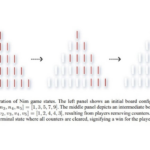 AI Research Reveals Blind Spots in Game-Playing Strategies, Impacting Future Developments
 China Leads AI Hardware Innovation, Says IDC Executive at Mobile World Congress






