JAKARTA – A team of scientists from the Hong Kong University of Science and Technology (HKUST) has unveiled an advanced artificial intelligence (AI) system specifically designed to predict lightning storms and heavy rainfall with an extended lead time. This announcement was made during a press conference on January 28, where researchers detailed the system’s capability to provide early warnings up to four hours before extreme weather events, a significant improvement over existing technologies that typically offer predictions ranging from 20 minutes to two hours.
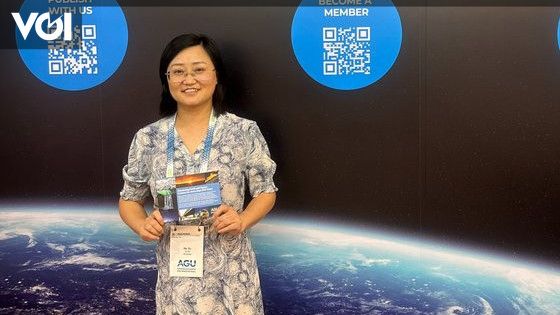
Project leader Su Hui, a professor from the Department of Civil and Environmental Engineering at HKUST, highlighted the critical importance of this technology amid the rising frequency of extreme weather patterns attributed to climate change. The integration of AI with satellite data aims to equip governments and emergency services with improved preparation time for flash floods and severe storms that have become increasingly unpredictable.
The newly developed system, known as the Deep Diffusion Model based on Satellite Data (DDMS), operates differently from traditional forecasting models. It employs a unique generative AI technique that introduces noise into the training data, allowing the system to learn how to reverse this process to generate more accurate weather forecasts. This innovative approach enhances the model’s accuracy by over 15 percent, with updates occurring every 15 minutes.
The DDMS technology was developed in collaboration with Chinese weather authorities, utilizing infrared brightness temperature data collected by the Fengyun-4 satellite from 2018 to 2021. The model’s strength lies in its reliance on satellite imagery, which can detect the formation of convective clouds much earlier than conventional land-based radar systems. This capability is particularly relevant given the recent weather anomalies that have impacted Hong Kong and southern China, where the number of typhoons and rainfall totals have exceeded seasonal averages, resulting in record high storm warnings.
Currently, the China Meteorological Administration and the Hong Kong Observatory are working to integrate the DDMS AI model into their official weather forecasting protocols. Data validation conducted on spring and summer samples from 2022 and 2023 suggests that this model may establish a new standard in global disaster mitigation efforts. The ongoing integration of this technology is seen as a proactive measure to minimize both material losses and human casualties through the application of advanced artificial intelligence in public safety.
As climate change continues to escalate the frequency of extreme weather events, advancements in technology like the DDMS present a vital opportunity for improving response strategies. The enhanced predictive capabilities can potentially transform how governments and agencies respond to natural disasters, offering a stronger line of defense against the increasingly unpredictable nature of severe weather.
See also Meet the Top 10 Women Driving AI Innovation and Ethics in 2023’s Leading Companies
 Meta’s Zuckerberg Reveals AI-Powered Future with Advanced Recommendations and Smart Glasses
 Meta Aims for $135B in AI Investments Fueled by Ad Revenue Surge, Says Zuckerberg
 AI-Driven Drug Commercialization Market to Surge 24.12% CAGR, Transforming Pharma Strategies by 2032
 China Approves ByteDance, Alibaba, Tencent to Buy 400,000 Nvidia H200 AI Chips