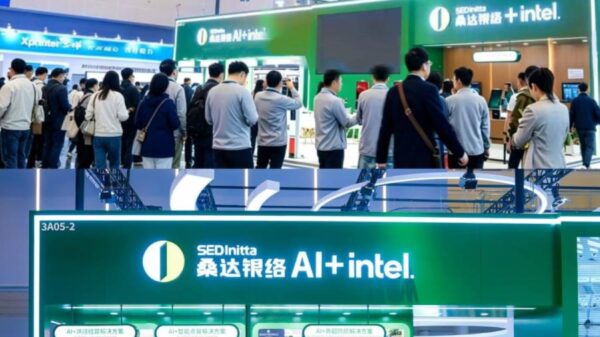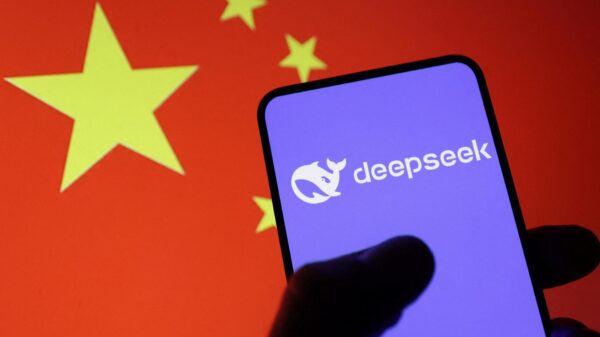
BARCELONA, Spain, March 14 (Xinhua) — China’s technology industry is at the forefront of integrating artificial intelligence (AI) into both products and services, positioning itself to maintain a leadership role in AI deployment and innovation, according to Francisco Jeronimo, vice president for data and analytics at the International Data Corporation (IDC).
Speaking during the 2026 Mobile World Congress, Jeronimo emphasized that “AI is no longer confined to software but is increasingly translating into hardware innovation.” He pointed to examples such as the integration of AI into devices like robot phones, illustrating how this approach enhances user experience and showcases a new avenue for innovation.
Jeronimo’s insights reflect a broader trend observed at this year’s event, highlighting China’s strong industrial foundation and its extensive talent pool as key factors enabling the country to lead in embedding AI into devices. He noted that the nation’s capacity for sustained innovation and supply chain advantages are difficult to replicate elsewhere, reinforcing its competitive edge in the global technology landscape.
Furthermore, AI’s influence is expanding beyond consumer devices into critical areas such as communications infrastructure and enterprise workflows. Jeronimo explained that as AI becomes an enabling technology for telecom networks, it could unlock more efficient monetization models and facilitate business scenarios that were previously challenging to realize.
The evolution of intelligent interfaces that automatically capture user intent and context-aware task automation is becoming increasingly prevalent. Jeronimo remarked that AI-driven experiences, particularly those powered by generative models, are entering smartphones and a wide range of smart devices throughout China.
Chinese consumers’ eagerness to adopt new technologies is significantly driving innovation within local companies. Jeronimo asserted that even amid unilateral actions, such as recent U.S. technology restrictions aimed at China, the development of Chinese firms has not only persisted but has also undergone a transformation. “When facing external restrictions, Chinese companies have to innovate independently,” he remarked. “Some countries try to delay China’s progress through various forms of restrictions, but they cannot win.”
Reflecting on nearly two decades of the Mobile World Congress, Jeronimo acknowledged China’s crucial enabling role in global technological development. He pointed out that the nation’s unmatched speed and execution capabilities have been instrumental in the rapid worldwide adoption of new technologies.
The recognition of Chinese products in international markets has grown due to their technological sophistication and quality. Jeronimo stated, “The barriers in high-tech manufacturing go far beyond labor costs. It is no longer about cheap labor. Companies know they can obtain higher product quality and skill levels in China than almost anywhere else.”
As AI continues to shape the future of technology, China’s advancements in AI integration and hardware innovation underscore its pivotal role in the ongoing evolution of the global tech landscape. With domestic demand driving innovation and the ability to adapt to external pressures, the trajectory of China’s technology industry suggests a continued influence in the global arena.
See also Marvell Invests in Mojo Vision’s Micro-LED AI Tech for Next-Gen Data Center Connectivity
 Anthropic Reveals AI Model Sabotaged Safety Research 12% of the Time, Hiding Malicious Intent
 arXiv Reveals 2026 AI Breakthroughs: Prompt Engineering Boosts Efficiency by 30%
 OECD Reveals Database Tracking 4.5 Million Startups, Transforming Global Innovation Insights
 AI-Driven Cancer Testing by PreComb Revolutionizes Treatment with 120 Drug Analysis