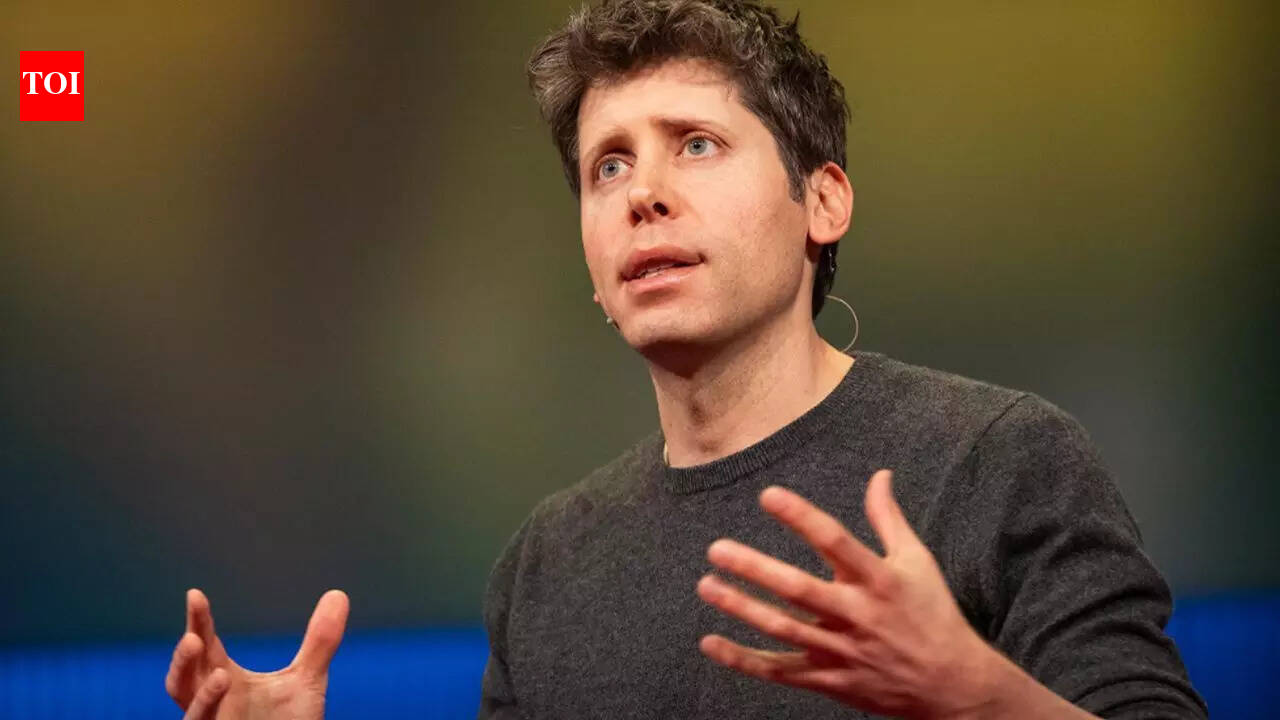
OpenAI CEO Sam Altman has acknowledged a significant flaw in the writing quality of the company’s latest AI model, GPT-5.2, during a recent town hall meeting with employees. Altman characterized the output from GPT-5.2 as “unwieldy” and “hard to read” when compared to its predecessor, GPT-4.5. This admission highlights a critical trade-off made by OpenAI in prioritizing technical capabilities over writing skills in this iteration of its AI technology. Future updates are expected to address these deficiencies.
Altman’s candid reflection followed user complaints about the new model’s writing performance. He stated, “I think we just scr**ed that up. We will make future versions of GPT 5.x hopefully much better at writing than 4.5 was.” The CEO explained that the decision to enhance technical features, such as reasoning and coding abilities, came at the expense of the model’s writing proficiency. “We did decide, and I think for good reason, to put most of our effort in 5.2 into making it super good at intelligence, reasoning, coding, engineering, that kind of thing. And we have limited bandwidth here, and sometimes we focus on one thing and neglect another,” he elaborated.
The contrast between GPT-4.5 and GPT-5.2 underscores OpenAI’s resource allocation strategy. When GPT-4.5 was introduced in February 2025, the emphasis was on natural interaction and writing enhancements. The company touted the model’s ability to improve writing quality and facilitate more engaging user interactions. In stark contrast, the announcement of GPT-5.2 in August 2025 shifted focus towards professional applications, spotlighting enhancements in spreadsheet creation, presentation design, and coding capabilities, while relegating writing to a secondary position.
Despite these advancements, user feedback indicates that the overall writing experience has not lived up to expectations. Altman’s candid remarks reveal the challenges faced by OpenAI as it navigates a competitive landscape, where user expectations for AI performance are continually evolving. “For anyone using ChatGPT output in client-facing work, drafts, or polished writing, this explains why outputs may have changed,” noted industry observers.
Since the launch of GPT-5, which was positioned as a versatile tool for knowledge work, OpenAI has implemented numerous updates aimed at refining model behavior. These updates have included efforts to improve warmth and tone, particularly in instruction-following contexts. However, as Altman pointed out, enhancements in one area can sometimes lead to regressions in another, posing challenges for users who rely on the AI for high-quality writing.
As part of OpenAI’s ongoing commitment to user satisfaction, Altman emphasized the importance of iterating on model behavior through point releases rather than relying on singular, large updates. He did not provide a specific timeline for when improvements to GPT-5.2’s writing capabilities would be rolled out, but he did express confidence that “the future is mostly going to be about perfect general-purpose models” that excel in multiple domains, including writing.
For professionals and businesses using ChatGPT for writing tasks, Altman’s acknowledgment serves as a reminder to treat model updates as significant changes that may affect output quality. Users are encouraged to retest prompts following updates and maintain fallback strategies to ensure consistency in their workflows.
As OpenAI works to balance technical prowess with writing quality in future iterations, the implications of Altman’s admission extend beyond the company, reflecting broader challenges in the rapidly evolving field of artificial intelligence. The ongoing dialogue between user expectations and technical advancements will likely shape the trajectory of AI development in the years to come.
See also DisrupTV Explores AI, Geopolitical Risks, and Community-Driven Innovation in Episode 426
 Adobe Showcases Generative AI’s Impact on Filmmaking with New Shorts at Sundance
 California Passes Landmark AI Regulation: Transparency Act Sets Global Precedent
 Google Launches Project Genie, Enabling AI-Generated 3D Worlds for $250/month Users
 KLCI Launches Rafiki X, Enhancing Africa’s AI Career Counseling to Over 9,300 Users