At the Sundance Film Festival, Adobe has partnered with independent filmmakers to explore the intersection of traditional filmmaking and generative AI. This collaboration has resulted in two original short films that highlight how emerging technologies can enhance storytelling while maintaining creative control. The films premiered at the Adobe House during the festival, showcasing a blend of innovative workflows and artistic vision.
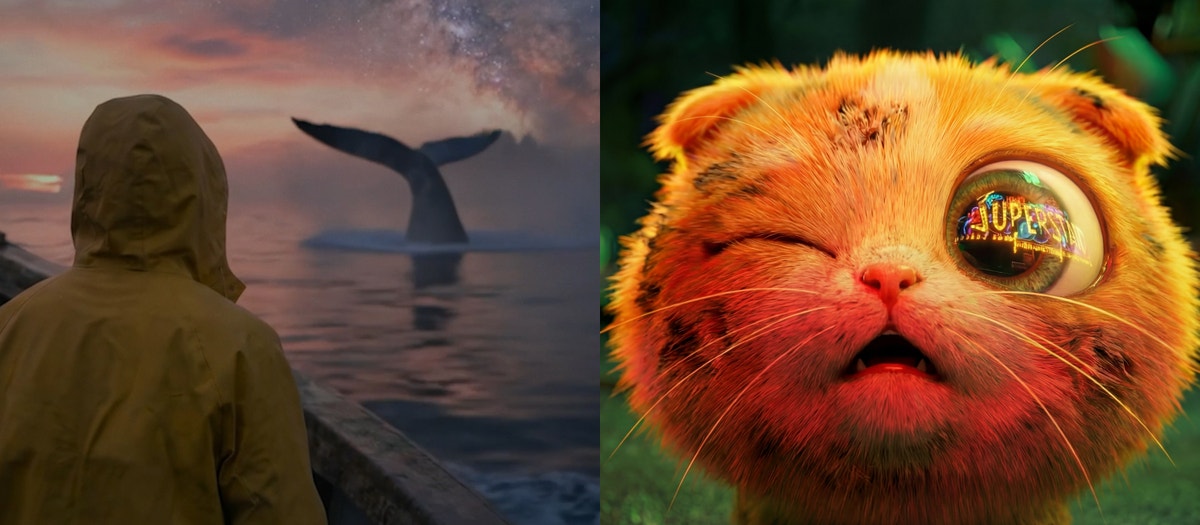
The two films, “Wink” directed by Momo Wang and “MythOS” directed by Taryn O’Neill, are case studies demonstrating how generative AI can unlock new creative possibilities. By combining traditional craft with AI-driven tools, the filmmakers were able to experiment with visual storytelling in ways that were previously impractical or budget-prohibitive. This approach not only optimized production timelines but also expanded the range of what small teams can achieve.
Both directors employed Adobe Firefly, the all-in-one creative AI studio, leveraging its capabilities for moodboarding, storyboarding, and refining assets. Firefly Boards served as a collaborative platform for the teams, facilitating communication and creative brainstorming. Essential Adobe products like Photoshop, Premiere, After Effects, and Audition were also integral to the final production stages, illustrating how technology can elevate the filmmaking process from conceptualization to completion.
Exploring the Films
“Wink” tells the story of a one-eyed stray cat who becomes a casino’s “lucky charm” but ultimately seeks to train a shelter of “unadoptable” animals to find love. Wang’s personal connection to the narrative is profound; the film is inspired by her own rescue cat who endured hardship. “When I saw his photo on the SPCA website, I knew immediately I was taking him home,” Wang said. “He had lost an eye to abuse, but we went on to share ten happy years — mostly eating shrimp together.”
Originally conceived as a larger feature, Wang had to refine her vision to fit a short format, focusing on emotional resonance. The film’s final scene emphasizes self-acceptance, encapsulated in Wink leaving her collar behind as a young woman invites her to “let’s go home.” Wang embodies this character’s voice, enhancing the film’s intimacy and impact.
The creative process involved extensive use of Adobe’s tools, with Wang initially sketching by hand before transforming her designs into a 3D style using Firefly. The team utilized Photoshop’s Generative Fill to create unique character designs. “Due to our tight timeline, and since 3D is currently the most robust and efficient style for AI generation, we used it as our foundation,” she noted. The collaborative nature of Firefly Boards streamlined remote teamwork, allowing for quick adjustments throughout the production.
In contrast, “MythOS” explores themes of mythology and community through the lens of a whale sharing a poignant narrative. O’Neill, who directed and wrote the film, expressed her fascination with storytelling’s enduring role in society. “Stories have long helped us make sense of the world, navigate uncertainty, and understand ourselves as a community,” O’Neill stated.
Initially envisioned as fully AI-generated, O’Neill opted for a hybrid approach, combining live-action elements with AI-generated backgrounds. The decision to shoot actors on a green screen required meticulous planning; AI backplates were needed to properly light the actors for their environments. “With their consent, we built a likeness card for each actor,” she explained, ensuring the AI tools accurately captured their essence.
The use of Firefly Boards was pivotal in facilitating quick visual development and concepting for “MythOS.” O’Neill highlighted how these tools allowed for flexibility in storytelling, particularly during the editing phase. “In a traditional filmmaking and VFX pipeline, that kind of late adjustment would have been far more costly and time-intensive,” she noted. The ability to adapt and generate additional shots under tight timelines proved invaluable.
Both Wang and O’Neill acknowledged the complexities of merging traditional workflows with generative AI. “The ideation phase can be incredibly fun in generative AI, and even hallucinations can become happy accidents,” O’Neill remarked, emphasizing the importance of intentionality in execution. Wang echoed this sentiment, asserting that while technology can enhance creativity, professional filmmaking skills remain essential. “Technology will always evolve and iterate,” she said, “but that moment when a group of like-minded artists comes together to create something beautiful? That is irreplaceable.”
See also California Passes Landmark AI Regulation: Transparency Act Sets Global Precedent
 Google Launches Project Genie, Enabling AI-Generated 3D Worlds for $250/month Users
 KLCI Launches Rafiki X, Enhancing Africa’s AI Career Counseling to Over 9,300 Users
 Elon Musk’s AI-Generated Sydney Sweeney Video Sparks Digital Consent Controversy