






















































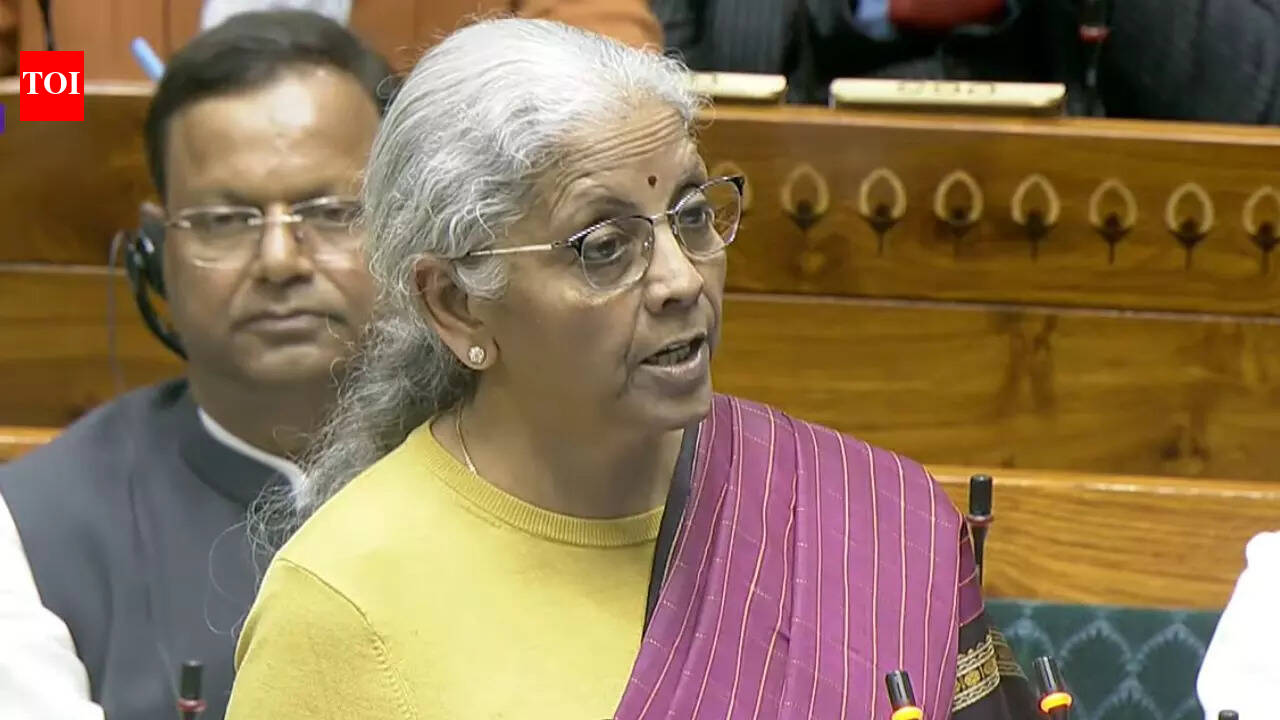
NEW DELHI: In a significant move to enhance tech-driven agriculture, Finance Minister Nirmala Sitharaman announced the launch of ‘Bharat Vistar’ during the Union Budget 2026-27 presentation. This multilingual AI tool is designed to integrate AgriStack portals and the Indian Council of Agricultural Research’s (ICAR) agricultural practices with advanced AI systems, fundamentally changing how farmers access resources and make informed decisions. The platform aims to boost farm productivity, provide customized advisory support to mitigate risks, and facilitate better on-ground choices for millions of farmers, aligning with the government’s vision for AI integration in the agricultural sector.
The budget also features substantial support for animal husbandry to stimulate rural employment, which includes a credit-linked subsidy program, the modernization of livestock enterprises, and the promotion of integrated value chains for livestock, dairy, and poultry. A renewed emphasis on high-value agriculture is evident, with initiatives to promote crops including coconut, sandalwood, cashew, cocoa, agar trees in the North East, and nuts such as almonds, walnuts, and pine nuts in coastal areas. As the world’s largest producer of coconuts, supporting around 30 million livelihoods including 10 million farmers, India will benefit from a dedicated scheme aimed at increasing production through interventions like replacing non-productive trees with high-yield saplings in key states.
Programs focused on self-reliance in cashew and cocoa processing aim to bolster Indian brands in the global market by 2030. Efforts to revive sandalwood cultivation and post-harvest processing will partner with state governments to restore its cultural ecosystem. Simultaneously, old orchards of walnuts, almonds, and pine nuts will be rejuvenated through high-density planting and initiatives led by youth to add value.
These AI-driven reforms build on previous budgets, which allocated Rs. 1.27 lakh crore towards agriculture and noted a reliance of 46.1% of the workforce on this sector, as per the Periodic Labour Force Survey for 2023-24. Presenting the Union Budget, Sitharaman outlined targeted agricultural initiatives that prioritize higher farmer incomes, youth empowerment, and integrated fisheries development, all aimed at driving rural growth. “Our third karta view aligns with our vision,” she stated in Parliament, emphasizing key efforts to enhance farmer incomes through productivity gains and entrepreneurship, particularly for small and marginal farmers.
Sitharaman underscored the importance of empowering youth with livelihood opportunities and access to training and high-quality assistive devices, while also supporting vulnerable groups with mental health and trauma care. A special focus will be directed towards poorer, older states and the North East to accelerate development and job creation.
In the fisheries sector, the government plans to roll out initiatives for the integrated development of 500 reservoirs and other water bodies, aiming to strengthen the fisheries value chain in coastal areas. This approach is expected to foster market linkages through startups, women-led groups, and fish farmer producer organizations.
Turning to animal husbandry, Sitharaman elaborated on support mechanisms through a credit-linked subsidy program, scaling up and modernizing livestock enterprises, and enhancing livestock dairy infrastructure. These actions build on the previous year’s agriculture push, where Department of Agriculture and Farmers’ Welfare allocations reached Rs. 1,27,290 crore. Sitharaman highlighted the government’s commitment to ensuring farmers and rural citizens directly benefit from agricultural reforms, promoting employment in agri-allied sectors and enhancing agricultural productivity.
She reported that these agriculture-focused measures have resulted in a substantial growth rate of around 7%, contributing notably to rural poverty reduction and improving the livelihoods of millions within the farming community. As India navigates a complex external environment characterized by trade disruptions and challenges in accessing seeds, fertilizers, and supply chains, new technologies like precision farming and AI are increasingly instrumental in transforming agricultural production systems. These technologies are expected to sharply raise demand for water, energy, and critical minerals necessary for sustainable cropping.
Sitharaman affirmed that India will confidently advance towards Viksit Bharat by balancing agricultural ambitions, such as doubling farm incomes, with inclusive growth for smallholders and rural ecosystems.
Bharat Vistar is positioned as a multilingual AI-powered platform introduced as a “virtually integrated system” to streamline farmers’ access to agricultural resources. By merging AgriStack portals with ICAR practice packages through advanced AI, it aims to enhance farm productivity and support sharper decision-making while minimizing risks through tailored advisories on crops, weather, and market conditions. This initiative targets the 46.1% of India’s workforce reliant on agriculture, marking a leap in precision farming designed to support smallholders and align with the goals of Viksit Bharat.
See also Eric Schmidt Declares AI ‘Underhyped,’ Predicts Major Transformations in Healthcare and Finance
 NODES Launches AI Platform Enabling Privacy-Preserving Hiring for Fortune 500 Firms
 Abhishek Mittal Reveals Pragmatic AI Strategies for Combating Financial Crime at AML RightSource
 48% of Financial Advisers Use AI Tools, 87% Plan to Adopt in Next Year















