






















































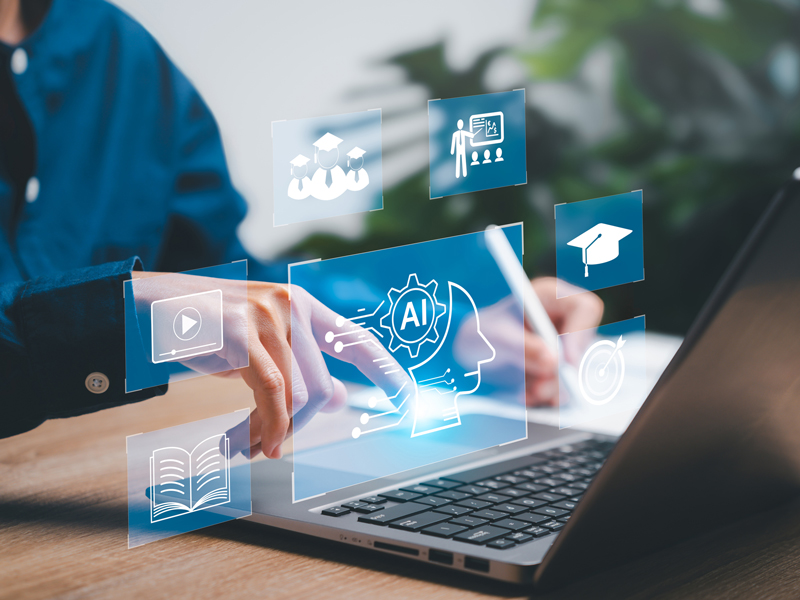
Melissa Loble, chief academic officer at educational technology company Instructure, asserts that universities must undergo significant adaptation to remain competitive in an increasingly digital landscape. “Higher education continues to respond to the rise of AI, but has yet to make the structural changes required to fully harness its potential,” she notes. The integration of digital tools, spanning virtual learning environments to artificial intelligence, has disrupted traditional educational models, while evolving workplace skills demand a shift towards lifelong learning among graduates.
Loble emphasizes that institutions embracing processes designed to cultivate digital maturity and fulfill student needs will thrive in this new era. Such structural changes impact all levels of higher education, including assessment methods, data management, and curriculum development, with offerings like microcredentials gaining prominence. “The year 2026 must be the year of structural reconfiguration in which educators redesign teaching and assessment, unite their fragmented technological systems, and respond to the needs of the labor market and prospective students,” she advises.
The use of AI in academia stirs up controversy, particularly regarding issues of plagiarism and academic integrity. A recent study by plagiarism detection firm Turnitin revealed that 95 percent of academic administrators, educators, and students surveyed believe AI is being misused in higher education. Although over three-quarters of respondents acknowledged the potential benefits of AI, a similar percentage expressed feeling overwhelmed by the abundance of available tools. “AI keeps advancing, and students learn to use it faster than many of their teachers,” Loble remarks.
Amid these concerns, Loble cautions against adopting a “police mode” mentality to combat academic dishonesty. “There are so many ways in which students can access AI to cheat,” she asserts, arguing that solutions lie not solely in technology but also in pedagogy. She advocates for assessments that highlight the learning process rather than merely the final product, allowing students to understand the significance of their educational journey. Incorporating modules on the ethical use of AI into curricula is another crucial step, preparing future graduates to navigate technological and ethical challenges.
As the landscape of higher education evolves, shifting skill requirements and the digital revolution are reshaping student demographics and course demand. Concerns about an impending enrollment cliff loom large in the United States, with fewer first-year students expressing interest in traditional college degrees. Loble identifies a “shift” in enrollment patterns, noting changes in who studies, where they study, and what they study. She points to Spain’s vocational education sector, which has seen unprecedented growth with more than 1.2 million students currently enrolled, a third more than six years ago.
“Universities cannot compete for the same students as before,” Loble states. “The key in 2026 is how to open new, more flexible learning routes that accompany people throughout their entire working life and also fit into multigenerational classrooms.” According to Instructure’s The State of Higher Education 2025 report, over half of the surveyed students (54 percent) prefer more flexible study options in the future, including blended learning, microcredentials, and short courses. Microcredentials, in particular, represent an opportunity for universities to diversify their offerings and attract professional students, aligning educational content with employer needs.
Loble stresses that in the age of lifelong learning, the challenge for microcredentials lies not just in expanding offerings but ensuring they genuinely support student and employee progression and mobility. “Universities have the responsibility to show that the teaching they provide and the credentials they award are credible and meaningful for the labor market,” she argues.
The digital transformation extends beyond student engagement to the very frameworks that underpin university operations. Many institutions continue to rely on self-managed platforms and learning systems designed for simpler processes, which struggle to keep pace with technological advancements. Loble warns that these legacy systems compel universities to resort to temporary fixes, often layering superficial AI functionalities on outdated frameworks.
To fully capitalize on opportunities presented by machine learning and agentic AI, universities must adopt an AI-friendly architecture characterized by flexible and transparent interfaces and unified data access. “Higher education is at a turning point,” Loble concludes. As institutions strive to remain relevant, focusing on enhancing course quality, redefining assessment practices, and building integrated technological ecosystems will be critical in navigating the future landscape of education.
See also AI’s Role in Social-Emotional Learning: 64% of Teens Use Chatbots Daily, Experts Weigh In
 LEGO Education Advocates Child-First AI Literacy at BETT 2023 Conference
 Navneet AI Partners with IIT Gandhinagar to Enhance AI Education for 2,000 Teachers in India
 Digital Promise Launches $26M K-12 AI Infrastructure Program to Enhance Assessment Standards
 EdTech Market Set to Soar to $426.23 Billion by 2033, Driven by AI Innovations and Digital Learning















