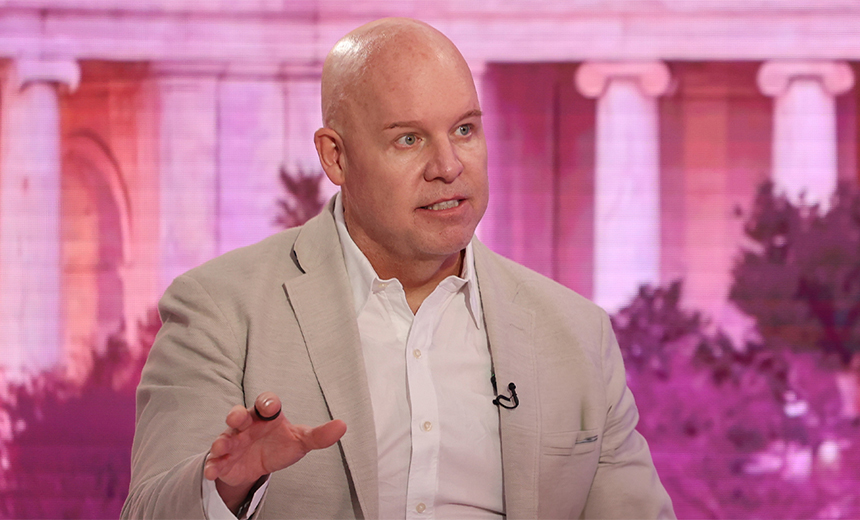
Artificial intelligence has dramatically reshaped the landscape of cybersecurity, according to Robert T. Lee, chief AI officer and chief of research at the SANS Institute. In a recent interview at the RSAC Conference 2026, Lee highlighted a concerning trend: the time required for cyber attackers to exploit vulnerabilities has plummeted from years to mere days, with some actions now being executed in hours or even minutes. This rapid acceleration in attack capabilities is forcing defenders to scramble in an effort to keep pace with increasingly sophisticated threats.
Lee pointed out that attackers have integrated automation throughout the entire lifecycle of cyberattacks. This not only streamlines their operations but also enhances the scale and reach of their campaigns. “What used to take thousands of personnel on a nation-state team can now be accomplished with just two individuals,” he stated, underscoring the scale of the shift in operational efficiency.
The implications of these developments are profound, as they pose significant challenges to current cybersecurity frameworks. As attackers employ advanced techniques and automated processes, traditional defense mechanisms struggle to adapt quickly enough. Lee noted that the SANS Investigative Forensic Toolkit has made strides in this area, drastically reducing incident response times from days to mere minutes. Such tools are essential for organizations looking to enhance their ability to respond to the escalating frequency and complexity of cyber threats.
In a broader context, the rise of AI in cybersecurity has prompted discussions about the ethical implications and the necessary measures for developing secure AI systems. Lee emphasized that as AI technologies evolve, so too must the standards and practices governing their use in cybersecurity. He advocates for a collaborative approach, particularly through open-source initiatives that aim to scale community-driven defensive capabilities.
Furthermore, he discussed how AI agents can expedite the extraction of tactics, techniques, and procedures (TTPs), thereby improving enterprise-wide threat detection. This capability is increasingly vital for organizations seeking to bolster their defenses against modern cyber threats.
As the chief AI officer at SANS Institute, Lee plays a pivotal role in strengthening global standards for cybersecurity education, research, and certification. With nearly 30 years of experience in the field, including roles in digital forensics and offensive cyber operations, he has established himself as a leading voice in cybersecurity. His work with the U.S. Air Force’s 609th Information Warfare Squadron further cements his reputation, earning him the title of “Godfather of Digital Forensics.”
The rapid evolution of AI-driven attacks serves as a wake-up call for organizations worldwide. As attackers become increasingly adept at leveraging automation and advanced technologies, the need for robust cybersecurity measures has never been more pressing. The future of cybersecurity will rely on not only advanced technology but also the collaboration of the global community to adapt and respond to emerging threats.
See also CrowdStrike Stock Plummets 35% as AI Security Tools Threaten Established Providers
 Citi’s Fatima Boolani Reveals Cybersecurity Budget Growth Lags Despite AI Threats
 Palo Alto Networks Launches Prisma AIRS 3.0 to Secure AI Agents in Cloud Environments
 Agentic AI Raises Cybersecurity Concerns: Insights from Harvard Panel on Risks and Governance
 AI Cybercrime Surge: 1,200% Increase in 2025 Signals $40B Losses by 2027