
Artificial intelligence (AI) is rapidly transforming education, prompting educators to re-evaluate what human learners should focus on in a world increasingly dominated by machines. This pivotal question was at the forefront of discussions during the EduVision Summit 2025, organized by BenQ, which connected education leaders from international schools in the Middle East with their counterparts in Taiwan. The summit, held in Taiwan, sought to facilitate a cross-border dialogue on the evolving role of education amid technological advancements. As AI capabilities grow, the consensus among participants is that education must prioritize not just technical skills but also the uniquely human abilities that machines cannot replicate.
At the summit, educators emphasized a critical shift in focus—from simply using AI tools to understanding how to coexist with them. With AI becoming part of daily life, mere knowledge transfer is insufficient; a new emphasis on AI literacy is essential. This includes grasping the intricacies of AI, ethical considerations surrounding its use, and the implications of its decisions. As one leader aptly noted, “If AI rewrites the world, we must ensure students are holding the pen,” reinforcing the need to cultivate a generation of learners who can critically engage with AI rather than merely consume its outputs.
The summit further illuminated the rising importance of soft skills—traits such as resilience, empathy, leadership, and critical thinking—as indispensable for future employability. As AI excels in efficiency but falters in areas requiring moral judgment and emotional intelligence, educators acknowledged that traditional teaching models focused on rote memorization must evolve. Instead, agile learning frameworks that encourage thematic exploration and practical application are becoming increasingly relevant.
Cultural Context in Education Technology
Recognizing that education cannot be understood solely through a local lens, the summit also highlighted the significance of cultural context in the integration of technology. BenQ’s commitment to tailoring solutions to the unique needs of different regions was underscored by its collaborations with Middle Eastern educators. For instance, the company integrated features like prayer time reminders into classroom systems to ensure that technology supports rather than disrupts the learning process. This teacher-centric approach aims to enable educators to harness technology effectively at their own pace, enhancing the educational experience.
The exchange also showcased tangible applications of AI in classrooms. At Renai Junior High School in Taipei, educators observed innovative lessons that blended AI tools with language arts and visual creativity, allowing students to use AI-generated images to interpret classic literature. This hands-on approach illustrated how technology can enrich learning experiences without overshadowing the educator’s role. The students not only demonstrated technical skills but also showcased abilities in communication and collaboration, highlighting the multifaceted nature of modern education.
As AI continues to advance, the summit participants reaffirmed the need for a collective approach to education that transcends borders. This perspective acknowledges that no single region has all the answers and emphasizes the importance of collaboration among educators, industry stakeholders, and policymakers. By working together, stakeholders can create a framework to enhance AI literacy and ensure equitable access to technological resources, particularly for underserved communities.
Looking ahead, the role of education in adapting to AI will be crucial. The dialogue fostered during the EduVision Summit represents a significant step toward creating a more informed and capable generation of learners. As machines become increasingly adept at handling complex tasks, the challenge remains for education systems to not only keep pace but also guide students in leading the way with AI. Ultimately, as the landscape of education shifts, the most pressing task may be to remind students of their humanity and prepare them to harness AI responsibly and wisely.
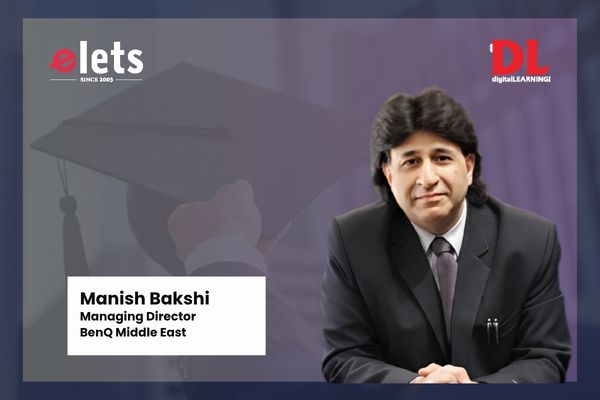
Views expressed by: Manish Bakshi, Managing Director, BenQ Middle East
See also Hive Colab Launches Mastercard Foundation EdTech Fellowship for 36 African Ventures
 Parents and Educators Push for AI Moratorium at NYC School Board Meeting
 Khan Academy Launches $10K AI Degree Program in Partnership with TED and ETS
 AI Enrolments Surge 90% Among Mid-Career Professionals, Non-Tech Roles Drive Demand
 Chiemela Kalu Launches MISGPT to Enhance Academic Advising for Underserved Students