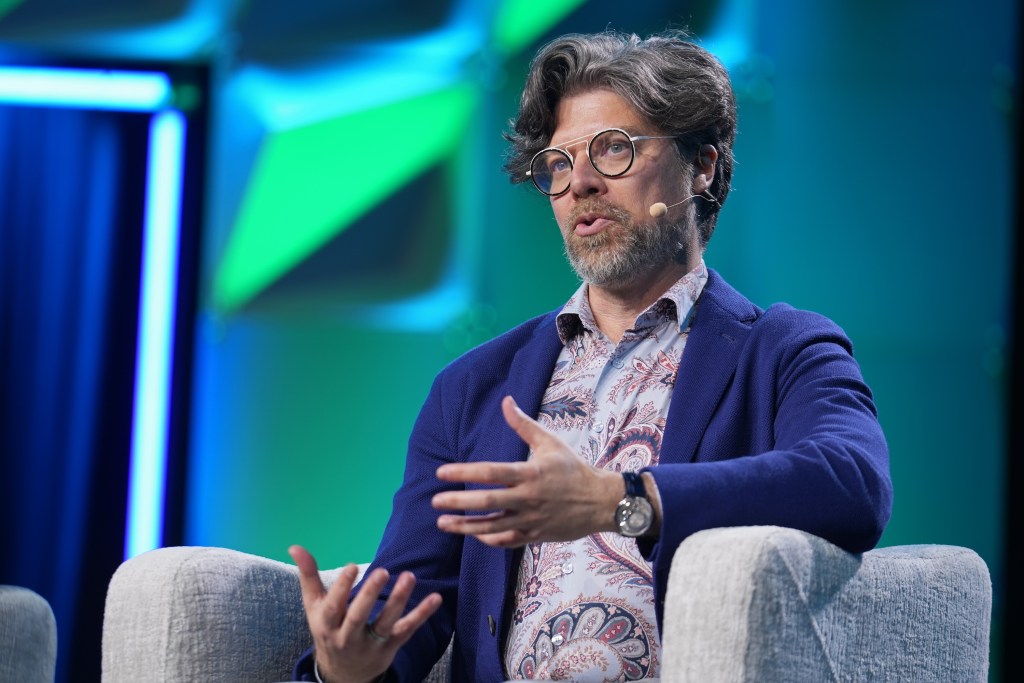
A key executive at Nvidia has revealed that the costs associated with artificial intelligence (AI) have surpassed those of human labor, challenging the narrative that AI is a cost-saving technology. Bryan Catanzaro, vice president of applied deep learning at Nvidia, stated in a recent interview that “for my team, the cost of compute is far beyond the costs of the employees,” indicating the high financial burden of AI implementation.
This assertion aligns with findings from a 2024 study conducted by the Massachusetts Institute of Technology (MIT), which concluded that AI automation is economically viable for only about 23% of jobs. In contrast, the remaining 77% still find human workers to be the more cost-effective option, particularly in roles heavily reliant on visual tasks. The implications of these findings suggest that, while AI technologies are advancing rapidly, they have yet to demonstrate widespread economic feasibility across the job market.
Despite the current high costs and a lack of clear productivity gains, investment in AI technologies has surged significantly. According to Morgan Stanley, big tech firms have committed approximately $740 billion to AI-related expenditures this year, marking a 69% increase from 2025. Furthermore, the costs of AI software have escalated sharply over the past year, with increases ranging from 20% to 37%, as reported by spending management company Tropic. These rising costs prompt questions about the sustainability of current investment trends and the long-term viability of AI-enhanced operations.
Notably, as firms channel substantial resources into AI, they are experiencing a paradox of increased spending resulting in workforce layoffs. Data from Layoffs.fyi indicates that over 92,000 tech workers have lost their jobs this year alone, with nearly 100 companies cutting positions. This trend is markedly faster than the previous year when approximately 120,000 layoffs occurred throughout the entire year. Observers, including Keith Lee, an AI and finance professor at the Swiss Institute of Artificial Intelligence’s Gordon School of Business, express concern over this mismatch between immediate financial decisions and long-term economic sense.
Lee points out that even as companies invest heavily in AI, human labor remains cheaper for many tasks, creating a discrepancy between what is economically sensible on paper and the actions being taken in the industry. “What we’re seeing is a short-term mismatch,” he noted, stressing that the economic landscape for AI is fluid. The current situation may evolve as the costs associated with running AI models decrease and infrastructure becomes more efficient.
In addition to the financial implications, there are also significant operational risks associated with AI. Instances of costly AI errors have been reported, including a situation where an AI tool inadvertently wiped out a database and network, further complicating the case for rapid AI adoption.
While AI may currently be more expensive than human labor, experts predict that this dynamic could shift. As the technologies mature and costs decrease, AI may become a more reliable and predictable option for companies. Lee emphasizes that the future of AI will not solely hinge on it becoming cheaper than human labor; instead, it will rely on AI systems demonstrating both cost-effectiveness and predictability at scale.
The rapid escalation of AI investment and its implications for the workforce raises critical questions about the future landscape of employment and technology. As companies continue to navigate these challenges, the ongoing debate about the role of AI in the economy will remain at the forefront of technological discourse.
See also AWS AI Revenue Surpasses $15 Billion, Reaffirming Amazon’s Cloud Dominance
 CIOs Warn of Talent Shortage Harming Enterprise AI Deployment and Growth
 IBM Launches Bob, an AI Development Partner Boosting Productivity by 45% for Enterprises
 US Retail AI Traffic Soars 393% YoY, Yet Many Sites Remain Unreadable by Machines
 IBM Reveals AI Solutions to Transform Retail Experience at Think 2026 Conference