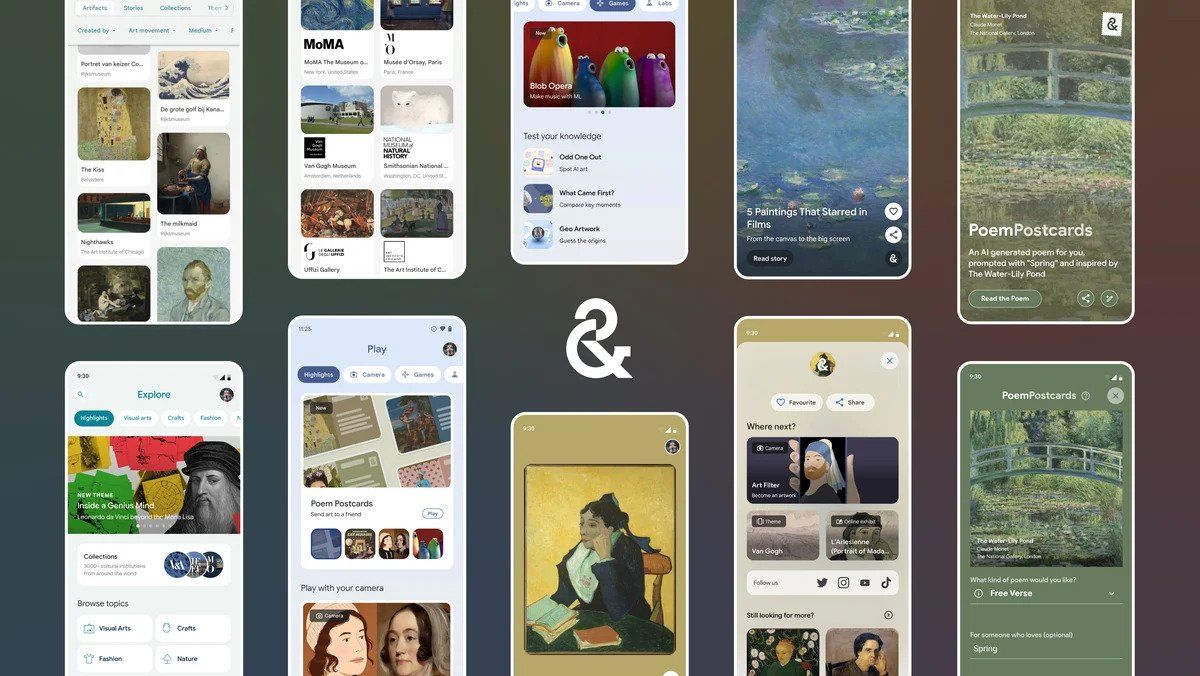
Google has unveiled a series of experimental features for its Arts & Culture app, aimed at transforming how users engage with art and education. Announced this week, the company introduced the “World Toon Video” experiment, which allows users to convert selfies into animated characters for use in educational video clips. This innovative approach aims to blend entertainment with learning, potentially making both more engaging for users.
To use the “World Toon Video” feature, users simply take a selfie and then select from a variety of cartoon styles, including options like puppet or old cartoon. After choosing a style, users select a scene that dictates the educational context, such as exploring outer space or navigating a jungle. Google’s generative AI will then animate the user’s character within the chosen setting, producing a unique video clip designed to educate while entertaining.
The second experimental feature is dubbed “Learn Everything.” This function allows users to take photographs of everyday objects—such as a light bulb or a coffee mug—and utilize these images as metaphors for learning. Users can specify a topic they wish to explore, with levels ranging from Beginner to Advanced. For instance, taking a picture of a light bulb could lead to an explanation on stellar evolution, as the AI generates contextually relevant information based on the image provided.
The final feature, “Arts Chat,” is already available within the app and has similarities to interactive AI chatbots. It enables users to engage in real-time conversations about renowned artists and their work. This feature is powered by Google’s Gemini technology, which enhances the user experience by providing access to explainer videos on various art genres.
Google’s latest updates appear to be a strategic move to further integrate artificial intelligence into cultural and educational experiences. The Arts & Culture app previously saw enhancements such as an Inspire feed and AI-generated poems, which can be shared with others. The introduction of the “World Toon Video” expands on existing features, like the Art Selfie, which allowed users to see their faces transformed into famous artworks.
The goal behind these updates is clear: to make learning about art and culture a more dynamic and enjoyable experience. By incorporating AI technology, Google aims to create an interactive platform where users not only engage with art but also learn from it in creative ways. The company’s approach reflects a growing trend in the tech industry to use artificial intelligence not just for functional purposes but as a means to enhance creativity and personal expression.
As Google continues to innovate within its Arts & Culture app, it remains to be seen how these experimental features will be received by users. The interplay between entertainment and education is a budding frontier for technology, offering possibilities for enriched learning experiences. With these updates, Google is positioning itself at the forefront of this evolution, potentially reshaping how individuals engage with both art and academia in the digital age.
See also Breadkrumb and TripSpark Launch AI Tools to Streamline Travel Planning and Social Collaboration
 Figma Faces Class-Action Lawsuit for Alleged Misuse of User-Generated Designs in AI Training
 Westport Entrepreneur Launches ThoughtPartnr to Help Small Businesses Embrace AI
 Allens Boosts Non-Partner Fee-Earners to Record High Amid Rising AI Tool Adoption
 RADPAIR and Fovia AI Launch Voice-Controlled Agentic AI for Radiology Workflows