











































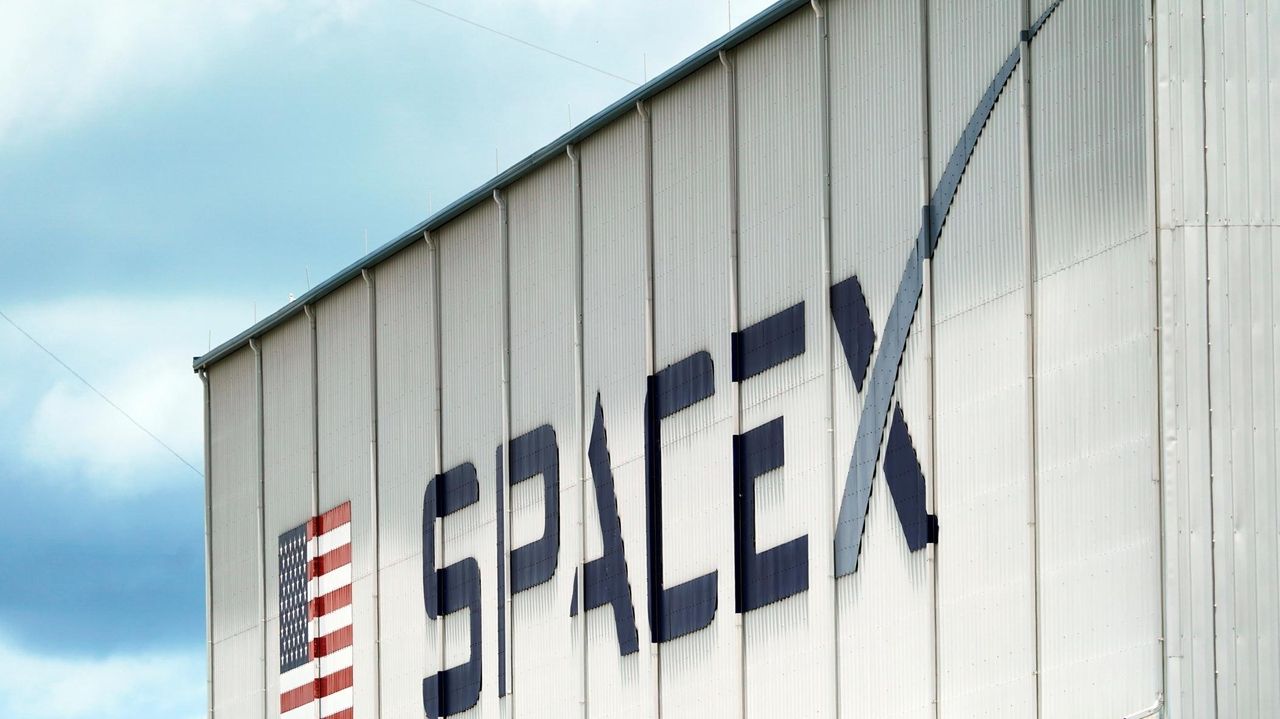
NEW YORK — Elon Musk this week announced plans to revolutionize the tech landscape once again, this time by launching a network of up to a million satellites that will function as solar-powered data centers in space. The initiative aims to support the growing demand for artificial intelligence and chatbots while mitigating strain on power grids and reducing energy costs for consumers. Musk’s strategy includes merging SpaceX with his AI business and preparing for a significant initial public offering of the newly formed entity.
“Space-based AI is obviously the only way to scale,” Musk stated on SpaceX’s website. He emphasized the potential of harnessing solar energy in space, remarking that “it’s always sunny in space!” This vision, however, faces substantial hurdles as experts highlight various technical, financial, and environmental challenges ahead.
Capturing solar energy in space could alleviate the pressure on Earth’s power grids and decrease the demand for large computing warehouses, which are often resource-intensive in terms of land and water for cooling. Yet, the unique environment of space brings its own complications. Data centers produce significant heat, and while space’s cold environment could be seen as a natural cooling solution, it poses its own set of challenges. According to Josep Jornet, a computer and electrical engineering professor at Northeastern University, “An uncooled computer chip in space would overheat and melt much faster than one on Earth.”
To counteract this, one proposed solution involves the development of large radiator panels designed to radiate heat away into space. While this concept has been successfully implemented on a smaller scale on the International Space Station, the scale required for Musk’s planned data centers would necessitate the creation of “massive, fragile structures that have never been built before,” Jornet noted.
Another pressing concern is space debris. A malfunctioning satellite can lead to catastrophic collisions, jeopardizing not only Musk’s operations but also critical services like emergency communications and weather forecasting. Musk pointed out in a recent regulatory filing that his Starlink satellite network, which has deployed around 10,000 satellites, has experienced only one “low-velocity debris generating event” in its seven-year operation. Nonetheless, as he envisions launching around a million new satellites, experts warn that the risk of collisions could escalate dramatically. John Crassidis, a former NASA engineer at the University at Buffalo, warns, “We could reach a tipping point where the chance of collision is going to be too great.” He cautioned that the high speeds of these objects—approximately 17,500 miles per hour—could result in violent impacts.
Satellite failures also pose a challenge. Components like graphics processing units (GPUs), which are crucial for AI applications, can degrade over time and become inoperable. Baiju Bhatt, CEO of Aetherflux, a company specializing in space-based solar energy solutions, explained, “On Earth, what you would do is send someone down to the data center… But no such repair crew exists in orbit.” Bhatt mentioned that one workaround could involve overprovisioning satellites with additional chips, although the expense could be substantial, with each chip potentially costing tens of thousands of dollars.
Musk is not alone in pursuing this ambitious vision. Other companies, such as Redmond-based Starcloud, have begun experimenting with space-based AI technology. Starcloud launched a satellite last November carrying a single Nvidia-made AI chip, while Google is exploring orbital data centers through its Project Suncatcher. Jeff Bezos’ Blue Origin has also announced plans to launch over 5,000 satellites starting next year, primarily for communications rather than AI.
Despite the competition, Musk holds a distinct advantage due to SpaceX’s rocket capabilities. Starcloud relied on a Falcon rocket for its satellite deployment, and Aetherflux plans to utilize SpaceX for its upcoming launch. Notably, Musk often charges rivals significantly more for launches than he does for his own projects, which could enhance his competitive position. Pierre Lionnet, a research director at Eurospace, emphasized that Musk’s recent announcements signal a strategic move to leverage his low launch costs against competitors, saying, “It’s a kind of powerplay.”
As Musk aims to expand his footprint in the space industry, the feasibility of his vision will depend not only on technological advancements but also on navigating the regulatory landscape and addressing the myriad challenges of operating in space. The implications of his ambitions could redefine the intersection of technology and energy, shaping the future of artificial intelligence and beyond.
See also J.P. Morgan Projects China’s AI Market to Reach $90B by 2030 Amid Growth Shift
 Broadcom Launches First Wi-Fi 8 Enterprise Platform with Integrated AI Acceleration
 Allegiance Retail Services Launches AI Meal Planner PrepPal with Digital Chef Aiden
 OpenAI Launches Frontier to Transform Enterprise AI Management and Governance
 Goldman Sachs Partners with Anthropic to Launch AI Agents for Banking Automation