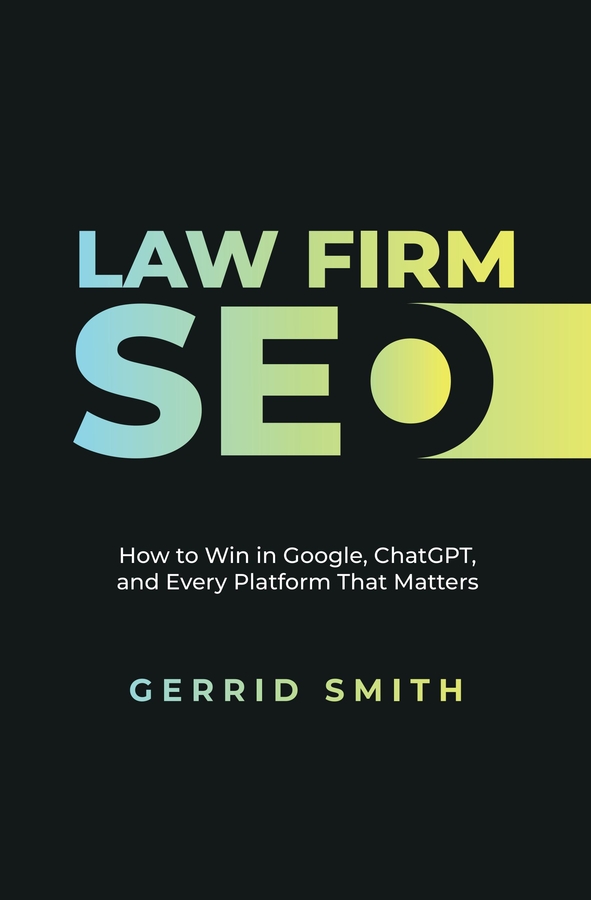
SARASOTA, FL, February 04, 2026 /24-7PressRelease/ — Gerrid Smith, an SEO specialist renowned for his work with law firms, has unveiled his latest book, Law Firm SEO: How to Win in Google, ChatGPT, and Every Platform That Matters. This guide is crafted to assist attorneys in mastering the intricacies of search engine optimization (SEO) in today’s evolving digital landscape. The book emerges at a time when law firms must navigate a more fragmented search environment, where potential clients utilize both traditional search engines like Google and AI-driven platforms.
Drawing on nearly two decades of experience in law firm SEO, Smith emphasizes that many attorneys can enhance their search visibility without relying on costly long-term agency retainers. “The biggest misconception is that SEO requires a large monthly retainer,” he stated. “Most law firms can handle much of it themselves if they understand the process.” This assertion reflects a growing trend among legal professionals seeking to optimize their marketing strategies in-house.
Smith’s journey into the field began after the failure of his first digital business in 2007. This setback, however, laid the groundwork for his future success. He initially launched an online personal injury lawyer directory, which ultimately boasted over 3,000 attorney listings nationwide. A pivotal moment came when a local attorney requested assistance in ranking his website instead of purchasing directory placement. Within 90 days, that firm achieved the top spot for its primary keyword, marking a significant turning point in Smith’s career.
This success led to the establishment of a dedicated law firm SEO agency, where Smith aided more than 100 law firms in reaching the first page of Google for thousands of highly competitive keywords across various legal practice areas. After successfully selling the agency in 2020, Smith stepped back from client work, but not from the legal marketing landscape. His new book revisits the strategies that propelled his previous successes, now adapted for contemporary market conditions where both traditional search and AI-generated responses are crucial.
Law Firm SEO is designed for a diverse audience, including attorneys, in-house marketing teams, and firms reassessing their marketing expenditures. Smith positions SEO not merely as a tactic but as a vital long-term business asset, essential for sustainable growth. The book offers a systematic approach that combines Smith’s extensive knowledge with updated insights into how modern tools can simplify the SEO process for legal professionals.
As the legal sector continues to adapt to the rapid advancements in search technology, Smith’s guidance may prove invaluable for law firms eager to enhance their online presence. By providing a practical framework, Law Firm SEO aims to empower attorneys to take control of their marketing efforts and achieve greater visibility in an increasingly competitive environment.
About Fortress: Fortress is an attorney SEO agency founded by Gerrid Smith, focusing on sustainable organic growth through transparent strategy and execution.
See also Anthropic Declares Claude Will Remain Ad-Free, Unlike OpenAI’s ChatGPT
 Google Enhances Search with AI Overviews, Launches Gemini 3 for Conversational Queries
 Moltbook Launches AI-Only Social Network with 1.6M Agents and 15,549 Sub-Communities
 AI Transforms Brand Experiences, Enhancing Conversion Funnels Through Personalization and Real-Time Insights
 Stocks Slide as Labor Market Weakens, Nasdaq Faces Worst Three-Day Drop Since April