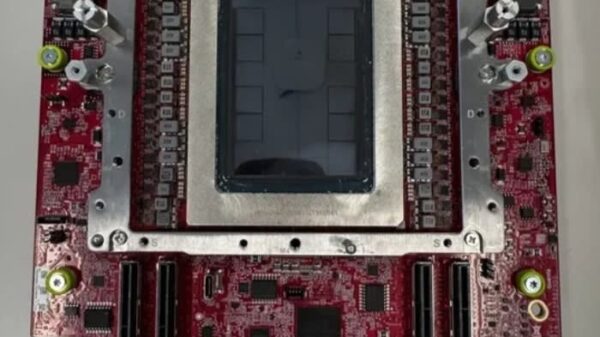











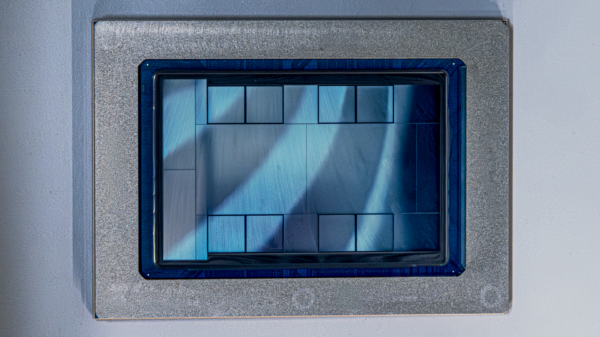

























In a bold strategic shift, Tesla CEO Elon Musk announced over the long weekend that the company will revive its Dojo3 AI chip project, redirecting its focus from self-driving technology to developing space-based artificial intelligence compute infrastructure. This marked evolution in Tesla’s silicon strategy aims to address the increasing computational energy crisis on Earth by relocating data centers into orbit. The announcement comes just five months after Tesla effectively disbanded its in-house Dojo supercomputer team, opting instead to rely on partnerships with firms such as Nvidia and Samsung. Musk’s latest statements suggest a pivot in the project’s mission, positioning the revived Dojo3 as a specialized processor aimed at a new frontier: orbital AI data centers.
The trajectory of Tesla’s Dojo project has been fraught with challenges and ambition. Originally designed as a custom supercomputer to train the company’s Full Self-Driving (FSD) models, the initial Dojo faced significant hurdles. In 2025, following the departure of its lead, Peter Bannon, Tesla disbanded the core team, with about 20 engineers transitioning to DensityAI, a startup founded by former Tesla silicon executives. Reports at the time indicated a strategic shift towards greater reliance on Nvidia for computing needs and Samsung for manufacturing, seemingly sidelining Tesla’s ambitions for proprietary chip development. However, Musk’s recent announcement indicates progress within Tesla’s broader chip roadmap, revealing that the AI5 chip—produced by TSMC for FSD and Optimus robots—is “in good shape.” Additionally, Tesla’s substantial $16.5 billion deal with Samsung for next-generation AI6 chips remains intact, encompassing requirements for vehicles, robots, and data centers. Thus, Dojo3 is being carved out for a unique, exploratory mission rather than replacing existing initiatives.
Musk’s vision for orbital AI compute extends beyond theoretical science fiction; it seeks to tackle a pressing issue on Earth: energy consumption. The training of modern AI models requires immense power, straining local electrical grids and raising sustainability concerns. Leaders like Musk and OpenAI’s Sam Altman have speculated about the limitations of terrestrial data centers. An orbital facility, especially in a sun-synchronous orbit, could benefit from continuous solar power, minimizing downtime and diminishing reliance on fossil fuels. Musk possesses a unique advantage through SpaceX, which controls the launch vehicles needed for this venture. Reports suggest Musk plans to leverage a future SpaceX IPO to fund a constellation of compute satellites using Starship, creating a synergistic loop within his enterprises. While SpaceX provides launch capabilities, Tesla develops the specialized AI hardware, resulting in a new service offering from the orbital network. Nonetheless, significant technical challenges remain, including effective heat dissipation in a vacuum, radiation hardening of components, and maintaining reliable, high-bandwidth communication with Earth.
The timing of Musk’s announcement coincides with developments in the competitive landscape. At CES 2026, Nvidia showcased Alpamayo, an open-source AI model for autonomous driving that poses a direct challenge to Tesla’s proprietary FSD technology. Musk’s public remarks wishing Nvidia success highlighted the complexities involved in addressing the “long tail” of edge cases in autonomous driving. This competitive pressure may have hastened Tesla’s desire to differentiate its silicon strategy beyond the automotive sector. By targeting space-based compute, Tesla is entering a nascent market with minimal direct competition. This move may also reshape dynamics within the semiconductor industry. While Tesla will continue to procure chips from Samsung and TSMC, a successful Dojo3 for space applications could establish Tesla as a leading designer of specialized, high-performance silicon for extreme environments, attracting talent and investment while blurring the lines between automotive, aerospace, and computing sectors. Alongside the announcement, Musk initiated a recruitment campaign aimed at engineers, inviting them to share their most challenging technical problems, signaling a rapid rebuilding of expertise lost in recent months.
Experts in the industry exhibit a blend of intrigue and skepticism regarding the feasibility of this undertaking. The core idea of orbital data centers holds theoretical appeal, but practical execution poses daunting obstacles. The primary challenge lies in thermal management, as high-performance computing chips generate significant heat that is difficult to dissipate in the vacuum of space without bulky, heavy radiator systems. Additionally, the cost of launching infrastructure, despite reductions made by SpaceX, remains a considerable hurdle for projects requiring ongoing maintenance and upgrades. Musk’s approach, however, fits a familiar pattern across his ventures: setting ambitious, audacious long-term goals that may seem far-fetched initially, and then systematically addressing the engineering challenges. This pattern was evident in the development of reusable rockets at SpaceX and the establishment of a viable electric vehicle market at Tesla. The revival of Dojo3 may serve dual purposes: laying claim to a future market while gauging investor and talent interest. Success will depend not only on chip design but on advances in space-grade cooling, power systems, and in-orbit servicing—areas where SpaceX’s experience could be pivotal.
Elon Musk’s announcement to resurrect Tesla’s Dojo3 chip for space-based AI compute signifies a significant and ambitious strategic pivot. This transition moves the project from a competitive venture in a crowded terrestrial AI training market to a pioneering effort in orbital data infrastructure. Driven by the urgent realities of Earth’s energy constraints and the synergistic potential within Musk’s portfolio of companies, the goal is to establish a unique technological moat. Although the path to operational space-based data centers is laden with profound engineering challenges, this shift underscores Tesla’s evolving identity from an electric vehicle manufacturer to a broader technology and infrastructure company. The resurrection of Dojo3 represents not just a bid for chips for cars but an attempt to build the computational foundation for what Musk envisions as a multi-planetary, AI-enabled future.
Q1: What is Tesla’s Dojo3 chip?
A1: Dojo3 is Tesla’s previously abandoned third-generation artificial intelligence processor. CEO Elon Musk has announced its revival, with a new dedicated purpose for powering “space-based AI compute” in orbital data centers, rather than for training self-driving car models on Earth.
Q2: Why did Tesla shut down the Dojo project initially?
A2: Tesla disbanded the original Dojo team in 2025 after key leadership departures, including lead Peter Bannon. At the time, reports indicated Tesla planned to increase its reliance on external partners like Nvidia for AI compute and Samsung for chip manufacturing.
Q3: What are the benefits of space-based AI compute?
A3: The primary proposed benefits are unlimited solar power in certain orbits, leading to potential 24/7 operation without straining Earth’s power grids, and possibly reduced cooling costs in the cold of space. It is seen as a long-term solution to the massive energy demands of advanced AI.
Q4: How does SpaceX fit into this plan?
A4: Elon Musk also leads SpaceX, which manufactures and operates launch vehicles. The plan would likely rely on SpaceX’s Starship rocket to launch the constellation of compute satellites into orbit at a feasible cost, creating a synergistic link between the two companies.
Q5: What is the biggest technical challenge for orbital AI data centers?
A5: The most significant hurdle is thermal management. High-performance computing chips generate extreme heat, which is exceptionally difficult to dissipate effectively in the vacuum of space without complex, heavy, and reliable radiator systems, making chip and system design critically important.
 Ringg Raises $5.5M Led by Arkam Ventures to Expand Multilingual Voice AI Platform
 UK Appoints Starling and Lloyds Execs as AI Champions to Drive Safe Adoption in Banking
 Google Cloud Interviews Reveal 40x Growth in AI Adoption Confidence Amid Complexity
 Xerox and Lexmark Launch AI Retail Suite to Transform Competitive Landscape