


































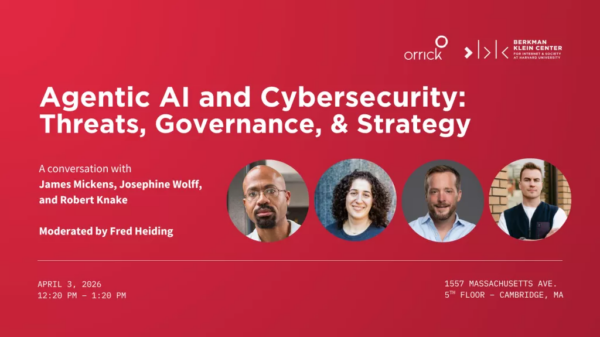












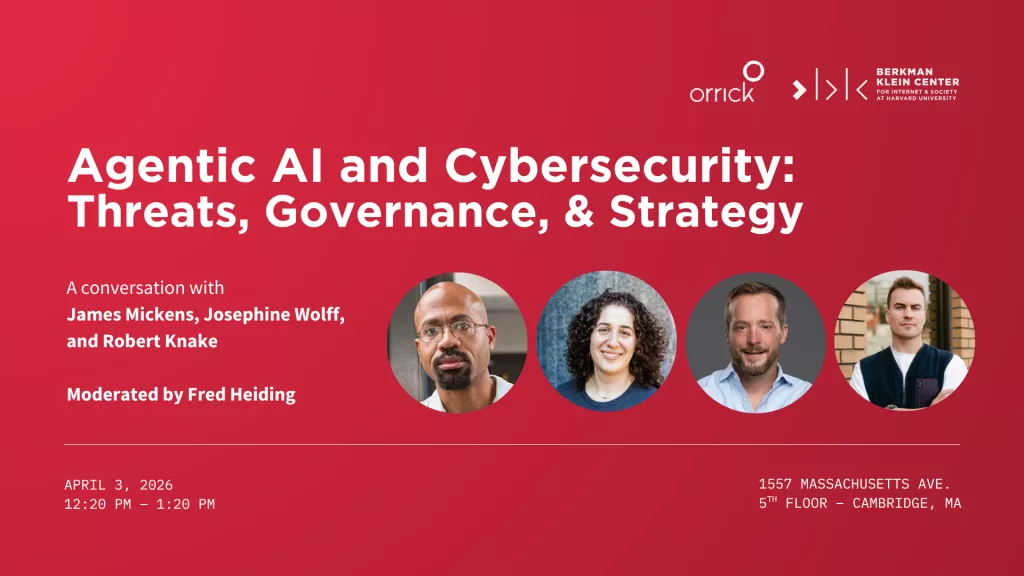
Leading experts in cybersecurity will gather for a hybrid panel discussion titled “Agentic AI and Cybersecurity: Threats, Governance, and Strategy” on April 3, 2026, from 12:20 PM to 1:20 PM ET at Harvard University. This event aims to address the dual-edged nature of autonomous artificial intelligence in the cybersecurity domain, focusing on both its benefits and potential risks. The discussion will explore critical questions regarding the implications of agentic AI on the threat landscape, the balance between offense and defense in cybersecurity, and the accountability mechanisms for breaches involving AI systems.
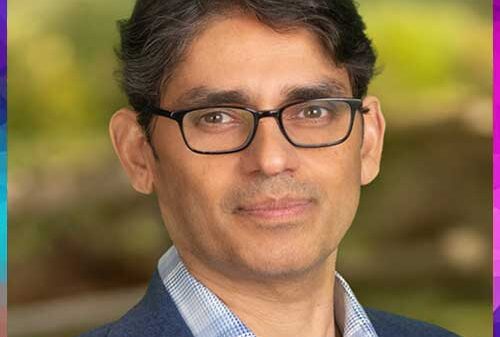
The panel will feature notable speakers, including James Mickens, an associate professor of computer science at Harvard University. Mickens specializes in the performance, security, and robustness of large-scale distributed web services. His research includes the Riverbed project, which investigates the use of trusted hardware and new operating system interfaces to manage sensitive data. He holds a B.S. in computer science from the Georgia Institute of Technology and a Ph.D. from the University of Michigan. Before joining Harvard, Mickens spent six years at Microsoft and served as a visiting professor at MIT.
Joining him is Josephine Wolff, a professor of cybersecurity policy at The Fletcher School at Tufts University. Wolff’s research focuses on liability in cybersecurity incidents, cyber insurance, and government responses to cyberattacks. She has authored two significant books, “You’ll See This Message When It Is Too Late” and “Cyberinsurance Policy,” both published by MIT Press. Her work has been featured in renowned publications such as the Financial Times and The New York Times. Before her tenure at Fletcher, Wolff was an assistant professor at the Rochester Institute of Technology and a fellow at the New America Cybersecurity Initiative.
Robert Knake, a Venture Partner at Paladin Capital Group and a recognized expert in cybersecurity, will also participate. Knake previously served as the first Deputy National Cyber Director for Strategy and Budget at the White House, where he contributed to the establishment of the National Cybersecurity Strategy. His background includes directing cybersecurity policy at the National Security Council and co-authoring influential books on cybersecurity with Richard Clarke. Knake holds a Master’s degree in Public Policy from Harvard’s Kennedy School and has testified before Congress multiple times.
The discussion will be moderated by Fred Heiding, a postdoctoral research fellow at Harvard’s Belfer Center. Heiding’s expertise lies at the intersection of technical capabilities and policy implications in computer security. He is an active member of the World Economic Forum’s Cybercrime Center and teaches courses on generative AI and international security at Harvard. His research has been presented at significant conferences, including Black Hat and Defcon, and he has contributed to leading academic and professional journals.
This event is organized in collaboration with Orrick, Herrington, & Sutcliffe LLP, and attendees can participate either in person or via Zoom. In-person attendance is limited to Harvard ID holders, and lunch will be provided for those attending on-site. The discussion promises to illuminate the challenges of integrating AI in cybersecurity while addressing the pressing need for regulatory frameworks that ensure accountability.
As the cybersecurity landscape becomes increasingly complex due to the incorporation of AI technologies, events like this one are crucial in fostering dialogue among experts. They highlight the urgent need for strategies that balance innovation with responsibility, particularly as the capabilities of AI continue to expand. The outcomes of this discussion may shape future policies and best practices in an era where AI’s role in cybersecurity will only grow more significant.
See also Anthropic’s Claims of AI-Driven Cyberattacks Raise Industry Skepticism
 Anthropic Reports AI-Driven Cyberattack Linked to Chinese Espionage
 Quantum Computing Threatens Current Cryptography, Experts Seek Solutions
 Anthropic’s Claude AI exploited in significant cyber-espionage operation
 AI Poisoning Attacks Surge 40%: Businesses Face Growing Cybersecurity Risks