










































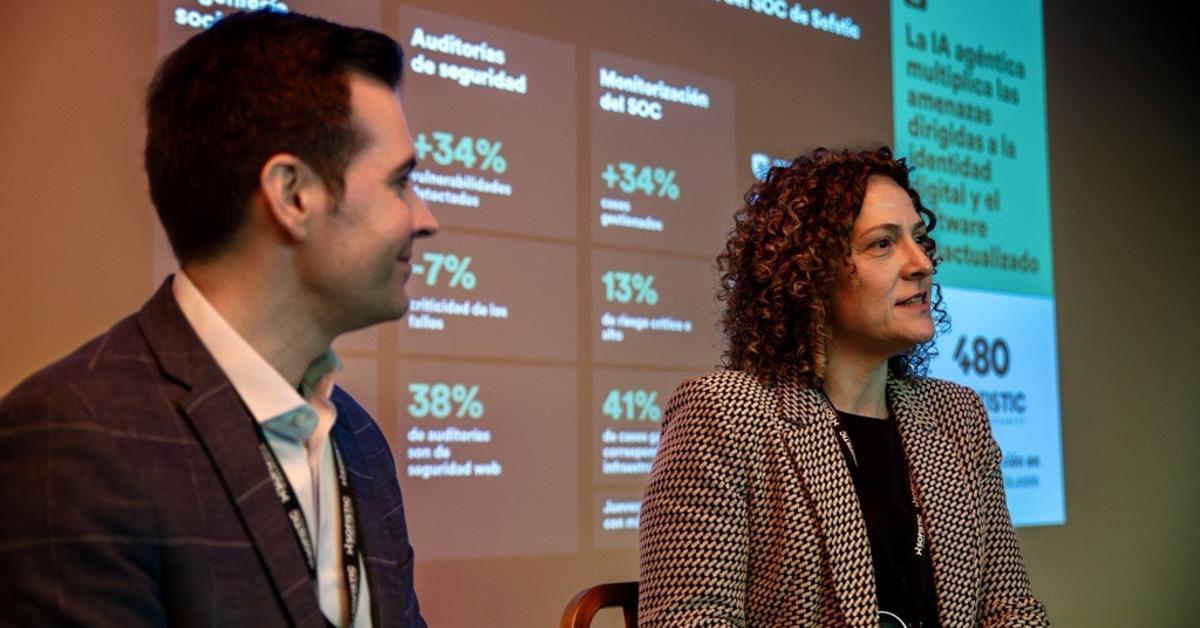
Barcelona — The emergence of artificial intelligence (AI) has ushered in numerous business opportunities, yet it has also dramatically amplified vulnerabilities within corporate security systems. A recent report from Sofistic, which assessed 1,500 cases and over 100,000 alerts at its security operations center, highlights this troubling trend. The company, part of the Cuatroochenta group, serves clients in Spain and several Latin American nations, including Panama, Colombia, Costa Rica, and the Dominican Republic.
Sofistic’s analysis reveals a 34% increase in cases managed by its operations center over the past year. “Companies are increasingly aware and have more connected devices, which means more cyberattacks are being detected,” said Mar López, Sofistic’s CEO and former head of the Spanish government’s cybersecurity office. She noted that heightened awareness among companies is paralleled by a rise in criminal activity targeting those very vulnerabilities.
In a significant adaptation by cybercriminals, there has been a 21% decline in users clicking on phishing emails and a 9% reduction in those supplying personal credentials. Yet once this initial barrier is crossed, AI technology facilitates the impersonation of banks or energy companies through calls—known as “vishing”—that ensnare unsuspecting victims.
Critical Infrastructure Vulnerabilities
The report indicates that critical infrastructure remains a primary target for cybercriminals, particularly amid escalating geopolitical tensions. A staggering 41% of the cases analyzed involved attacks on essential sectors like energy, transportation, and water supply. However, vulnerabilities are surfacing in areas previously overlooked, such as the education sector, which houses vast amounts of sensitive data. Juan Carlos García, Director of the Security Operations Center at Sofistic, emphasized that “security isn’t part of their core structure,” reiterating that “data is gold these days.”
The commerce sector also requires increased vigilance, as investment in cybersecurity remains disproportionately low compared to the risks it faces. As more companies integrate AI into their operations, the cybersecurity landscape will likely become even more complex and perilous.
Looking ahead, the intersection of AI and cybersecurity will not only challenge existing security measures but also necessitate a reevaluation of how organizations approach data protection. Companies in various industries will need to adapt rapidly, balancing the operational advantages of AI with the increasing array of cyber threats that accompany its adoption.
See also Cyber Attacks Accelerate to 72 Minutes; OpenClaw NPM Bypass Discovered
 Chinese Threat Actors Use Anthropic’s Claude for First Large-Scale AI Cyberattack
 PNNL and Anthropic Unveil ALOHA Tool to Replicate Cyber Attacks in Hours, Cutting Costs Significantly
 Varist Launches Hybrid Detection Engine, Scanning 500 Files per Second for AI Malware Protection
 Techie Reveals AI Tool Blockage at Major MNC Due to Data Security Regulations