































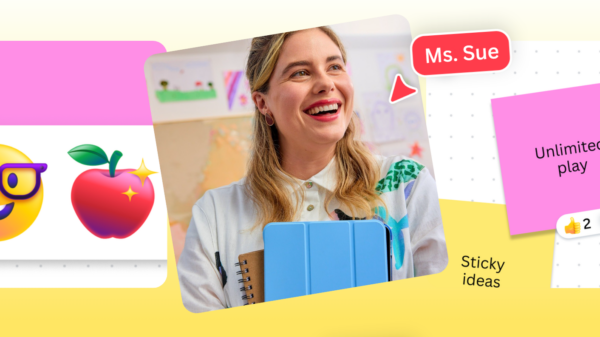
















A trio of former Google engineers is launching a new learning venture aimed at children aged 5 to 12, betting that they will engage more effectively through exploration than by conversing with AI chatbots. The startup, named Sparkli, has developed an AI-powered app that creates interactive “expeditions” that combine audio, video, images, quizzes, and choose-your-own-adventure scenarios. This innovative approach aims to transform children’s innate curiosity into structured learning experiences.
Sparkli claims it can generate a multimedia lesson within minutes of a child’s inquiry, currently piloting its services with a school network serving over 100,000 students. The company recently secured $5 million in pre-seed funding, led by the Swiss venture firm Founderful, positioning itself as an alternative to more generalized AI assistants.
Unlike static videos or text-based chats, Sparkli aims to provide dynamic content that answers broad, open-ended questions such as “What is it like on Mars?” and “How does a startup get off the ground?” Each topic unfolds in short chapters with narration and visuals, encouraging low-pressure interactions that promote discovery rather than simply right-or-wrong answers. Children can choose from curated subjects or input their own questions to tailor their learning journey. Daily featured topics serve to ignite new interests, and voice options support emerging readers.
The founding team, which includes Lax Poojary, Lucie Marchand, and Myn Kang, previously developed experimental products at Google, such as a travel discovery tool and a video-centric shopping app. Sparkli also employs a PhD in educational science and AI, along with a classroom teacher, indicating a strong emphasis on pedagogy. The curriculum addresses key concepts that schools often find challenging to modernize, such as design thinking, financial literacy, and entrepreneurship, in addition to traditional subjects like science and the humanities.
An educator dashboard allows teachers to assign “expeditions,” monitor student progress, and convert open-ended classroom discussions into structured lessons. Gamification elements, such as streaks and quest cards tied to a child’s avatar, are designed to encourage healthy learning habits while avoiding the pitfalls of a burdensome academic routine.
Child safety remains a paramount concern for AI applications targeting young users. Sparkli takes a proactive stance by blocking sexual content and reformatting sensitive queries, such as those related to self-harm, into guidance on emotional literacy, while encouraging children to consult trusted adults. This approach comes in light of ongoing litigation against popular AI platforms accused of exposing minors to harmful material.
Compliance is equally critical, particularly in jurisdictions with stringent regulations on children’s online interaction. In the U.S., the COPPA Act mandates verifiable parental consent and strict data minimization for users under 13, while the UK’s Age Appropriate Design Code requires privacy by default. The EU is also introducing regulations that will add transparency and oversight obligations for AI systems that interact with minors. Sparkli’s initial rollout in schools and the educator controls it offers suggest a strategy to meet these regulatory demands, though the effectiveness will ultimately hinge on audits and impact evaluations.
Currently, Sparkli has piloted its program in over 20 schools and is collaborating with an educational institute that serves more than 100,000 students. The immediate focus is on forging institutional partnerships, with consumer availability on the horizon after proving the classroom model. Founderful describes Sparkli as its first dedicated edtech investment, recognizing the team’s rapid product development and the gap between children’s inquiries and traditional curricula.
The technical challenges are substantial, as real-time generation of multimodal lessons requires meticulous cost management and quality assurance. Industry experts note that multimodal AI remains costlier than text-based chat interactions, and ensuring accuracy and age-appropriateness will be crucial to avoid potential misinformation and bias. Sparkli is expected to rely on vetted sources for content, tier materials by reading level, and employ layered moderation—common practices among AI products aimed at young users.
The educational technology sector is experiencing a resurgence as schools seek effective tools that enhance engagement without adding burden to teachers. According to forecasts, global edtech spending is projected to exceed $400 billion by mid-decade. The urgency for effective learning interventions is underscored by the OECD’s PISA 2022 report, which documented the most significant declines in math performance in its history. This backdrop has prompted experimentation from both nonprofits and startups, including initiatives like Khan Academy’s AI tutor and game-based learning on mainstream platforms.
Sparkli aims to carve out a unique position in this crowded landscape by asserting that rich, interactive media can better capture children’s attention than text chat, while maintaining a pedagogy-focused framework to ensure safe classroom integration of generative AI. If the company can effectively manage latency, control costs, and validate content quality, it stands to gain a significant foothold in both educational environments and at home.
See also AI Enhances Student Creativity and Strategic Thinking in Marketing Courses
 AI Revolutionizes Education by 2026: Personalized Learning and Smart Assessment Tools Lead Changes
 AI in Schools: 95% of Educators Warn of Risks from Unchecked Adoption of Technology
 Fermi.ai Launches AI-Driven EdTech Platform in US and India, Enhancing Learning Mastery
 MediaGen Launches AI English Learning Platform E-Baigle at 2026 Korea Education Fair