























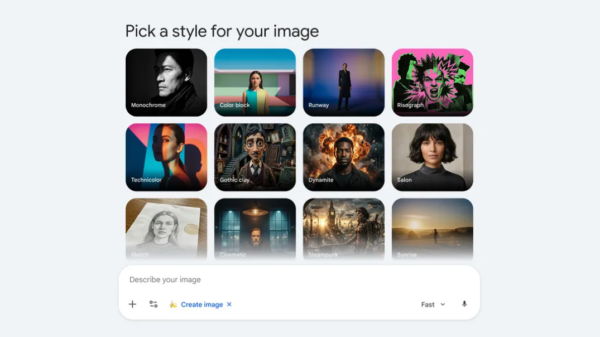











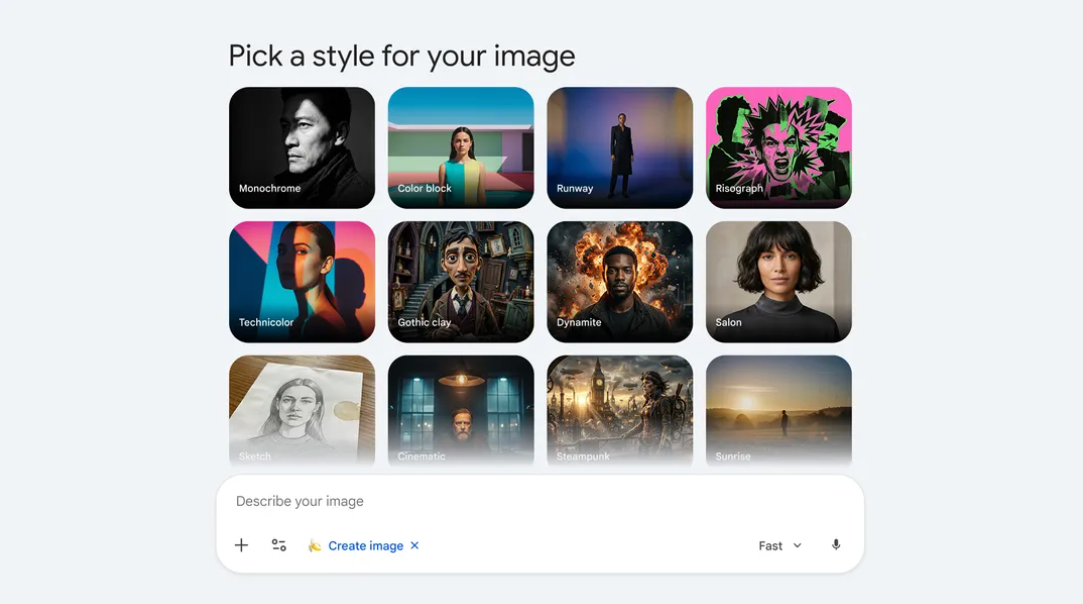
Google DeepMind has unveiled Nano Banana 2, also known as Gemini 3.1 Flash Image, enhancing its AI image generation capabilities within the Google ecosystem. This latest update promises faster generation speeds while maintaining the high-quality features traditionally associated with the more advanced Pro models.
The introduction of Nano Banana 2 aims to balance speed and quality, a challenge that has often characterized generative image tools. As stated by Google, the model integrates advanced world knowledge, improved instruction adherence, subject consistency, and production-ready image specifications, all delivered at what the company describes as “Flash speed.”
Rolling out across platforms such as the Gemini app, Google Search, AI Studio, Vertex AI, Flow, and Google Ads, the model signifies a significant advancement in the way users can create images.
In a recent blog post, Naina Raisinghani, Product Manager at Google DeepMind, expressed enthusiasm about the new model: “Introducing Nano Banana 2 (Gemini 3.1 Flash Image), our latest state-of-the-art image model. Now you can get the advanced world knowledge, quality and reasoning you love in Nano Banana Pro, at lightning-fast speed.”
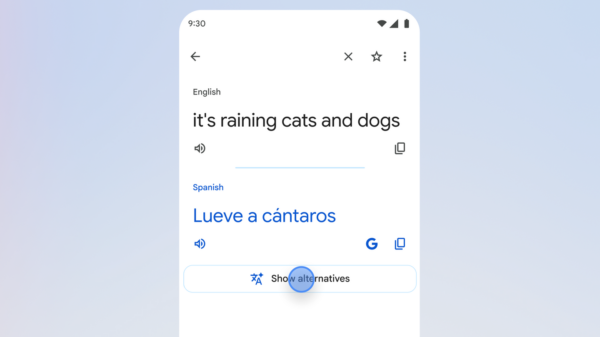
Google emphasizes that the model draws on Gemini’s extensive real-world knowledge base, incorporating real-time information and images from web searches to accurately render specific subjects. One of the key advancements includes precision text rendering within images, which encompasses translation and localization capabilities.
Raisinghani added, “Nano Banana 2 brings the high-speed intelligence of Gemini Flash to visual generation, making rapid edits and iteration possible.” The model supports resolutions ranging from 512 pixels to 4K and various aspect ratios, including vertical and widescreen formats. Users can maintain character resemblance for up to five characters and retain fidelity for up to 14 objects within a single workflow.
The new model makes several features that were previously exclusive to Nano Banana Pro available at accelerated speeds. These enhancements include improved subject consistency, better adherence to instructions, and enhanced visual fidelity with superior lighting and texture detail.
Notably, Nano Banana 2 has become the default image generation system in Flow and is accessible to all Flow users without any associated costs. Additionally, it is available through the Gemini API in AI Studio and Vertex AI in preview mode. Meanwhile, Google AI Pro and Ultra subscribers will continue to have access to Nano Banana Pro for specialized tasks.
As part of the launch, Google reiterated its commitment to content provenance and verification. The company has integrated its SynthID watermarking system with C2PA Content Credentials to offer verification signals for AI-generated media. According to Raisinghani, “Since its launch in November, our SynthID verification feature in Gemini app has been used over 20 million times across various languages, helping people identify Google AI-generated images, video and audio.” She also noted that C2PA verification would soon be available within the Gemini app.
As AI image generation becomes increasingly integrated into search, advertising, cloud platforms, and productivity tools, model updates are focusing on workflow integration rather than standalone experimentation. With Nano Banana 2 positioned to combine speed and fidelity, the real test will be its adoption among creators and enterprises within actual production environments.
The ETIH Innovation Awards 2026 are now open for entries, recognizing education technology organizations that deliver measurable impacts across K–12, higher education, and lifelong learning. The awards invite submissions from the UK, the Americas, and internationally, with a focus on evidence of outcomes and real-world application.
See also Andrew Ng Advocates for Coding Skills Amid AI Evolution in Tech
 AI’s Growing Influence in Higher Education: Balancing Innovation and Critical Thinking
 AI in English Language Education: 6 Principles for Ethical Use and Human-Centered Solutions
 Ghana’s Ministry of Education Launches AI Curriculum, Training 68,000 Teachers by 2025
 57% of Special Educators Use AI for IEPs, Raising Legal and Ethical Concerns