





















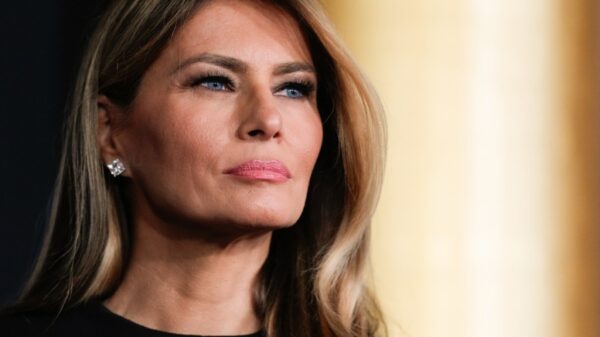











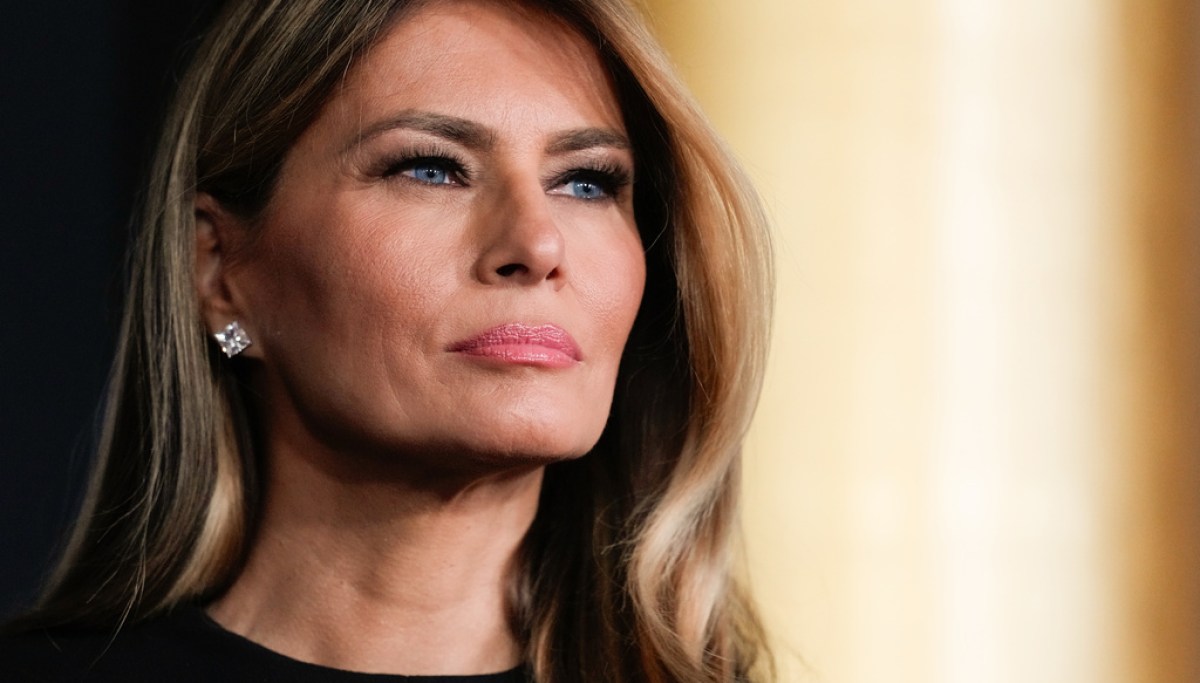
First Lady Melania Trump emphasized the importance of human creativity in a speech at the “Zoom Ahead: AI for Tomorrow’s Leaders” event, highlighting that while artificial intelligence (AI) can generate images and information, it is ultimately humans who give projects “purpose” and “meaning.” The event, which focused on AI’s role in education, was part of her ongoing efforts to empower the next generation to harness technology responsibly.
“Although artificial intelligence can generate images and information, only humans can generate meaning and purpose,” Trump stated. She encouraged attendees to allow their imagination to guide their intellectual progress while reminding them not to use AI as a shortcut. “Be intellectually honest with yourself — use AI as a tool — but do not let it replace your personal intelligence,” she added, underscoring the significance of maintaining human insight in an increasingly automated world.
Trump’s remarks come as part of her broader commitment to advancing AI education, particularly for K-12 students. Earlier in August, she launched the Presidential AI Challenge, inviting students and educators to apply AI in developing projects that tackle real-world issues within their communities. “Artificial intelligence is changing today’s world, and your curiosity should serve as the driving force,” she noted during the event.
As part of her vision, Trump highlighted how AI can meet individuals’ curiosity and transform creative ideas into reality. “The Age of Imagination is a new era, powered by artificial intelligence, where one’s curiosity can be satisfied almost magically, in seconds,” she said. “You are fortunate to have the capability to fulfill your dreams through the power of learning, with AI serving as the primary engine for creative exploration.” This sentiment aligns with her ongoing drive to integrate technological literacy with education.
Throughout her speech, Trump maintained that curiosity is the “driving force” behind “every great achievement,” stating that it enhances the capabilities of AI itself. She encouraged attendees to explore their creative talents across diverse fields such as film, fashion, and music, stating, “You can develop movie characters, scripts, fashion, music, art, the entire ecosystem. All with AI.” Her remarks reflect a growing recognition of the intersection between creativity and technology in educational settings.
The “Zoom Ahead” event is part of a broader initiative by Zoom to foster AI literacy and responsibility among young learners. In 2025, Zoom Cares announced a $10 million commitment over three years to expand AI education, with a $5 million investment earmarked specifically for K-12 education. The company has also collaborated with Trump on initiatives aimed at integrating AI education into youth development, becoming a signatory of the White House’s “Pledge to America’s Youth: Investing in AI Education.”
Since the onset of President Donald Trump’s second administration, Melania Trump has made AI one of her key priorities. In September, she also launched “Fostering the Future Together,” a global coalition focused on enhancing children’s well-being through education, innovation, and technology. This coalition aims to prioritize child development at the intersection of technology and education.
While expressing enthusiasm for the potential of AI, the First Lady consistently emphasized the necessity of human curiosity and creativity. “In the new AI era, the most powerful skill is knowing what to ask, why it matters, and how to think beyond the first answer,” she concluded, urging attendees to “be stubbornly curious, think outside the box, and question everything.” This call to action reflects an understanding that, as AI continues to evolve, the future will depend on a balanced integration of technology and human ingenuity.
See also Andrew Ng Advocates for Coding Skills Amid AI Evolution in Tech
 AI’s Growing Influence in Higher Education: Balancing Innovation and Critical Thinking
 AI in English Language Education: 6 Principles for Ethical Use and Human-Centered Solutions
 Ghana’s Ministry of Education Launches AI Curriculum, Training 68,000 Teachers by 2025
 57% of Special Educators Use AI for IEPs, Raising Legal and Ethical Concerns