

















































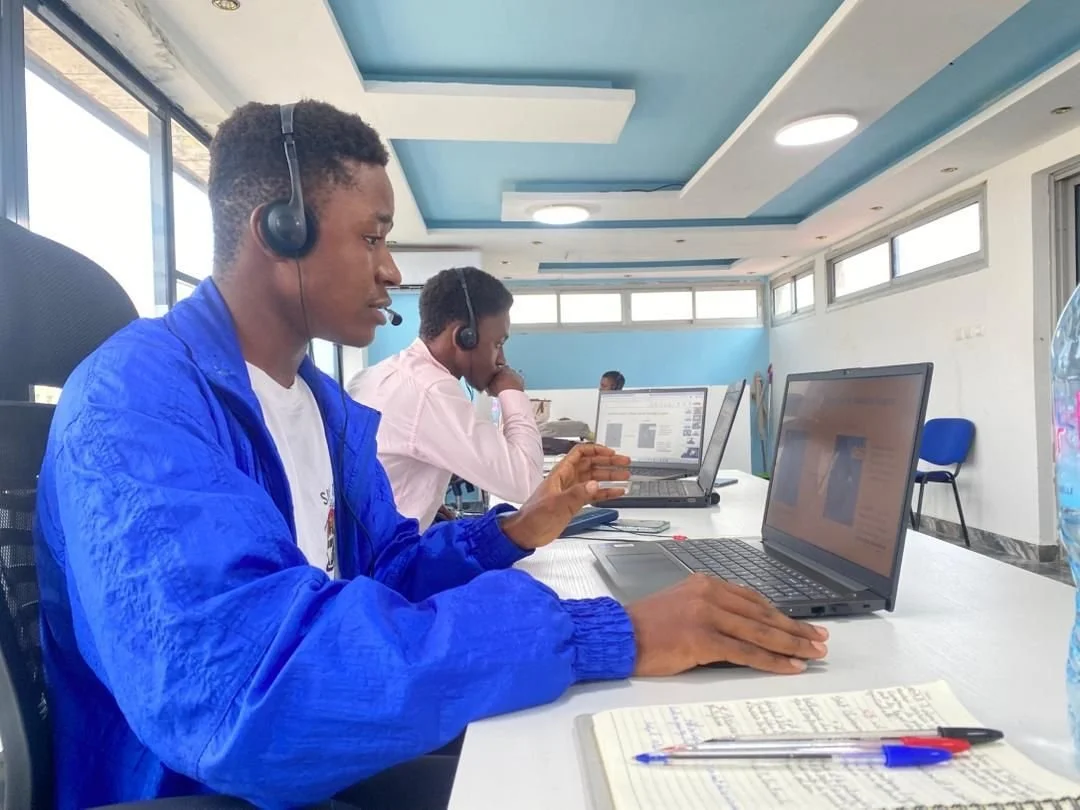
Sazience Technology has announced the results of a recent healthcare-focused hackathon carried out by its training division, the Sazience Technology Academy, in partnership with the MIT African Graduate Association. The initiative, aimed at addressing real-world healthcare challenges, showcased innovative solutions developed by students, particularly in the realm of artificial intelligence’s role in medical image interpretation.
The update was posted on LinkedIn, detailing the work of Group 1 during the MIT African Graduate Association x Sazience Technology Academy Hackathon. Their project specifically targeted the time-consuming processes associated with interpreting medical images, an issue exacerbated in regions with limited access to specialists.
Sazience Technology, which operates throughout the Middle East and Africa, specializes in digital transformation services and applied technology training. Its Academy emphasizes hands-on learning, focusing on applied AI and practical problem-solving. The hackathon served as a platform for students to tackle pressing challenges in healthcare, particularly in the African context.
The students identified significant delays in medical image interpretation, pointing to extensive review processes, a scarcity of specialists, and the difficulties faced by general practitioners who often lack immediate expert guidance. Sazience Technology highlighted that the project was centered around a crucial healthcare challenge, namely, medical image interpretation—especially pertinent within African healthcare settings.
To address these issues, the team developed a supervised machine learning system trained on hundreds of labeled medical images. This system analyzes clinical images and generates probable diagnostic indications, facilitating faster and more informed referral decisions. Sazience Technology explained that the system is designed to “assist general practitioners in understanding what may be happening in an image, enabling faster and more informed referral,” while also alleviating the burden on specialists by reducing the time required to review and interpret cases.
The model is crafted to function effectively across images of varying quality and to produce structured, interpretable outputs that can seamlessly fit into lightweight clinical workflows. This adaptability is critical, given the often challenging conditions in which healthcare professionals operate in many parts of Africa.
Importantly, Sazience Technology clarified that the system is not intended to replace clinicians or serve as an automated diagnostic authority. “The system does not replace clinicians. It augments clinical judgment by accelerating image analysis and helping ensure that critical cases are identified and referred more efficiently,” the company stated. This distinction underscores the technology’s role as a support tool, rather than a substitute for professional medical expertise.
The project was executed as part of the Academy’s applied training model, which is designed to bridge the gap between theoretical knowledge and practical implementation, aligning students’ work with actual clinical needs. By engaging in such initiatives, Sazience Technology is fostering a new generation of tech-savvy healthcare professionals capable of addressing the continent’s pressing medical challenges.
This hackathon not only demonstrates the potential of AI to enhance healthcare delivery but also highlights the importance of collaborative initiatives that bring together educational institutions and technology providers. As the healthcare landscape continues to evolve, such partnerships may play a pivotal role in improving access to quality medical care in underserved regions.
See also Andrew Ng Advocates for Coding Skills Amid AI Evolution in Tech
 AI’s Growing Influence in Higher Education: Balancing Innovation and Critical Thinking
 AI in English Language Education: 6 Principles for Ethical Use and Human-Centered Solutions
 Ghana’s Ministry of Education Launches AI Curriculum, Training 68,000 Teachers by 2025
 57% of Special Educators Use AI for IEPs, Raising Legal and Ethical Concerns