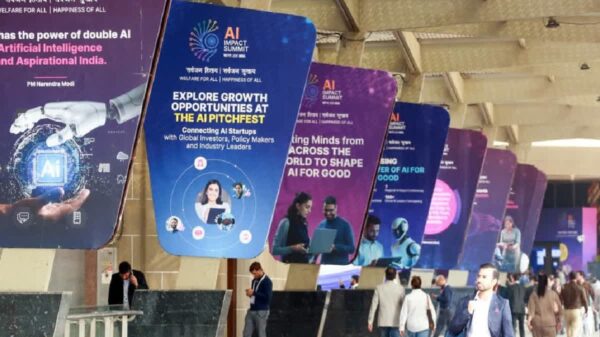






The “AI for Inclusion & Social Good” pre-summit events are set to take place as part of the AI Impact Summit 2026 India, organized by the Ministry of Electronics and Information Technology, Government of India. This three-day program will be hosted by the UNESCO Chair on Assistive Technologies in Education at the Amrita Vishwa Vidyapeetham, Amritapuri Campus, focusing on advancing inclusive education through artificial intelligence and assistive technologies for students with disabilities.
The event will feature panel discussions led by a diverse group of researchers, educators, and experts in assistive technology. Participants will have the opportunity to explore an Assistive Technologies showcase, which will include innovations developed by university researchers, faculty, and students. In addition, a capacity-building program on Online Labs (OLabs) will be conducted by experts from CIET, NCERT, highlighting practical applications and developments in educational technology.
This initiative aims to promote inclusive and equitable quality education, aligning with the United Nations Sustainable Development Goals (SDGs) 4 and 17, which focus on quality education and partnerships for the goals, respectively. To ensure accessibility for all participants, Indian Sign Language (ISL) interpreters will be available throughout the event, further emphasizing the commitment to inclusivity.
The UNESCO Chair in Assistive Technologies in Education and the AI and Disability Studies TAG from the Amrita School of Computing are organizing the summit. Their collaboration reflects a growing recognition of the importance of integrating assistive technologies in educational settings. As educational institutions increasingly adopt AI tools, the focus on inclusivity becomes paramount.
AI applications in education have the potential to significantly enhance learning experiences for all students, particularly those with disabilities. By utilizing advanced technologies, educators can tailor learning environments that accommodate various needs, ensuring that no student is left behind. The discussions at the summit will delve into the practical implications of these technologies, exploring how they can be harnessed to foster an inclusive educational landscape.
The summit also underscores the role of partnerships in achieving educational goals. By bringing together various stakeholders—including governmental bodies, educational institutions, and technology experts—the event aims to create a cohesive strategy for implementing assistive technologies in schools and universities across India. This collaborative approach is essential in addressing the unique challenges faced by students with disabilities.
Looking ahead, the insights gained from the AI Impact Summit 2026 India could serve as a blueprint for future initiatives aimed at promoting inclusive education through technology. As discussions around AI and assistive technologies continue to evolve, the outcomes of this summit may influence policy-making and resource allocation in the education sector, driving forward the mission of equitable access to quality education for all.
See also Jinxin Technology Launches NAMI INSIGHT One: AI-Powered Learning Glasses for $404B EdTech Market
 NYU Researchers Unveil Framework for Bidirectional Human-AI Alignment in Education
 President Murmu Launches #SkillTheNation Challenge to Enhance AI Skills in India
 AI-Driven EdTech Predictions for 2026: Schools Embrace Personalized Learning and Safety Innovations
 WVU Parkersburg Professor Highlights AI’s Classroom Impact and Calls for Policy Reform