




















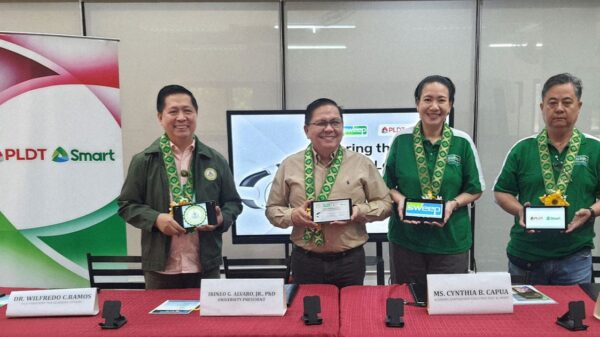















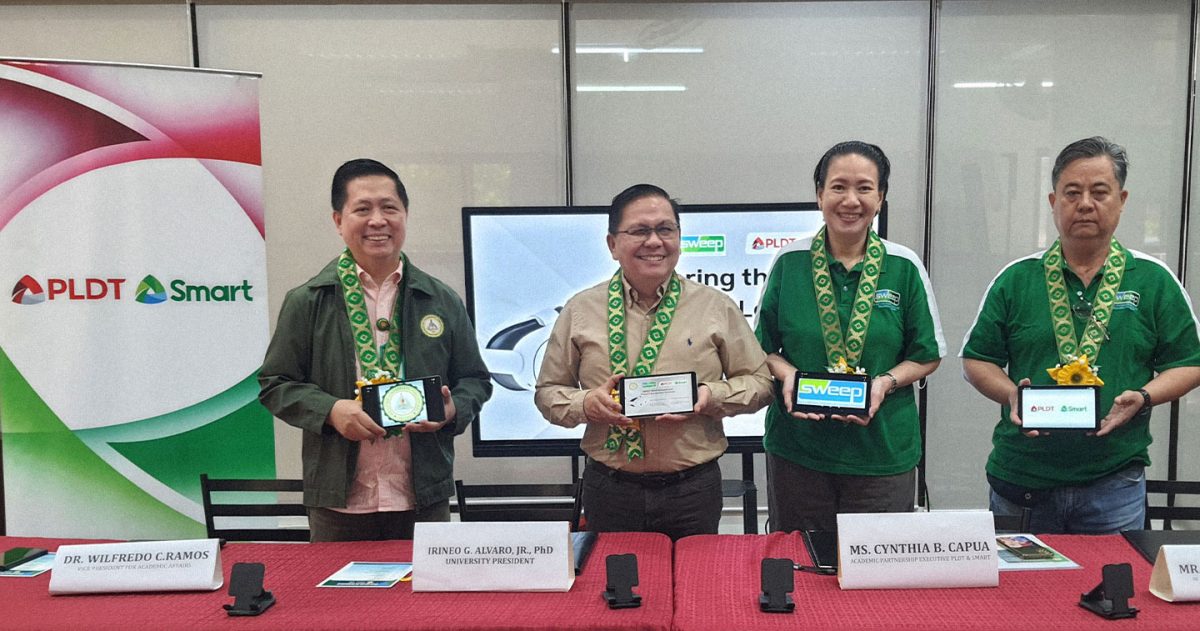
Wesleyan University-Philippines in Cabanatuan City, Nueva Ecija, has renewed its partnership with Smart Communications, Inc. under the Smart Wireless Engineering Education Program (SWEEP), marking a significant step in its approach to artificial intelligence and automation. Celebrating its 80th anniversary, the university aims to harness technology’s potential to enhance human reasoning rather than replace it, according to President Dr. Irineo Alvaro Jr.
“Technology is here to stay, and among its most significant advances is artificial intelligence,” Dr. Alvaro remarked. “Its value lies in strengthening human reasoning and capability—not replacing them—and this partnership with Smart allows us to explore that potential in meaningful ways.”
Now entering its fifth phase, SWEEP is focusing on fostering skills in emerging digital innovations, including prompt engineering, AI-assisted coding, data analysis, and automated decision systems. These areas are increasingly vital as they reshape communication and customer experiences across industries.
Stephanie Orlino, Assistant Vice President and Head of Stakeholder Engagement at Smart, emphasized the initiative’s role in developing industry-ready engineers. “Smart supports the development of industry-ready engineers and technopreneurs who can contribute to the country’s digital transformation,” Orlino stated. “Through SWEEP, students gain exposure to real-world applications that help build a strong foundation for their future careers.”
In addition to technical training, Phase 5 aims to cultivate critical thinking, problem-solving, and design perspectives, ensuring that technology serves as an enabler of human judgment. SWEEP also equips students with knowledge of immersive technologies, such as extended reality (XR), which encompasses virtual, augmented, and mixed reality. These technologies facilitate interactive learning experiences that merge physical and digital environments.
The program further delves into network disaggregation, a shift toward modular architectures that provides more flexibility and efficiency for organizations by allowing the integration of open hardware, software, and network functions from various vendors. This approach is increasingly relevant as businesses seek more adaptable networking solutions.
As part of SWEEP, Wesleyan students benefit from mentorship programs led by Smart engineers, gaining insights into how advanced technologies can enhance operational functions such as systems monitoring, customer support workflows, and preventive maintenance. This hands-on experience is crucial for preparing students for the demands of modern industries.
To prepare educators for future learning environments, Smart recently hosted an “AI for All” bootcamp for Wesleyan’s basic education teachers. The workshop provided practical experiences with AI-powered applications, enabling participants to develop dynamic lessons, offer immediate feedback, analyze data, and automate routine administrative tasks.
Wesleyan University-Philippines is one of the earliest adopters of the SWEEP program, having joined in 2003. It was also the first institution to receive the SWEEP Award, which recognizes excellence in engineering education. Since the program’s inception, over 43,000 faculty members and students have been trained, while more than 4,000 internships have been facilitated within the PLDT Group, leading to the establishment of six startups. More than 1,000 graduates from partner schools have secured positions at Smart, highlighting the program’s effectiveness in cultivating industry-ready talent for the Philippines’ digital future.
The renewed focus on artificial intelligence and automation through the SWEEP program reflects a broader commitment to align educational initiatives with the evolving demands of the technology landscape, further empowering students and educators to thrive in an increasingly digital world.
See also Andrew Ng Advocates for Coding Skills Amid AI Evolution in Tech
 AI’s Growing Influence in Higher Education: Balancing Innovation and Critical Thinking
 AI in English Language Education: 6 Principles for Ethical Use and Human-Centered Solutions
 Ghana’s Ministry of Education Launches AI Curriculum, Training 68,000 Teachers by 2025
 57% of Special Educators Use AI for IEPs, Raising Legal and Ethical Concerns