











































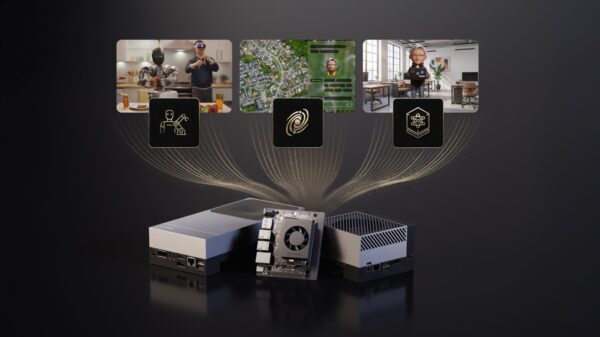


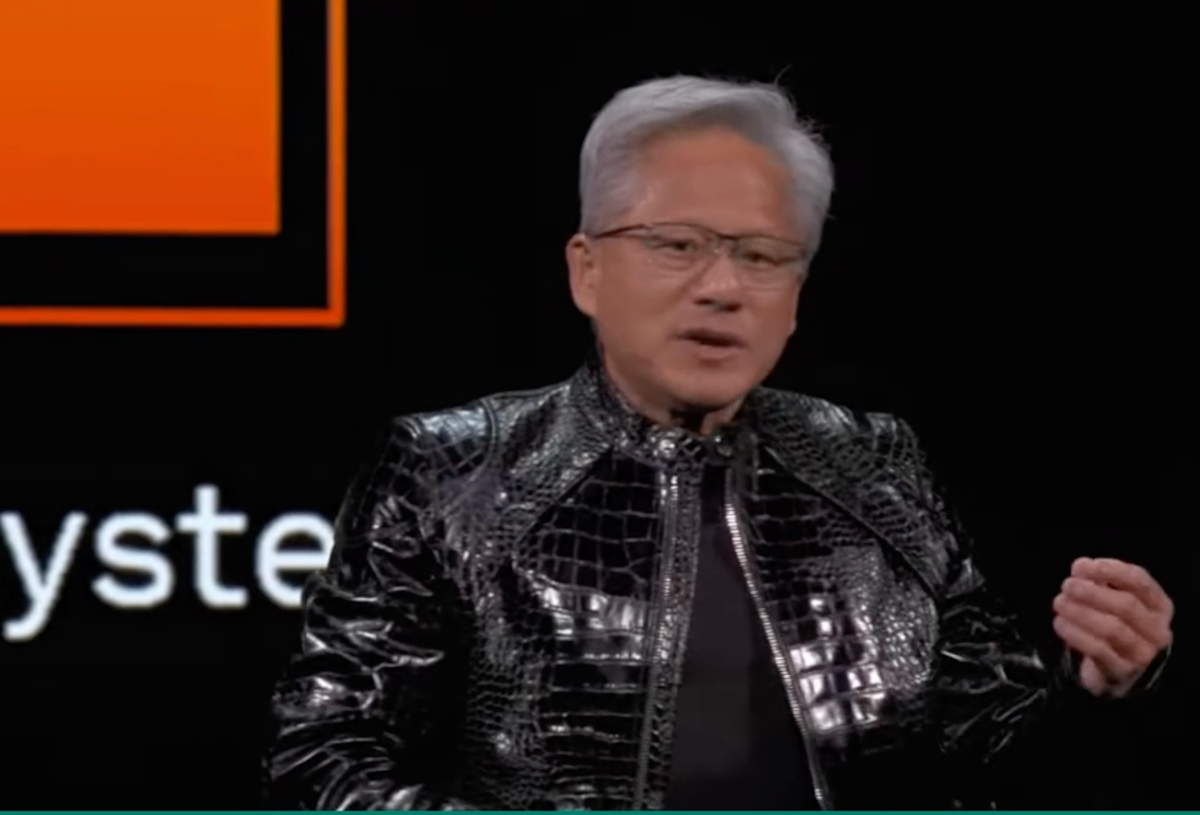
LAS VEGAS — AI giant Nvidia (NVDA) unveiled its latest technological advancement, the Vera Rubin superchip, at CES 2026 on Monday. This new chip, part of the company’s newly branded Rubin platform, integrates one Vera CPU with two Rubin GPUs, marking a significant step in Nvidia’s ongoing efforts to enhance AI computing capabilities.
Nvidia has positioned the Rubin platform as ideal for deploying agentic AI systems, advanced reasoning models, and mixture-of-experts (MoE) frameworks. These MoE models utilize various “expert” AIs, directing user queries to the most suitable AI based on specific questions. “Rubin arrives at exactly the right moment, as AI computing demand for both training and inference is going through the roof,” stated Nvidia CEO Jensen Huang.
The Rubin platform comprises not only the Vera CPU and Rubin GPUs but also four additional components: the Nvidia NVLink 6 Switch, Nvidia ConnectX-9 SuperNIC, Nvidia BlueField-4 DPU, and Nvidia Spectrum-6 Ethernet Switch. These components are designed to enhance overall performance and efficiency when packaged together into the Nvidia Vera Rubin NVL72 server, which accommodates 72 GPUs in a single system. By interlinking multiple NVL72 servers, Nvidia aims to create the DGX SuperPOD, a massive AI supercomputer sought after by major technology players such as Microsoft, Google, Amazon, and Meta.
Nvidia is also highlighting its new AI storage solution, termed Nvidia Inference Context Memory Storage, which it claims is essential for managing data produced by trillion-parameter AI models and complex reasoning tasks. The Rubin platform promises enhanced efficiency compared to the previous-generation Grace Blackwell offering, with Nvidia asserting a fourfold reduction in the number of GPUs required for training MoE models compared to Blackwell systems.
This reduction in GPU count could free up resources for companies, allowing them to repurpose excess units for other tasks, thereby improving operational efficiency. Additionally, Nvidia reports that Rubin offers a tenfold decrease in inference token costs, a significant benefit considering that token processing is both resource-intensive and energy-consuming, particularly with large AI models. Lowering these costs could improve the total cost of ownership for users compared to earlier models.
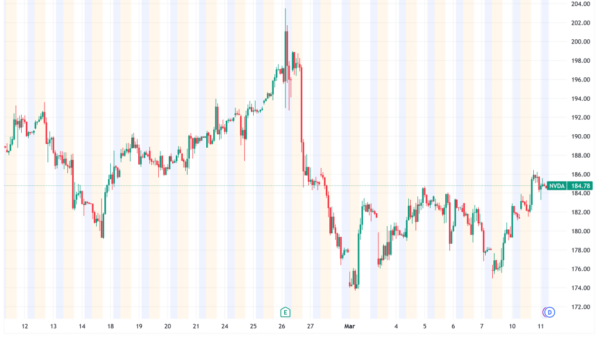
Nvidia has begun sampling the Rubin platform with partners and is now in full production. Despite recent fluctuations in its market valuation—initially soaring to over $5 trillion before concerns regarding AI spending and potential market bubbles reduced it to approximately $4.6 billion—Nvidia remains a dominant force in the chip manufacturing sector.
The company is facing intensified competition from rival AMD (AMD), which is set to introduce its own Helios rack-scale systems as a counter to Nvidia’s NVLink 72. Furthermore, customers such as Google and Amazon have shown interest in enhancing their AI capabilities by expanding the use of custom processors in collaboration with Anthropic (ANTH.PVT), which already powers its Claude AI platform with the support of both tech giants.
Reports suggest Google is also exploring partnerships with Meta and other cloud service providers to integrate its processors into their data centers. Nevertheless, analysts believe that AMD and its customers are unlikely to displace Nvidia’s leading position in the AI market in the near term. Should Nvidia maintain its annual release schedule of new products, it may further solidify its competitive advantage.
As the demand for advanced AI solutions continues to rise, the introduction of the Vera Rubin superchip underscores Nvidia’s strategic commitment to staying at the forefront of AI computing technology, a sector expected to play a pivotal role in shaping the future of numerous industries.
See also Palantir Stock Drops 8.9% Amid AI Contract Growth and Insider Selling Concerns
 xAI Raises $20 Billion to Enhance AI Infrastructure and Deploy Grok to 600 Million Users
 AMD Unveils Helios AI Data Center Rack, Promises 1,000x Performance Boost with MI500 Series
 Micron, SK Hynix, and Sandisk Poised to Lead $100B AI Memory Supercycle, Analysts Say
 Generative AI Transforms Finance by 2026: Boosting Efficiency and Creating New Jobs