



















































Short-video leader Kwai (01024.HK) reported its fiscal fourth-quarter results for the year ending December 2025 after market close on March 25. The company announced that its full-year revenue and adjusted net profit rose year-on-year, meeting market expectations. However, despite these results, Kwai’s share price plunged sharply at yesterday’s open, with intraday losses exceeding 14% at one point, marking its largest single-day drop in nearly 11 months and wiping over HK$10 billion from its market value. This dramatic decline coincided with OpenAI‘s announcement of the complete retirement of its video-generation model, Sora, prompting speculation about the market’s rigorous assessment of AI’s monetization potential.
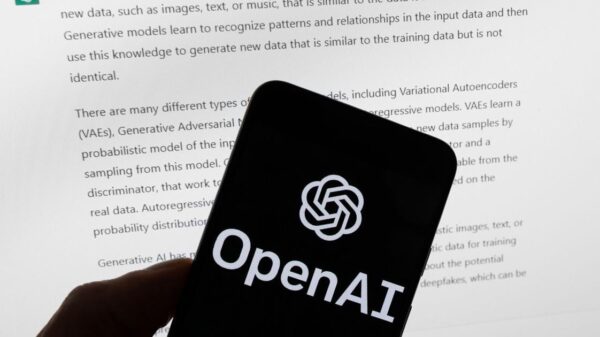
On March 25, OpenAI confirmed it would discontinue Sora entirely, including the standalone app, API endpoints, and its integration within ChatGPT. The model, once celebrated as a breakthrough in AI video technology, lasted only six months before its shutdown. Analysts attribute Sora’s failure to an untenable cost-revenue imbalance. Research firm SemiAnalysis estimated Sora’s daily operating costs could reach $15 million, translating to an annual burn exceeding $5.4 billion, while its revenue was nearly non-existent. Even more troubling was its user retention; Andreessen Horowitz (a16z) reported a 30-day retention rate of just 1%, with the 60-day rate dropping to zero. Faced with IPO preparations and tightening resources, OpenAI opted to eliminate loss-making ventures and concentrate on more profitable areas like enterprise tools and core large models.
In the wake of Kwai’s stock drop, some analysts noted that while its in-house video-generation model is poised for commercialization—generating quarterly revenue of RMB 340 million and aiming for an annualized run-rate above $300 million by January 2026—the market remains apprehensive regarding high AI investments and sustained profit pressures. Such concerns have led investors to withdraw from tech assets characterized by substantial upfront costs and slow returns.
Following the market reaction, domestic and international brokerages quickly reassessed Kwai’s value, adopting a largely pessimistic tone. Major foreign investment banks acted promptly, with Jefferies lowering its target from HK$106 to HK$82, while CLSA reduced its target from HK$85 to HK$68. CICC (China International Capital Corporation) remarked that Kwai’s significant share decline reflects a market re-pricing of internet companies’ AI investments. Investors are growing increasingly reluctant to pay for vague promises, focusing instead on earnings realization, cost-control abilities, and the quality of revenue growth. Kwai’s rising R&D spending is pressuring short-term profit margins, prompting downward revisions of revenue growth expectations for 2026 to below the industry average, leading to cuts in earnings forecasts and target prices.
Nomura downgraded Kwai to Neutral and substantially trimmed its price target, observing that OpenAI’s cessation of Sora indicates a broader strategic retreat in the global AI industry, revealing the monetization challenges and poor retention rates of consumer-facing AI products. The AI video sector, where Kwai is expanding its influence, faces not only increased competition but also high compute-cost pressures, raising concerns that commercialization may lag behind expectations. This is compounded by a prevailing weakness in Hong Kong tech stocks, prompting investor reluctance to remain invested.
Jaseper Tsang, vice chairman of the Hong Kong Institute of Financial Analysts and Professional Commentators Ltd., stated that the market has begun to express concerns over the AI development trajectory of mainland internet giants, spurred by earnings guidance from Tencent, Alibaba, and others. The large-scale investments in AI have become grossly misaligned with returns, resulting in persistent cash burn and intensifying sell-off pressures. Dai Kun, vice president and chief analyst at Forrester, explained that AI video generation demands significantly more computing power than text-based products, complicating the establishment of a stable profitability model. OpenAI’s discontinuation of inefficient services was a strategic decision made under constrained resources.
Veteran industry analysts echoed that Kwai’s steep decline mirrors broader sentiments within Hong Kong’s tech sector, suggesting a transition away from reckless growth. The capital frenzy appears to be waning as the market reverts its focus to commercial fundamentals.
The suspension of Sora and Kwai’s share collapse serve as cautionary tales for the AI industry and capital markets. AI technology is no longer viewed as an unquestionable “miracle cure”; even the most sophisticated AI models must demonstrate effective monetization. For investors, this moment may reflect a painful but necessary correction, as only companies that develop comprehensive commercialization strategies and maintain a balance between costs and revenues will continue to attract capital.
See also Finance Ministry Alerts Public to Fake AI Video Featuring Adviser Salehuddin Ahmed
 Bajaj Finance Launches 200K AI-Generated Ads with Bollywood Celebrities’ Digital Rights
 Traders Seek Credit Protection as Oracle’s Bond Derivatives Costs Double Since September
 BiyaPay Reveals Strategic Upgrade to Enhance Digital Finance Platform for Global Users
 MVGX Tech Launches AI-Powered Green Supply Chain Finance System at SFF 2025